The Vedic Science of Time: Understanding Kala as Reality’s Living Dimension
When we think about time, most of us imagine it like a straight line stretching from past to future. We check our watches, count our hours, and feel pressured by the ticking clock. But what if I told you that ancient Indian sages understood time as something completely different—not as a neutral container holding events, but as a living, conscious force that actively shapes who we are and how we experience existence?
The Vedic concept of Kala challenges everything we assume about time. It suggests that time is not merely the medium in which events occur, but the very substance that gives quality, meaning, and potential to each moment. This is not mythology or poetry. It is a sophisticated framework for understanding how consciousness, energy, and existence itself operate at different scales.
Let me start with the most basic insight: the Vedic tradition views time as cyclical rather than linear. Imagine time not as an arrow flying straight into the future, but as a wheel that turns, returns, and turns again. This is fundamentally different from how modern Western thought treats time. The ancient rishis recognized that everything repeats in patterns—the daily cycle of sunrise and sunset, the monthly dance of the moon’s phases, the annual journey of seasons, and vast cosmic cycles spanning millions of years.
What makes this particularly fascinating is that each cycle carries its own signature. A moment at dawn feels different from noon, which feels different from dusk. The weeks around a full moon carry different energy than the new moon period. This is not poetic fancy. Modern science has confirmed through chronobiology that our bodies do indeed experience different hormonal and neurological states at different times. The Vedas mapped this thousands of years ago with remarkable precision.
The ancient texts identify the smallest unit of time as a Trutti, which equals approximately 29.63 microseconds. From there, time expands in a perfectly structured hierarchy. A Nimesha, the blink of an eye, equals about 88.889 milliseconds. A Prāņa, one respiration, equals four seconds. The Vedic astronomers created an elaborate system showing how these tiny units build into minutes, hours, days, and ultimately into the vast cosmic cycles called Kalpas and Yugas.
“Time is the seed of all creation, the substance through which the Divine manifests existence.” - Vedic Philosophy
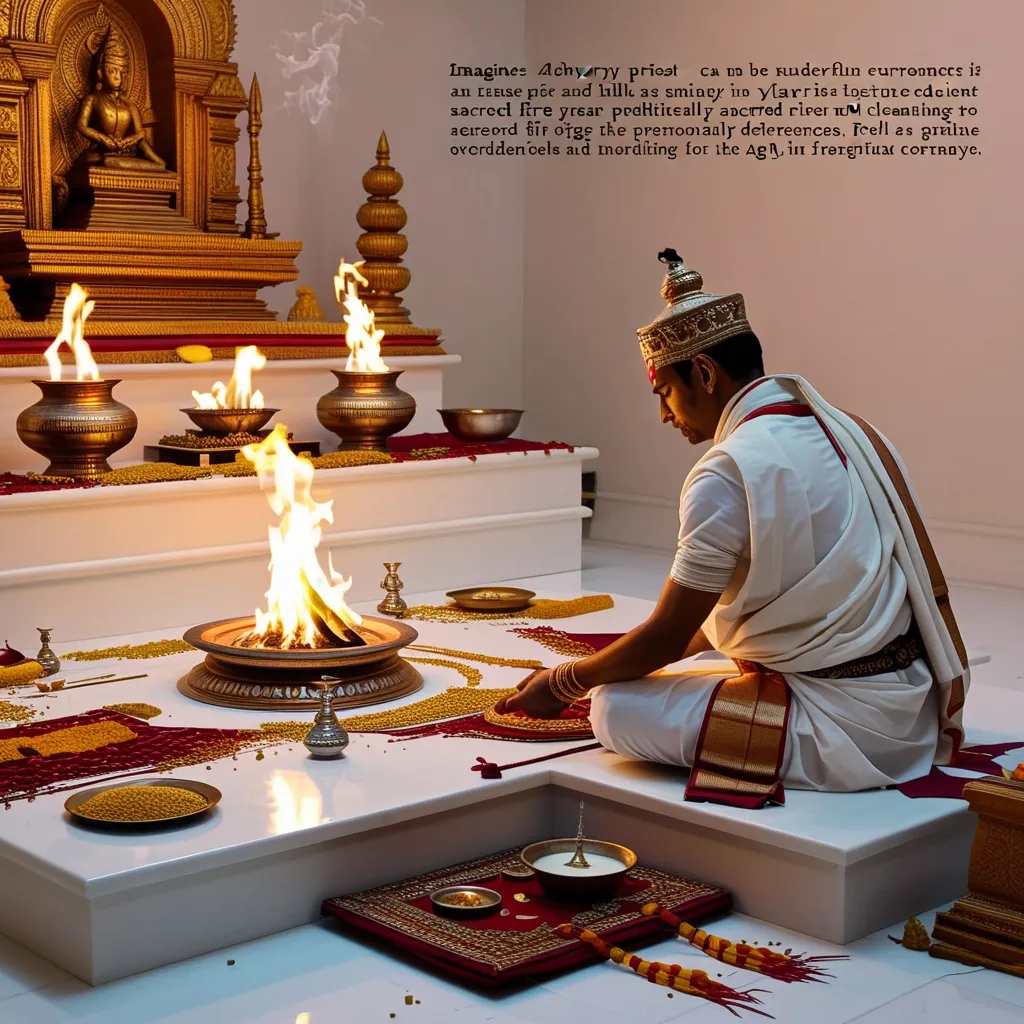
But here’s where things get really interesting. The Vedas don’t just measure time mechanically. They assign qualities to different temporal periods. The ancient texts describe something called the Brahma Muhurta, the period roughly one to two hours before dawn. This time carries a specific quality called Sattvic—pure, clear, and peaceful. During these hours, the atmosphere itself is said to be saturated with clarity and spiritual potential. This is why traditional wisdom recommends meditation and spiritual study during this window.
Have you ever noticed how some hours of the day feel naturally conducive to certain activities? Solar noon, when the sun reaches its peak, carries a Rajasic quality—energetic, dynamic, and assertive. This is ideal for physical work, business decisions, and tasks requiring courage. Sunset represents a transition point, a boundary between day and night, making it particularly potent for rituals of closure and introspection. Each moment has its own character.
The Vedic science of time goes even deeper. It incorporates something called Samaya, which means “the right moment.” This is the auspicious juncture for beginning significant endeavors. The whole discipline of Jyotisha, often called Vedic astrology, emerged as a practical tool for identifying these moments. By observing the movements of celestial bodies—the planets and their positions relative to the stars—practitioners could determine which periods favored specific activities.
This was not about blind superstition. Think of it this way: if we accept that the moon influences ocean tides, why would we assume it has no effect on the fluid human body? If gravitational forces from distant planets shape the very fabric of space around us, why would they not influence the energetic fields in which we live? The Vedic understanding proposed that by timing our actions to align with these cosmic currents, we work with nature rather than against it.
The texts describe vast cyclical ages called Yugas. The current age, the Kali Yuga, is characterized as a period of decay and spiritual darkness. But this darkness is not permanent. It follows a pattern. The Satya Yuga, an earlier age, was characterized by truth, harmony, and spiritual enlightenment. Before that came the Treta Yuga, and before that the Dvapara Yuga. These cycles repeat endlessly, suggesting that existence itself pulses between periods of growth and decline, clarity and confusion, order and chaos.
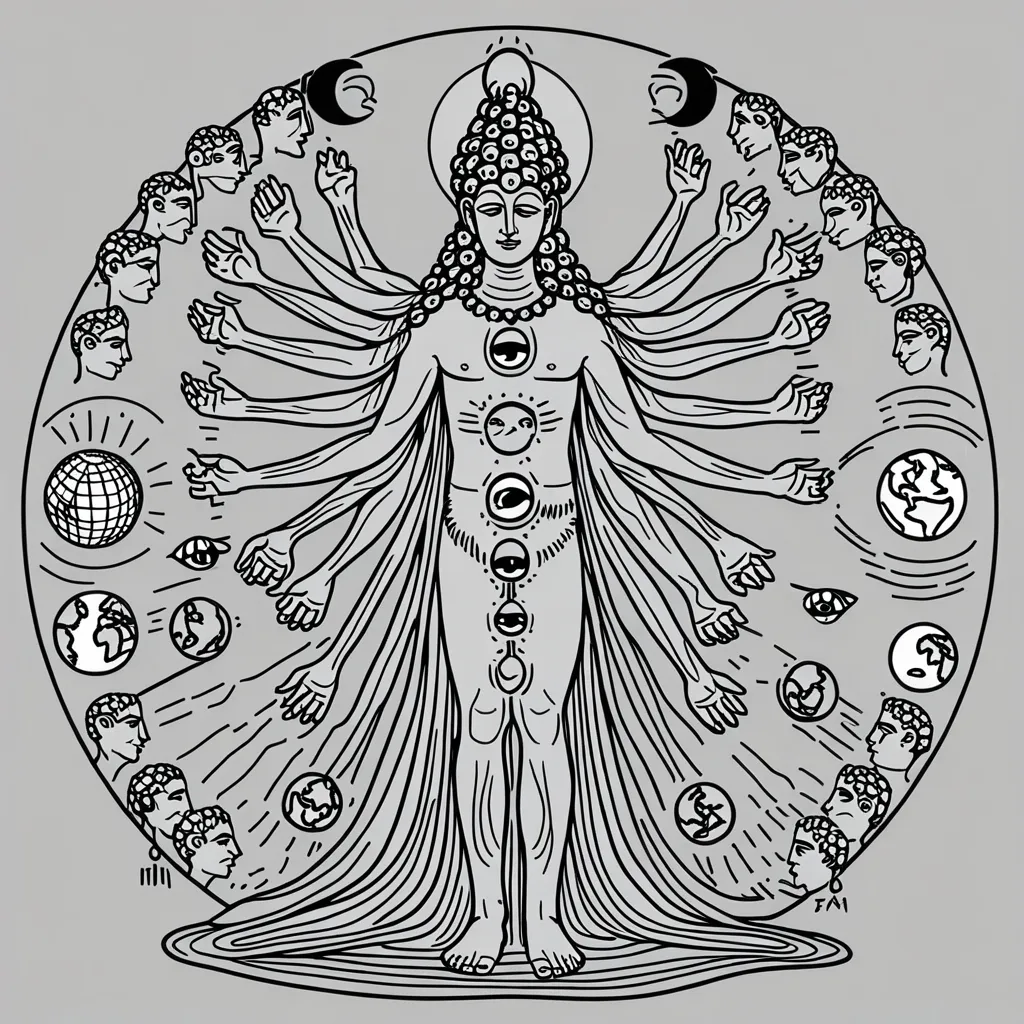
What strikes me as particularly profound is how the Vedas understood time as relative. This is not a modern discovery. The ancient texts describe how time flows differently in different realms. What constitutes one day for beings in higher dimensions might equal thousands of years in our experience. One text mentions that when Krishna extended a night for the Gopis who came to dance with him, he stretched a single night to last the equivalent of one full day in Brahma’s existence—billions of human years compressed into their subjective experience.
This is precisely what Einstein would later describe as time dilation. Different observers in different gravitational fields or moving at different velocities experience time at different rates. The Vedic sages arrived at this understanding through contemplation rather than mathematics, but the insight remains identical.
“The same moment which brings awareness of death also brings the awareness of timelessness.” - Ancient Vedic Wisdom
Consider how modern life has disconnected us from natural time rhythms. We sleep under artificial lights, wake at alarm clocks, and work under fluorescent bulbs regardless of whether the sun is up or down. We eat the same foods at the same times year-round, ignoring seasonal variations. Our bodies operate on a circadian rhythm evolved over millions of years, yet we constantly force ourselves out of sync with it.
The Vedic approach suggests that much of our anxiety, fatigue, and sense of being rushed stems not from having too little time, but from acting in opposition to the inherent grain of temporal moments. When we work against the natural rhythm of the day, week, season, and larger cycles, we experience friction and resistance. When we align with these rhythms, the same tasks flow with ease.
The ancient system offers practical tools for realignment. Waking near dawn, even if just an hour before sunrise, synchronizes our biology with the planet’s rotation. Our cortisol levels naturally peak in early morning, supporting alertness and clarity. Observing the moon’s phases brings awareness to our own cyclical patterns. Most people don’t realize that their energy, mood, and emotional sensitivity follow monthly rhythms mirroring the lunar cycle. Women’s menstrual cycles represent an obvious example, but all humans experience these fluctuations.
Setting aside even fifteen minutes in the Brahma Muhurta for quiet reflection can disproportionately affect the quality of your entire day. Rather than immediately diving into tasks, you create a buffer of peaceful awareness. This small shift reshapes how you approach subsequent hours. You stop simply reacting to events and start consciously engaging with the day’s unfolding.
On a deeper level, the Vedic understanding of time reveals something revolutionary about consciousness itself. The texts suggest that our sense of self—our individual identity—is inseparable from temporal experience. We experience time because we experience change. We identify with memories of the past and anticipations of the future. The eternal present moment, which actually contains all reality, remains largely invisible to ordinary consciousness because we constantly project ourselves backward and forward.
Have you ever had an experience where you lost all sense of time? These moments occur during deep focus, genuine creativity, or meditation. In such states, the usual mental chatter quiets down. The obsessive comparison between past and future relaxes. What remains is pure presence. The Vedic path teaches that this state of timelessness coexists with temporal experience. You don’t escape time by transcending it. Rather, you realize that the eternal and the temporal are not opposites but different aspects of the same reality.
The ultimate teaching points toward what might be called temporal freedom. The ancient sages sought liberation from what they called the cycle of Samsara—birth and death repeating endlessly. Yet this liberation was never conceived as an escape from the world or from time’s passage. Rather, it was a transformation of consciousness such that one could dwell in the timeless ground of reality while fully participating in the dance of moments, seasons, and ages.
The practical remedy this science offers to modern temporal anxiety is profound. Instead of “saving time” as if it were a scarce commodity to accumulate, we shift toward recognizing “sacred time”—different qualities and potentials available in each moment. Instead of treating all hours as equivalent and replaceable, we develop sensitivity to the grain of time itself.
This transforms daily life from a relentless drive against the clock into a conscious dance with the cosmos. Your productivity actually increases because you stop wasting energy fighting against natural rhythms. Your stress decreases because you move with rather than against the current. And deeper still, your sense of meaning expands as you recognize that your fleeting individual life participates in something vast and enduring—the rhythmic pulse of existence itself.
Time, understood this way, becomes neither an enemy to defeat nor a resource to hoard, but a living dimension of reality to honor, learn from, and ultimately, to transcend while fully inhabiting.