The Vedic Five Elements: Ancient India's Blueprint for Understanding Everything Around You
Discover the Vedic five elements — Earth, Water, Fire, Air & Ether — and how this ancient system maps your body, mind, and reality. Read to explore the full framework.
The moment you wake up, you are already surrounded by five things that ancient India said make up everything — your body, the chair you sit on, the water you drink, the air you breathe, and the space around you. Not five chemicals. Not five particles from a laboratory. Five elements. Earth, water, fire, air, and ether. The Vedas — some of the oldest texts humanity has ever produced — were saying this thousands of years ago, and the more you look at it, the harder it gets to dismiss.
Most people have heard of the four Western classical elements. The Vedic system quietly goes one step further with a fifth — ether, or Akasha — and that one addition changes everything about how you understand reality.
“The whole universe is pervaded by me in my unmanifest form. All beings exist in me, but I do not reside in them.” — Bhagavad Gita, Chapter 9
Let’s start with the one you feel most literally under your feet.
Earth — the element nobody talks about emotionally
Earth (Prithvi) is obvious when you think about rocks, soil, and bones. But here’s what most people miss — it also governs your psychology of patience. When someone calls a person “grounded,” they are, without knowing it, speaking the language of this element. In the Vedic view, your bones are not just calcium and phosphorus. They are earth expressing itself through form.
The sense organ linked to earth is smell. Think about that for a second. Smell is the most primal, the most memory-triggering of all our senses. Scientists know it bypasses the rational brain and hits the emotional centers directly. The Vedas connected this to earth — the most foundational element — long before neuroscience had a word for the olfactory system.
When your earth element is disturbed, you don’t just feel physically heavy. You become stubborn, immovable in thought, resistant to change. Recognizing this pattern gives you something most people never have — a roadmap to why you feel the way you feel.
Water — not just fluidity, but cohesion
Here’s a fact that surprises people. The Vedic quality assigned to water (Jala) is not just flow — it is cohesion. Water holds things together. Your blood doesn’t just flow; it carries, binds, connects cells to nutrition. Lymph doesn’t just drain; it links your immunity into a single coordinated system.
The sense organ for water is taste. And taste, when you think about it, requires moisture. A completely dry tongue tastes nothing. Without water, even the experience of flavor disappears. This connection between water and taste in the Vedic system wasn’t metaphor. It was precise observation.
“Be like water making its way through cracks. Do not be assertive, but adjust to the object, and you shall find way round or through it.” — Bruce Lee
Vedic rituals use water more than any other physical substance. Not because it’s common, but because the ancient teachers understood it cleanses at more than one level. The subtle body — the energy layer around the physical — was believed to hold impressions the way cloth holds dye. Water, used with intention, could wash those impressions too.
What does your relationship with water look like day to day? Do you drink enough, or do you run on coffee and ignore the signal?
Fire — the one element that demands something from you
Fire (Agni) is the only element that requires fuel from outside itself to continue. It is inherently transactional. The Vedic concept of Jatharagni — the digestive fire — treats your gut not as a processing machine but as a sacred flame that must be fed correctly to keep burning well. Ayurveda, which grew directly from Vedic thought, builds its entire dietary framework around this single idea.
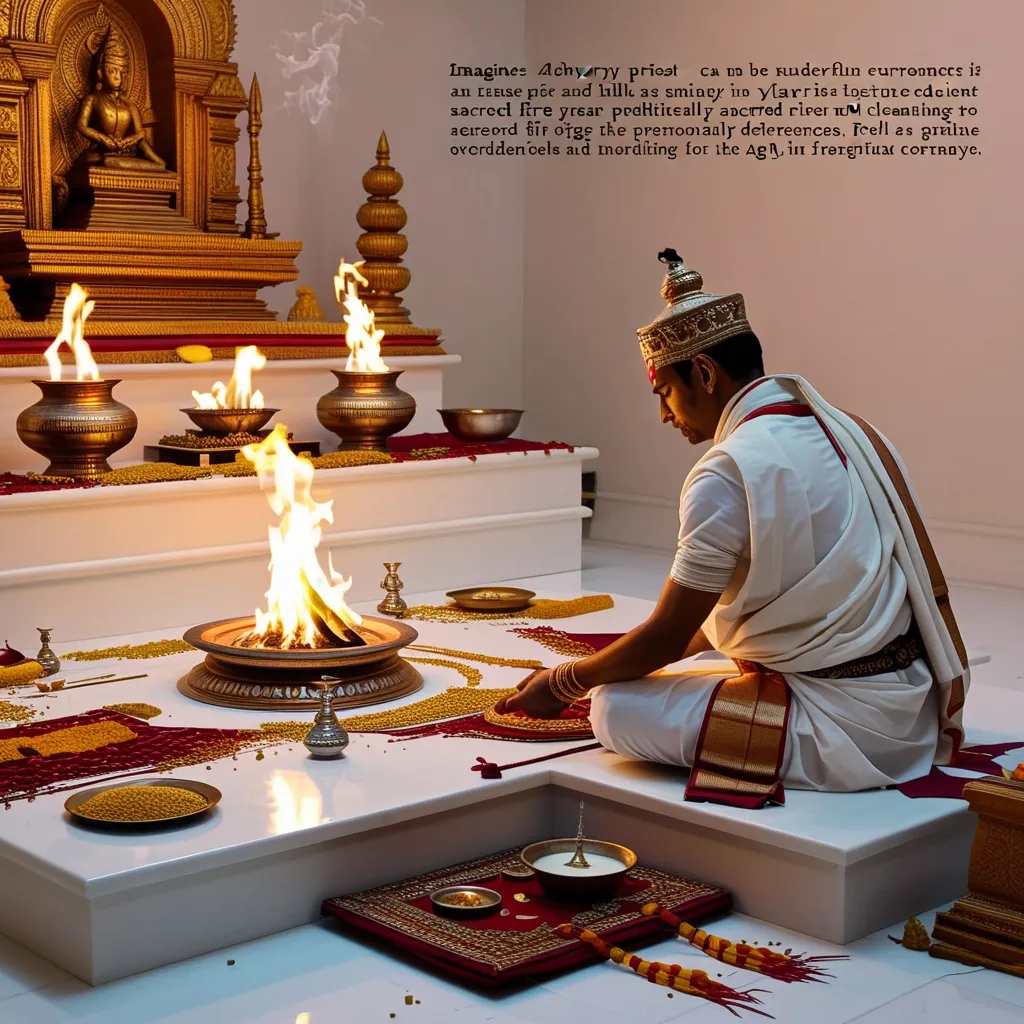
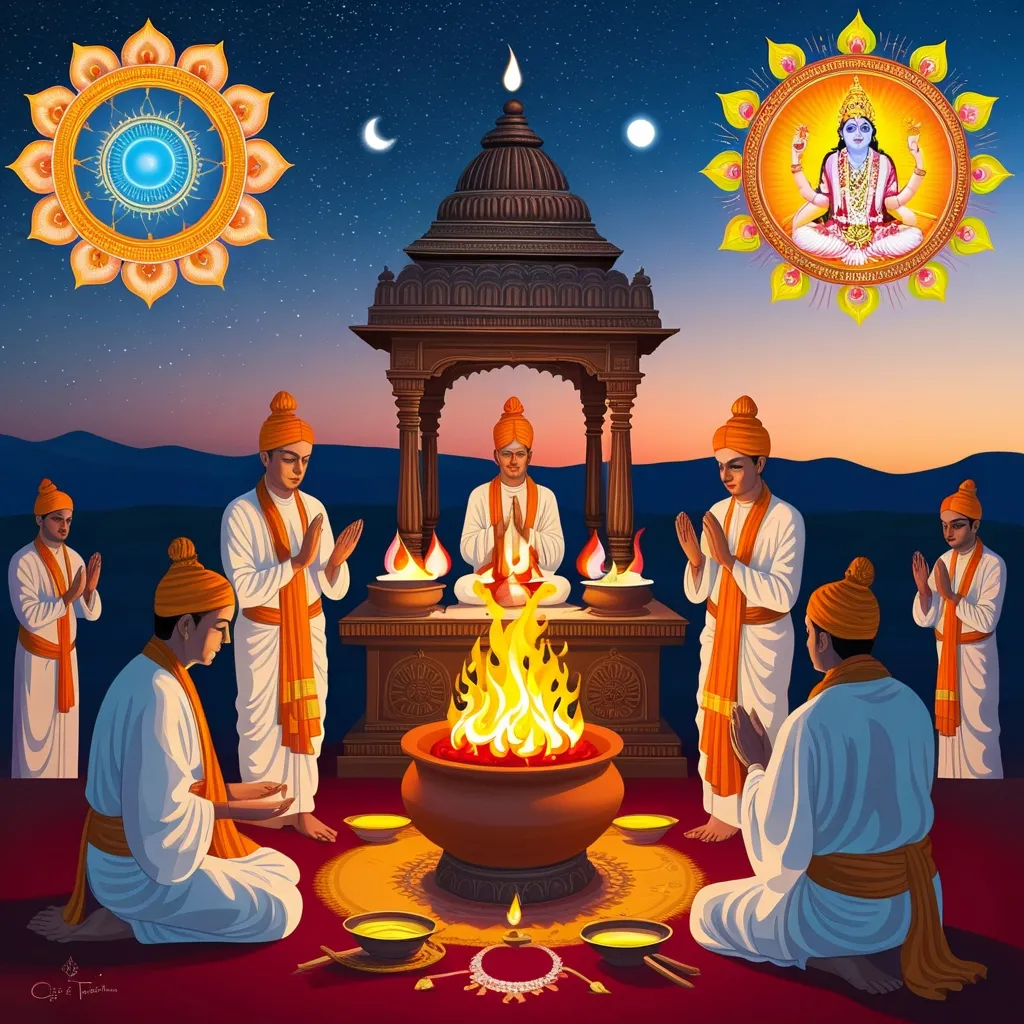
The sense linked to fire is sight. Light makes vision possible. No fire, no light, no sight. But the Vedic connection goes deeper — fire also governs discernment, the inner vision that lets you see clearly what is real and what is illusion. The sacred yajna fire used in Vedic ceremonies was not theater. It was a living symbol of this inner transformative process, the burning away of what is no longer needed.
People fear transformation because it feels like loss. Fire says that’s exactly what it is — and that’s why it works.
Air — the element of your nervous system
Most people think of air (Vayu) as wind or breath, and stop there. The Vedic teachers went much further. Air governs nerve impulses, the speed of thought, and the entire principle of communication between body parts. When you feel anxious, scattered, or unable to sit still, that is air in excess. When you feel sluggish and your thinking slows, that is air in deficiency.
The sense organ linked to air is touch — the skin, the most extensive sensory organ in the body. Touch communicates without words. A hand on a shoulder carries information that speech cannot. The Vedas understood the connection between movement, breath, and human contact long before the field of somatic psychology existed.
Pranayama — breath control — is essentially the technology built to work with this element directly. Not as a relaxation technique, but as a precise tool for adjusting the quality of your mind.
“Feelings come and go like clouds in a windy sky. Conscious breathing is my anchor.” — Thich Nhat Hanh
Have you ever noticed how your breathing changes with your mood — and how deliberately changing your breath then shifts your mood back?
Ether — the one most people cannot wrap their heads around
Ether (Akasha) is where it gets genuinely strange. It is not empty space in the way a box is empty. In Vedic thought, ether is the medium in which all other elements exist. It is the silence that makes sound meaningful. Without space, no form can exist. Without silence, no note of music lands.
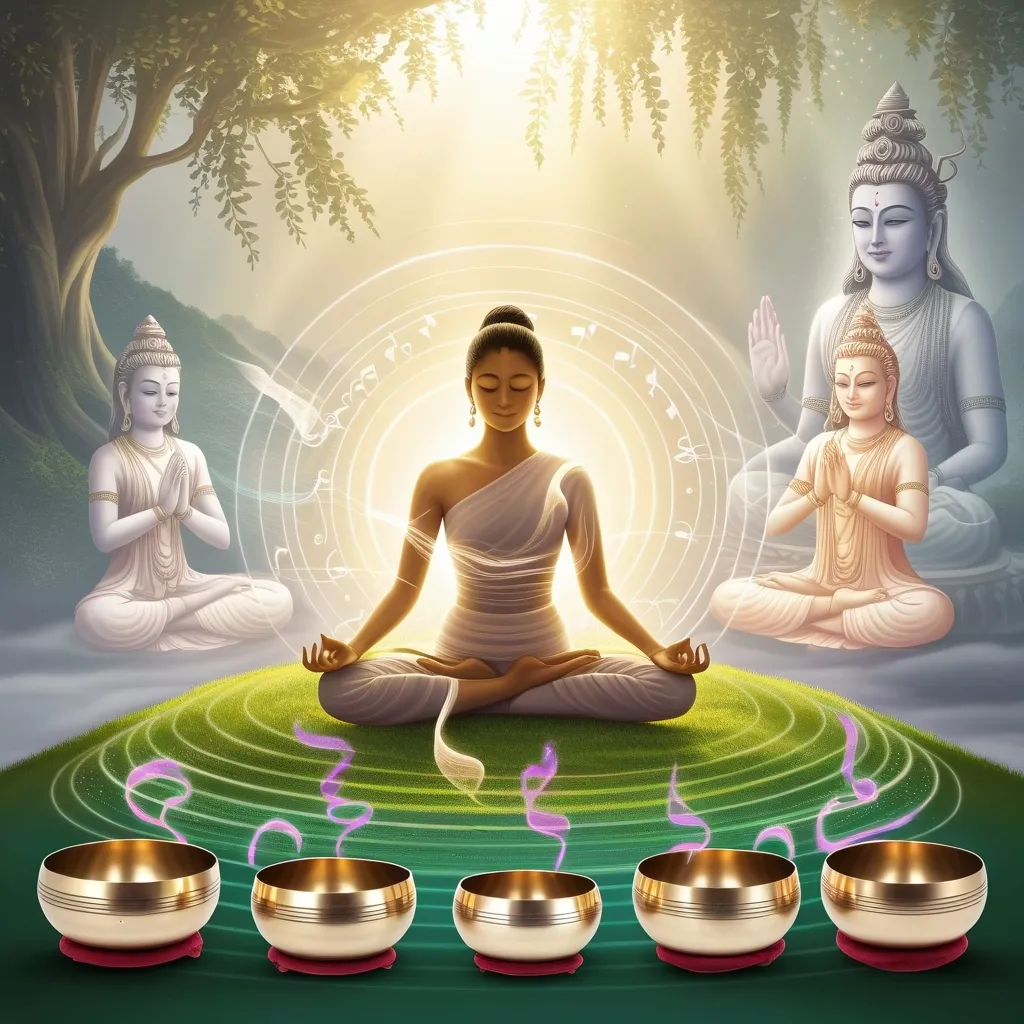
The sense organ for ether is hearing. Sound travels through space. But more than that, the Vedic view holds that sound — particularly Nada, the sacred sound — was the first expression of the universe coming into existence. This is why mantra sits at the center of Vedic practice. It isn’t religion in the popular sense. It is working directly with ether, the subtlest material layer, using sound as the tool.
Meditation, in the Vedic tradition, is ultimately the practice of resting in ether — becoming aware of the space between thoughts, the silence beneath noise, the gap between one breath and the next.
Why all five matter together
The five elements are not a list. They are a spectrum. From ether — the subtlest — down through air, fire, water, and finally earth — the densest. The human body contains all five, and every experience you have involves some combination of them shifting in proportion.
A heavy meal adds earth. A fever is fire overrunning water. Grief, which tightens the chest and makes breathing shallow, is air being blocked. Meditation opens ether. Every day of your life is a conversation between these five.
“Man is not a body. He is a force — the sum of all force, the sum of all elements.” — Vivekananda
What the Vedic system offers is something modern medicine, for all its brilliance, still lacks — a single unified map where matter, energy, mind, and awareness exist on one continuous spectrum rather than in separate boxes with different specialists managing each one.
The Taittiriya Upanishad describes five sheaths of the self, starting with the physical body made of food — meaning made of elements — and moving progressively inward toward pure awareness. The elements are not the end of the story. They are the first chapter.
The ancient teachers weren’t saying you ARE earth, water, fire, air, and ether. They were saying you are wearing them — and beneath all five, something else entirely is watching.
That’s the real question the Vedic five elements eventually asks you: if you peel away every layer of matter, every element, every sensation — what’s left?