Ancient Indian Puranas Reveal 7 Cosmic Realms Beyond Our Universe: The Hidden Map of Existence
Discover the seven cosmic realms (Lokas) in ancient Indian Puranas - from Svarga's celestial bliss to Satya Loka's ultimate truth. Explore this mystical map of existence and consciousness.
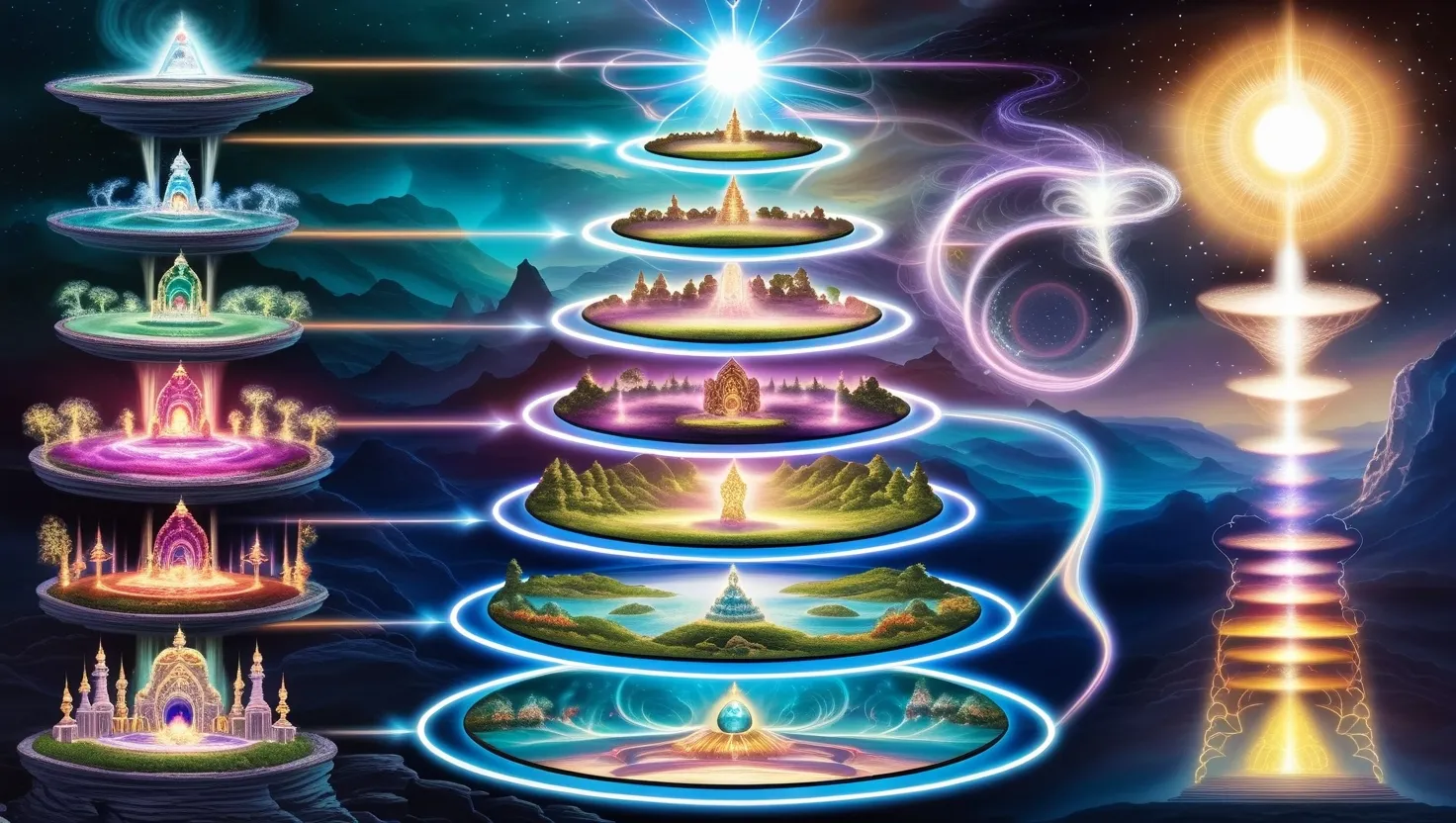
If you’ve ever gazed up at the night sky and wondered what lies beyond, you’re not alone. Ancient Indian texts suggest that our universe is far more intricate than we imagine. The Puranas, a collection of mythic and philosophical works, lay out a detailed map of existence that stretches well beyond the boundaries of our visible world. These texts describe seven distinct cosmic realms, or Lokas, each presenting a unique environment, purpose, and possibility for the soul’s journey. As I walk you through these otherworldly domains, let’s question what these realms could mean for our understanding of life, consciousness, and purpose.
“Not only is the universe stranger than we imagine, it is stranger than we can imagine.” — J.B.S. Haldane
The idea that existence consists of many worlds stacked above, below, and around us finds echoes in many cultures. Yet, the Puranic model stands out for its complexity and the psychological depth with which it treats both higher and lower planes. These Lokas are much more than places; they are subtle states of being, reflecting our actions, desires, wisdom, and illusions. Let’s start with the most celebrated of the seven: Svarga Loka.
Svarga Loka is often mistranslated as heaven. In the Puranas, however, it’s more nuanced — a realm of magnificent pleasure ruled by Indra, where souls experience the fruits of good karma. Here, celestial gardens overflow with fragrance, rivers of nectar flow freely, and divine musicians play melodies beyond human imagination. Yet, this bliss is always tinged with impermanence. Souls can’t linger here forever; once their good deeds are exhausted, they return to earth. This concept subtly hints at a critical truth: pleasure, even the most refined, is ultimately ephemeral.
“In the midst of movement and chaos, keep stillness inside of you.” — Deepak Chopra
As I contemplate the realms below the earth, I’m struck by how the Puranas resist simple moral binaries. The netherworlds, collectively called Patala Loka, consist of seven levels, each with its own rulers, cities, and societies. Most would expect these domains to be bleak or infernal, but the descriptions often paint them as vibrant, even luxurious. Magnificent palaces studded with jewels gleam in subterranean darkness, and the serpent beings (Nagas) rule with knowledge of the earth’s hidden powers. Does this structure suggest that our buried instincts and shadowy aspects carry both danger and the seed of untapped potential?
Turning to Naraka Loka, I find one of the most misunderstood realms. Often equated with hell, it is instead a place of karmic education. Souls face the consequences of their actions in environments tailored to purify and redirect them. The Puranas narrate countless hells — each aligned with a particular misdeed, from greed to violence to betrayal. Yet, the suffering endured here isn’t eternal. Once the soul’s negative karma is expunged, it’s free to move on. This perspective softens the idea of retribution, making it a process of learning rather than a final sentence. Isn’t that a profound divergence from conceptions of eternal damnation?
“He who learns but does not think, is lost! He who thinks but does not learn is in great danger.” — Confucius
Ascending from Svarga, we encounter Mahar Loka — a plane reserved for sages and ascetics. What makes this realm fascinating is its resilience; even during cosmic dissolutions that sweep away lower worlds, Mahar Loka endures. Its inhabitants are not content with fleeting pleasure or power. They immerse themselves in contemplation, seeking wisdom that outlasts the cycles of creation and destruction. Here, the currency is not merit, but insight. What might our world look like if we valued inner wisdom above achievement or status?
Jana Loka offers another curious alternative. Created by Brahma as a home for his mind-born sons, it’s inhabited by beings like the Sanat Kumaras, eternally youthful in spirit as well as appearance. The prevailing mood here is one of pure, desireless consciousness — a living demonstration of how letting go can yield deeper contentment than chasing dreams. Residents of Jana Loka have no attachment to the outcomes of their actions. Have you ever wondered what it would be like to be motivated solely by curiosity, rather than by reward or recognition?
“It is not the answer that enlightens, but the question.” — Eugène Ionesco
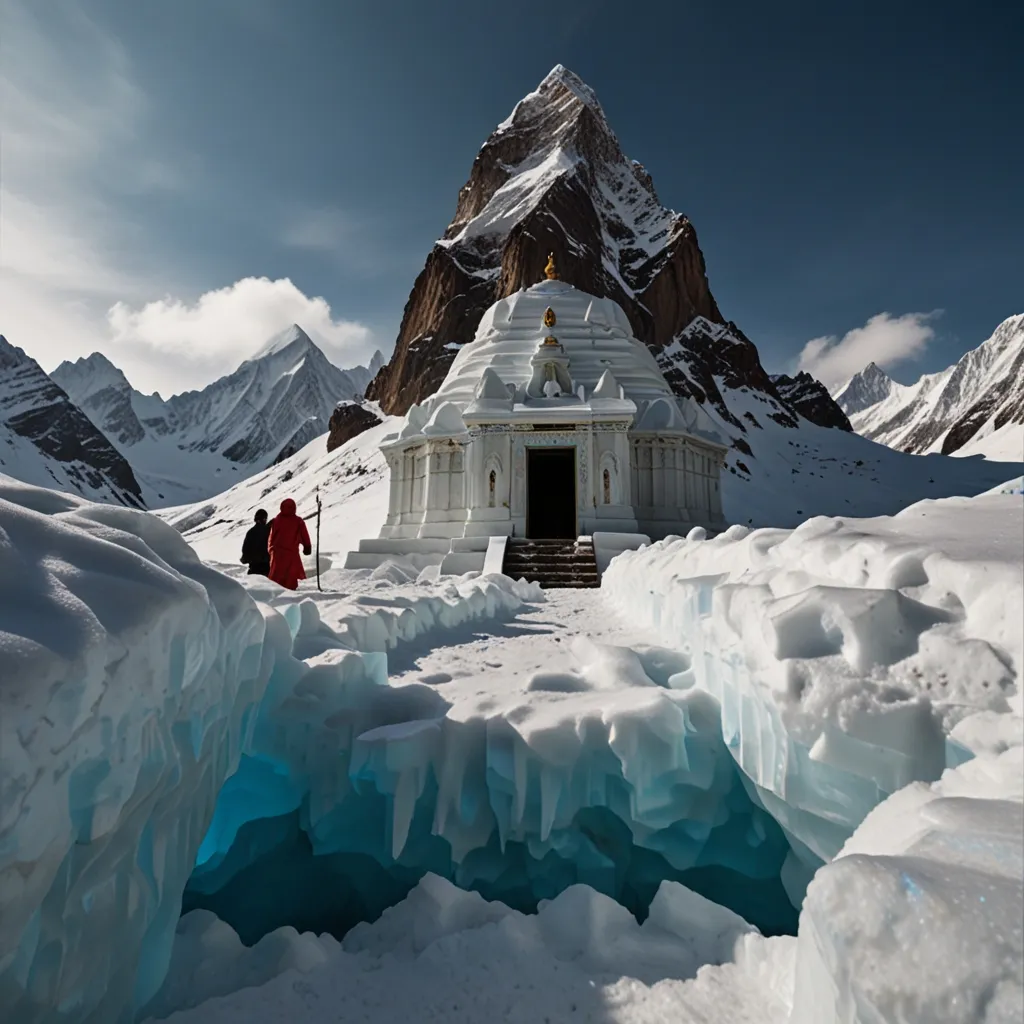
The next stop is Tapo Loka — a realm reserved for those who’ve perfected themselves through austerity and meditation. The beings here radiate an inner fire, the product of sacrificing immediate comfort for a higher goal. In the modern world, we often shy away from hardship, yet Tapo Loka teaches that disciplined effort can transform us into something luminous. Even gods aspire to ascend here, the Puranas say. Does this idea resonate with the discipline required for scientific discovery, artistic mastery, or spiritual awakening in our own lives?
At the summit stands Satya Loka, the luminous domain of Brahma. Here, dualities drop away; only pure consciousness and ultimate truth remain. Souls that arrive at Satya Loka no longer cycle through birth and death during the universe’s current age. The descriptions suggest a realm so refined that language falters: light without shadow, knowledge without ignorance. In such a state, liberation isn’t just freedom from suffering, but immersion in reality itself. Would you trade the rollercoaster of emotions for a steady state of wisdom and peace?
“Truth is not something outside to be discovered, it is something inside to be realized.” — Osho
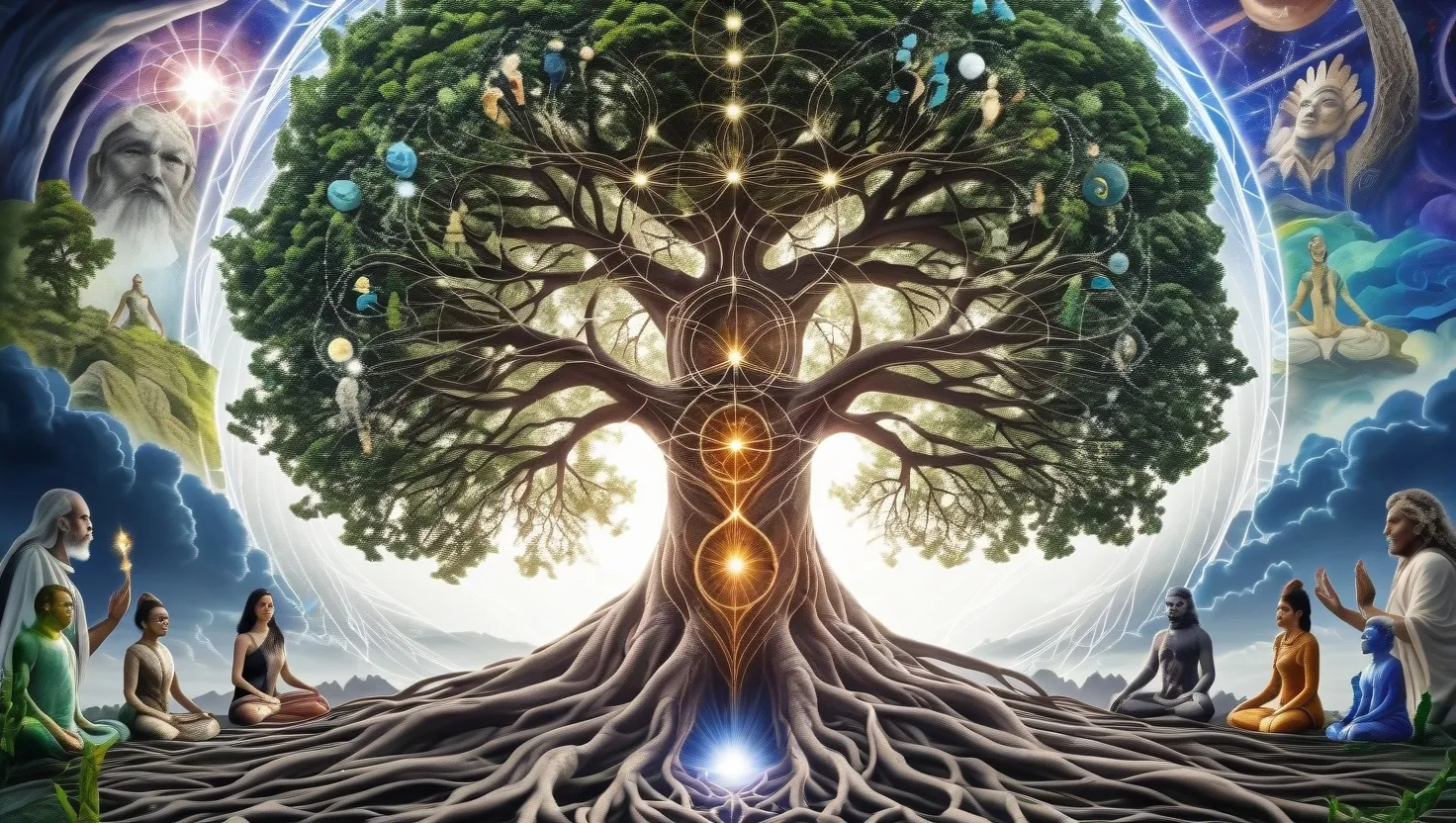
Why did the Puranas build such an elaborate vision of existence? On one level, these realms form a roadmap for the soul’s evolution. Each loka isn’t merely a destination, but a step in an expansive curriculum: the pursuit of pleasure, the experience of suffering, the acquisition of knowledge, the transcendence of desire, the triumph of austerity, and finally, the absorption into truth. This ladder of consciousness speaks to the diversity of human experience, affirming that every stage — whether joyful, painful, or serene — has its place in the cosmic order.
What sets this cosmology apart is how it mirrors our inner world. The nether regions may be hidden from daylight, but they correspond to our unconscious drives. The heavens are not only places of joy, but also of restlessness, because nothing there is permanent. The higher realms reflect the possibility of self-refinement and lasting freedom. Is it possible that these worlds are less distant than they seem — that each of us journeys through them in the course of a single lifetime, or even a single day?
As I reflect on the lesser-known details, I’m continually surprised by the Puranas’ sophistication. Patala Loka, for example, isn’t only the home of demons; it’s also the site of immense technological and architectural prowess, with cities many times more advanced than anything on earth. The beings here are not simply evil but complex, sometimes even more honest or loyal than the gods above. In Tapo Loka, the heat of austerity is described in almost scientific terms, as a force capable of bending reality itself. The sages residing on Mahar Loka are said to possess knowledge of cosmic cycles that even the gods seek.
The boundaries between these realms are not fixed. Legends abound of mortals visiting Svarga or sages descending to Patala — sometimes by accident, sometimes as a rite of passage. These stories suggest permeability, as if the universe itself is fluid and open to exploration by those who dare. At the same time, the journey from one realm to another is rarely about physical travel. More often, it’s a shift in perception, a lesson learned, a karma resolved.
“We are not human beings having a spiritual experience; we are spiritual beings having a human experience.” — Pierre Teilhard de Chardin
What fascinates me most is how deeply human aspirations and anxieties are woven into this cosmic structure. The pursuit of pleasure, the fear of suffering, the quest for truth, the discipline of self-mastery — all find their place. Yet, the system cautions against complacency on any rung. Resting in heavenly bliss is as dangerous as wallowing in lower instincts because both are temporary. Only the ongoing effort to rise, to learn, to shed ignorance leads one toward lasting fulfillment.
In our century, science explores outer space, while psychology and neuroscience plumb the depths of consciousness. The seven cosmic realms gesture toward the same infinite complexity, but they insist that the external and internal are not separate. Each realm could be read as an allegory of the mind, a phase of personal growth, or a dimension awaiting discovery in the universe.
So, as you ponder these realms described thousands of years ago, what questions do they spark in you? Do you see the seven Lokas as fantastical maps, mystical allegories, or blueprints for the soul’s potential? How might reflecting on them change your relationship to pleasure, hardship, knowledge, or truth?
The Puranic cosmology does not demand belief so much as it invites imagination and inquiry. If existence is as layered and varied as these texts suggest, perhaps our job isn’t to find all the answers, but to keep asking bigger, bolder questions. In doing so, we draw a little closer to the cosmic mysteries that have called to humanity since the first person looked up and wondered, what worlds lie beyond our own?