What Ancient Secrets Did Vishwamitra Unlock on His Epic Journey?
The Relentless Pursuit of Enlightenment: Vishwamitra's Epic Journey
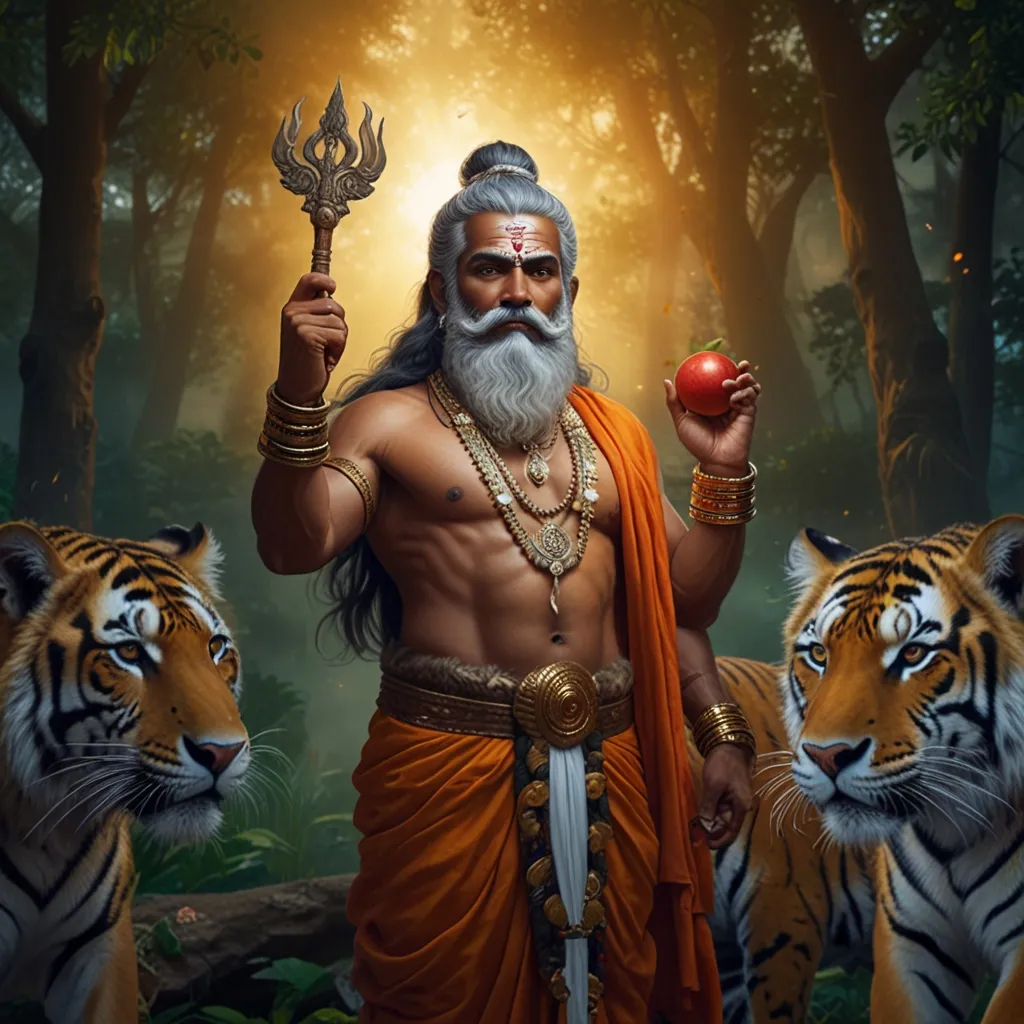
Long ago in the ancient lands of India, there was this badass king named Vishwamitra. He wasn’t just any king; he packed a punch with his warrior skills and ruled Kanyakubja pretty smoothly, earning lots of love and respect from his people. His reign flourished and life in his kingdom was as good as it gets.
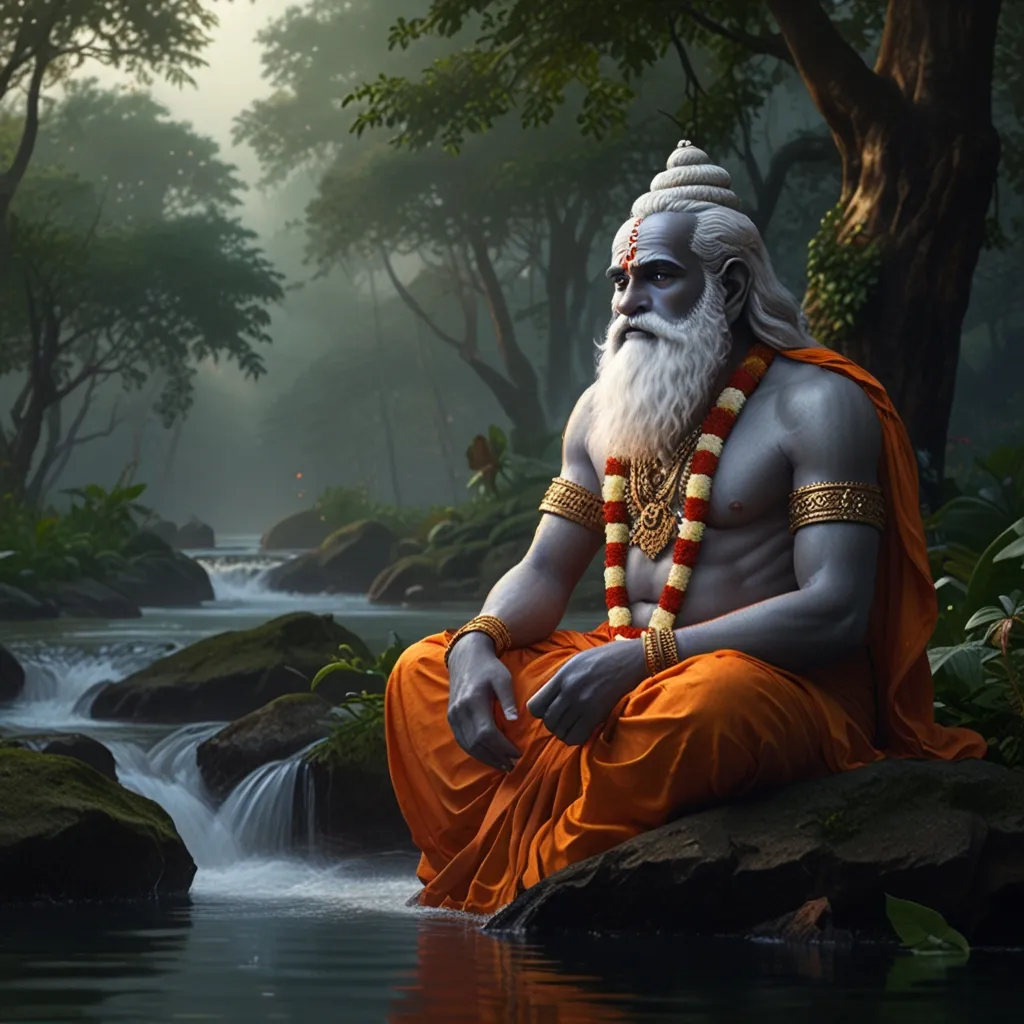
Now, one fine day, Vishwamitra decided to go on one of those classic royal expeditions. Deep in the forest, he stumbled upon a scene straight out of a Disney movie—tigers chilling next to cows and lions walking alongside deer. Intrigued, Vishwamitra found his way to a hermitage and met the wise sage Vashishta. Vashishta was generous and offered him fruits, welcoming him with open arms. But Vishwamitra wasn’t just there for a snack; he had a burning desire to become a Brahmarshi, the ultimate sage rank. He saw this serene retreat as the perfect starting point for his spiritual journey.
This wasn’t just a fleeting thought for Vishwamitra. The longing to become a Brahmarshi had deep roots. He kick-started his penance, living on air alone and performing extreme austerities. Imagine standing on one leg in blazing heat, enduring relentless rains, and freezing cold—this guy did it all. His intense dedication sent shivers down the gods’ spines. They sent the apsara, Menaka, a heavenly beauty, to distract him. Her charm was irresistible, and Vishwamitra fell hard, leading to a passionate romance that lasted ten years and even resulted in a daughter named Shakuntala.
Eventually, Vishwamitra wised up, realizing that Menaka was merely a divine distraction. Heartbroken, he sent her back to heaven and dove right back into his meditation, more determined than ever. The gods made a second attempt to throw him off by sending another apsara, Rambha. This time, Vishwamitra was ready. He withstood her beauty, cursed her into becoming a rock for 10,000 years, and carried on with his severe penances.
But life dealt him a tough hand. Vishwamitra had a famous rivalry with Vashishta that resembled an epic saga. The fireworks started when Vishwamitra saw Vashishta’s divine cow, Nandinī, and wanted to take her. Vashishta wasn’t having any of that—what ensued was a battle for the books, with Vashishta coming out on top. Crestfallen, Vishwamitra walked away from his kingdom and resumed his spiritual exercises in the forest.
Their clashes are the stuff of legend, but Vishwamitra’s interactions weren’t just limited to Vashishta. Enter King Harishchandra, whose truthfulness Vishwamitra decided to test. Harishchandra ended up begging in the streets due to Vishwamitra’s trial. And then there’s Triśaṅku, a king ousted for his misdoings, who crossed paths with Vishwamitra’s family in the forest. Triśaṅku tried to help but ended up killing Vashishta’s cow. That got him a rock-solid curse, transforming him into a low-caste man. Despite the bumps, Triśaṅku managed to reclaim his kingdom, thanks to a goddess’s blessings.
Vishwamitra’s epic penance and fierce resolve earned him the title of a royal hermit, and he went on to grasp the true power of the Gayatri Mantra. For the uninitiated, the Gayatri Mantra is like the holy grail of Hinduism. Only 24 rishis have fully understood its essence, and Vishwamitra was numero uno on that list.
After years and years of relentless toil, Brahma, the god of creation, finally showed up, granting Vishwamitra the coveted Brahmarshi status. Boom! Dream achieved. Vishwamitra’s journey stands as a powerful tale of sheer willpower and grit.
To this day, Vishwamitra is revered, admired for his wisdom and spiritual achievements. His story doesn’t just tell us about divine encounters and epic battles. It’s a timeless reminder that with fierce determination, nothing is out of reach.