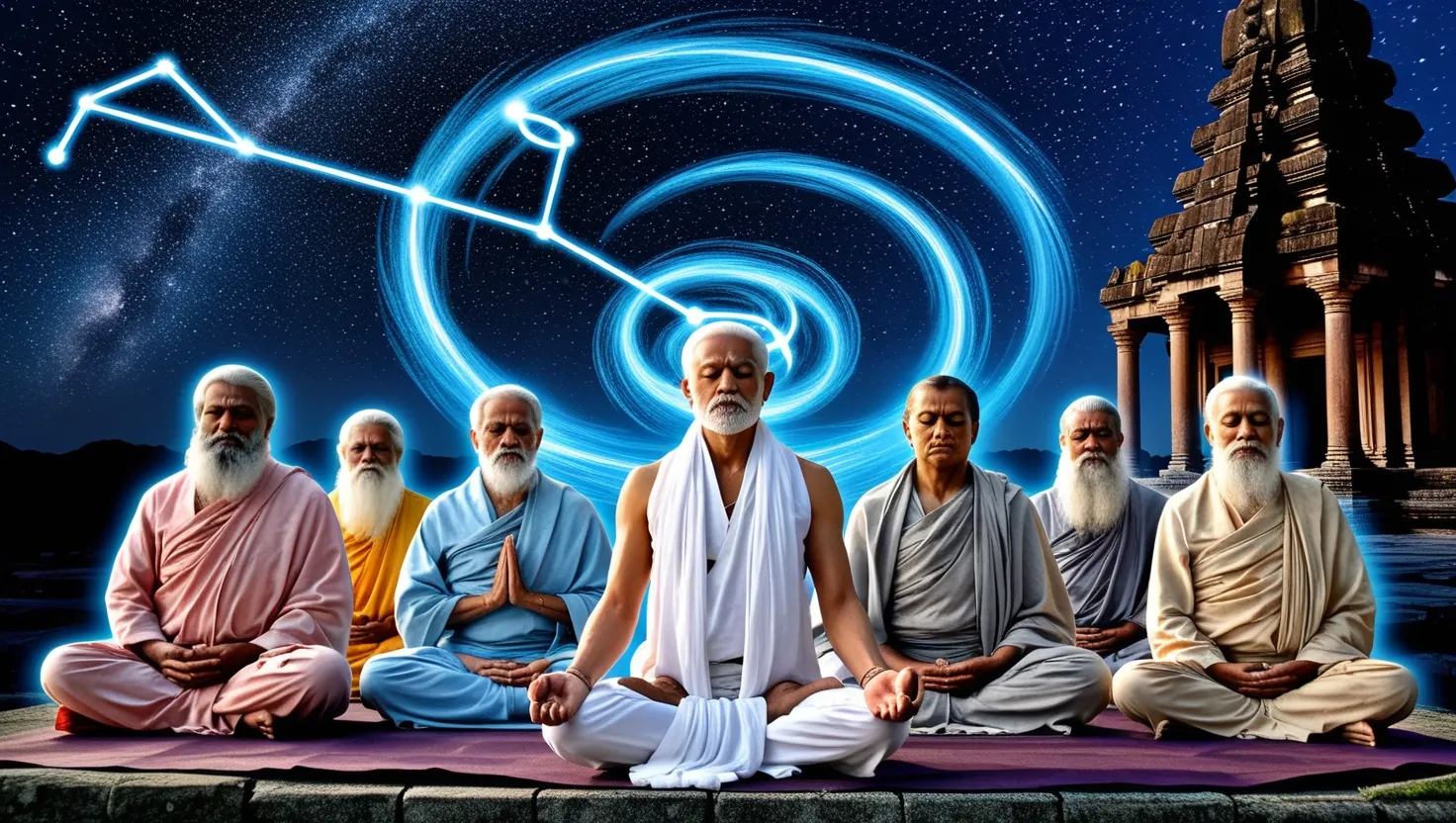
Saptarishi Astrology, a branch of Vedic astrology, focuses on seven sages and their cosmic cycles. It divides time into 2,700-year periods, each ruled by a sage. This system uses lunar mansions (Nakshatras) to predict global events and understand personal traits. It offers a unique perspective on the connection between celestial movements and human destiny, blending mythology, astronomy, and spirituality.
Rasayana, an ancient Ayurvedic practice, offers a holistic approach to wellness. It combines herbal remedies, dietary habits, and spiritual disciplines to enhance longevity and vitality. Rasayana aims to balance Ojas and Prana, vital energies in the body. It promotes a lifestyle in harmony with nature, emphasizing physical activity, meditation, and compassionate behavior. This practice remains relevant today, offering a path to rejuvenation and spiritual growth.
The Saptarishis, seven great sages in Hindu mythology, are crucial figures who shaped spiritual and cultural heritage. Born from Brahma, they contributed to Vedas, Ayurveda, and epics. Their teachings on karma, meditation, and dharma continue to inspire. They bridged divine and human realms, offering timeless wisdom for spiritual growth and ethical living.
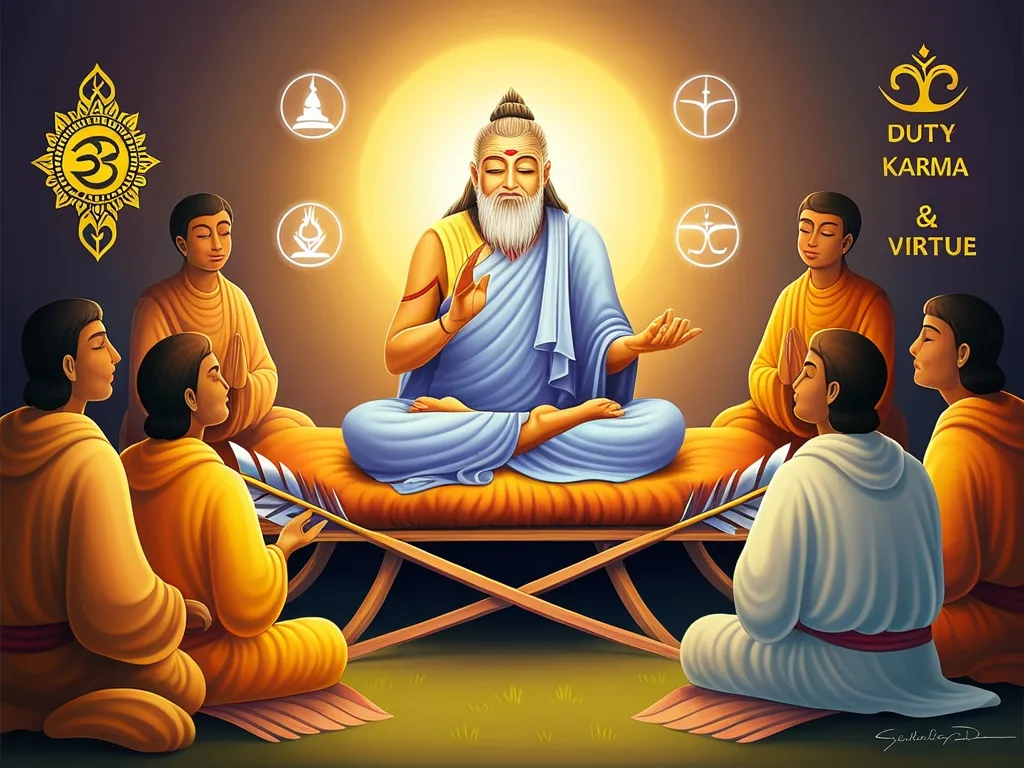
The Anushasana Parva in the Mahabharata shares Bhishma's final teachings. It covers ruler duties, karma, marriage types, and social responsibilities. The text blends stories and advice, focusing on ethics, personal growth, and living a meaningful life. Its timeless wisdom offers guidance for modern challenges, emphasizing virtue, duty, and balanced living.
Sankalpa is a powerful concept in Hindu philosophy, representing intention and resolve. It's a tool for personal transformation, aligning one's will with cosmic forces. Used in meditation and daily life, Sankalpa helps break old habits and achieve goals. It emphasizes the power of thought in shaping reality and encourages living with purpose and clarity.
Apsaras: celestial dancers in Hindu mythology. Born from cosmic ocean churning, they're beautiful, graceful, and powerful. Known for seducing ascetics and rewarding fallen soldiers, they represent desire and temptation. Depicted in art and literature, Apsaras symbolize the balance between spirituality and sensuality, offering insights into human desires and struggles.
Mahabharata's astras: divine weapons symbolizing power, ethics, and inner struggles. They teach responsibility, discipline, and moral conduct. Astras represent the balance between strength and wisdom, offering timeless lessons for navigating life's challenges and harnessing our inner potential.
The Chitraratha Parva in the Mahabharata explores karma, dharma, and free will through Arjuna's encounter with Gandharva king Chitrasena. It highlights the importance of wisdom, respect, and negotiation in life's challenges.
Hindu epics portray nature as an active participant, symbolizing dharma and cosmic harmony. Forests, rivers, and animals represent spiritual concepts, emphasizing ecological awareness and the interconnectedness of all living beings.
From Near Death to Rebirth: Bhima’s Epic Transformation in Naga Care
Churning the Ocean: Timeless Wisdom from a Celestial Epic in Hindu Mythology
An Unruly Prince: Loyalty, Cruelty, and Consequence in the Mahabharata
Dharma Personified: Vidura's Timeless Lessons in Ethical Leadership and Compassion