Some stories hurt more when we slow down and really look at them. For me, the Mahabharata is one of those stories, and the figures who sting the most are not the obvious villains, but the guides who could not save anyone, sometimes not even themselves.
Let me talk to you as if we are sitting together and rereading this huge epic slowly. I will keep it very simple. You don’t need any background. I will walk you through.
The Mahabharata is full of smart, wise, powerful people. They knew rules, ethics, war skills, politics, even philosophy that still feels fresh today. Yet, somehow, almost everything still went wrong. Have you ever wondered how a world full of “wise elders” ended in total collapse? If wisdom alone was enough, this war should never have happened.
There is a quiet, uncomfortable idea here: knowing is not the same as guiding. And guiding is not the same as saving.
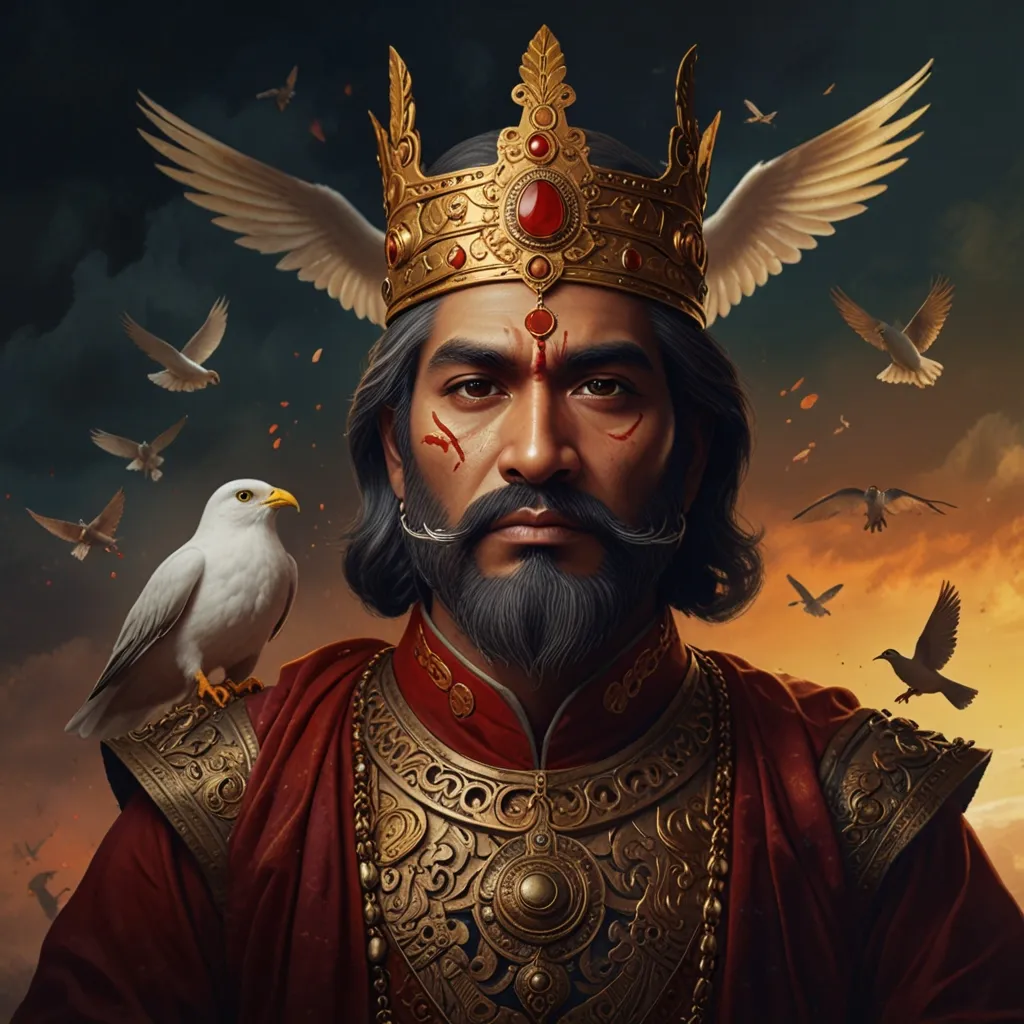
Bhishma is the first and strongest example. He is the old pillar of the Kuru house, the one everyone respects. He knows statecraft; he knows what a good king should be; he can talk for hours about duty. But his life is built on one huge decision he made as a young man: his terrible vow never to marry and to serve the throne of Hastinapura, whoever sat on it.
At first, that vow looks heroic. But as time passes, it turns into a chain around his neck.
When the blind Dhritarashtra hesitates, Bhishma advises. When Duryodhana behaves like a bully from childhood, Bhishma sees it. He even knows that the Pandavas are right and Duryodhana is wrong. But his vow to the throne locks him. He keeps saying, “This is wrong,” but he still stands in the army of the wrong side.
Is advice still moral when your sword is serving the opposite cause?
Bhishma shows us a strange truth: a vow can be more dangerous than a weakness. A weakness at least makes you hesitate. A vow can force you to support evil with a clean conscience, because you tell yourself, “I am only keeping my word.”
We usually praise loyalty as always good. But loyalty to what? Or to whom? If you are loyal to a seat instead of to justice, have you really been loyal to dharma at all?
Bhishma knew the right path but chose obedience to a promise over protection of the innocent. His curse is to watch disaster forming in slow motion and still ride with the wrong army. He shows us that a mentor can be trapped by his own past choices. Have you ever felt stuck supporting something you no longer believe in, just because you once said you would?
Now think about Drona. Drona is the great teacher of weapons, the man who trains both Kauravas and Pandavas. He gives them the skills that will later tear the world apart. On paper, a teacher is supposed to be neutral. In practice, Drona is never truly neutral.
He favors Arjuna. He pushes him harder than the rest. He calls him his best student, praises him openly, and designs tasks just to help Arjuna shine. Have you seen a teacher or coach like that? One favorite. Many others left in the shadow.
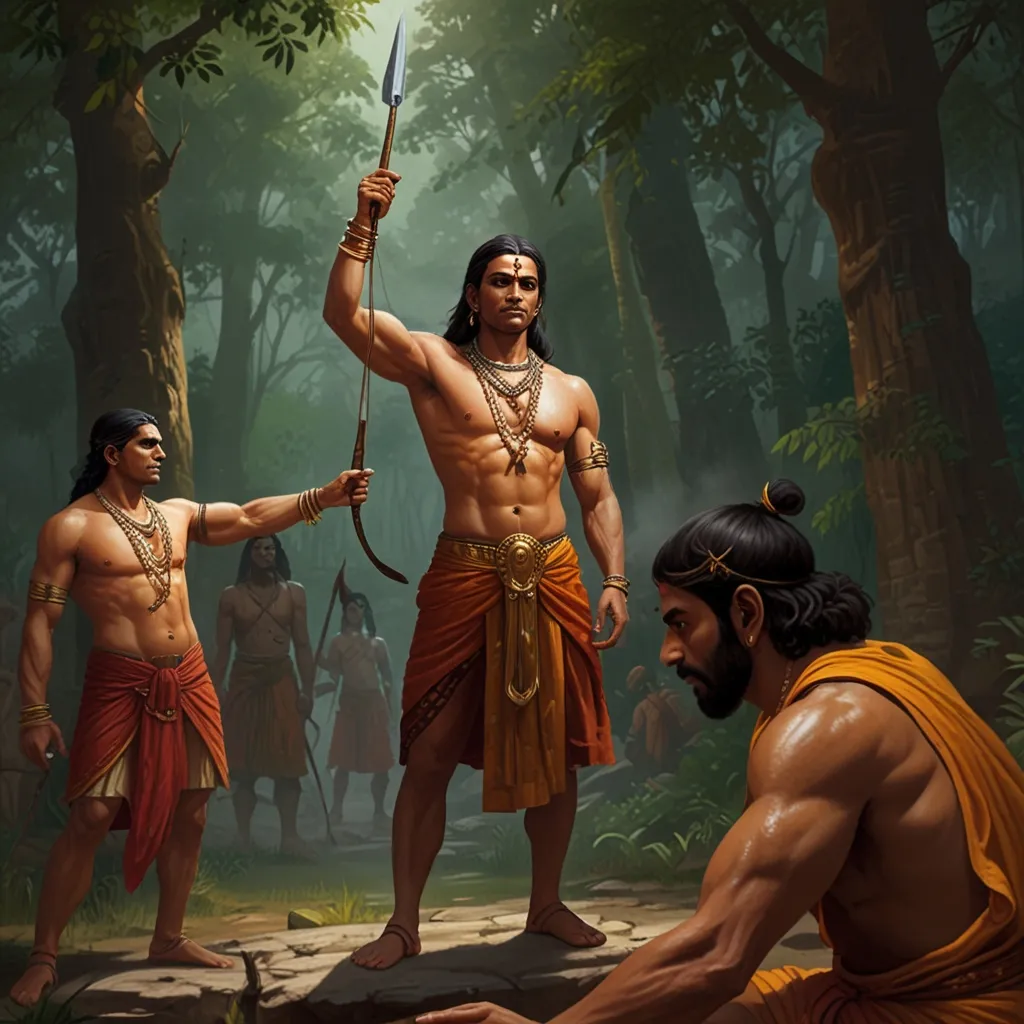
The story of Ekalavya makes this worse. Ekalavya, a boy from a lower status group, loves archery and worships Drona as his teacher in his heart. He practices secretly with a clay statue of Drona. Through raw effort, he becomes even better than Arjuna. When Drona finds out, he fears his promise to make Arjuna the greatest. So he does something cruel: he asks Ekalavya for his right thumb as “guru dakshina,” a gift to the teacher. Ekalavya gives it without protest. His archery is destroyed.
Here, the teacher is no longer a guide to justice; he becomes a guard protecting his pet student’s status.
So what is the lesson? Skill is not the same as fairness. You can be a master of a subject and still be very small in your heart. Drona can teach divine weapons but cannot treat all students as equal humans. He uses his power to cut down the threat to his favorite.
Let me ask you: if a teacher passes on knowledge but also passes on bias, is that teaching a blessing or a curse?
Later, on the battlefield, Drona fights on the Kaurava side, driven by old grudges, debts, and money offered to him by the court. The same hands that trained the Pandavas now tear through them. His teaching has no independent ethics; it serves whoever pays. In a way, Drona is a warning about education without character. We often chase “best coach, best school, best trainer.” The Mahabharata quietly asks, “Best at what? And serving whom?”
Krishna is more complicated. He is not just a wise elder; he is presented as divine, a god walking as a human. If anyone should be able to guide people to safety, it should be him. Yet he, too, “fails” in a very human way.
Before the war, Krishna goes to the Kaurava court as a peace messenger. He begs, reasons, warns. He says, in simple terms, “Give them at least a tiny share. Don’t force this war.” He offers compromise after compromise. Duryodhana refuses everything. Krishna even shows a glimpse of his cosmic form in the court to prove who he is. But it does not move Duryodhana at all.
What does it mean when even God’s full display of power cannot change a stubborn human mind?
Later, on the battlefield, Krishna guides Arjuna in the Bhagavad Gita. He gives him a huge spiritual teaching: about the soul, duty, action without attachment, seeing the world as part of a larger order. It is beautiful and deep. It has helped millions of people over centuries. But if we look strictly inside the story, what does it do? It gets Arjuna back on his feet to fight the war. It does not avoid the war. It makes him ready to kill people he loves, with a clear mind.
There is a hard question here: is a guide successful because he gives you peace of mind, or because he prevents pain in the world?
Krishna’s view is cosmic. He sees the war as a necessary cleansing of a decaying order. From that huge level, the death of warriors is part of a bigger balance. But others in the story do not live at that level. They live with grief, anger, loss. A mother loses all her sons. A brother dies. A city burns.
So Krishna’s wisdom points to a gap: there is divine truth, and there is human feeling. Joining the two is not easy. Have you ever had someone give you “big picture” advice when you were in pain, and it felt correct but also cold?
We can say Krishna “could not save” everyone because his goal was not exactly to stop the war. His goal was to guide people through it. The Mahabharata is honest about this: some forms of wisdom do not fix the world; they help you stand inside a broken world without falling apart.
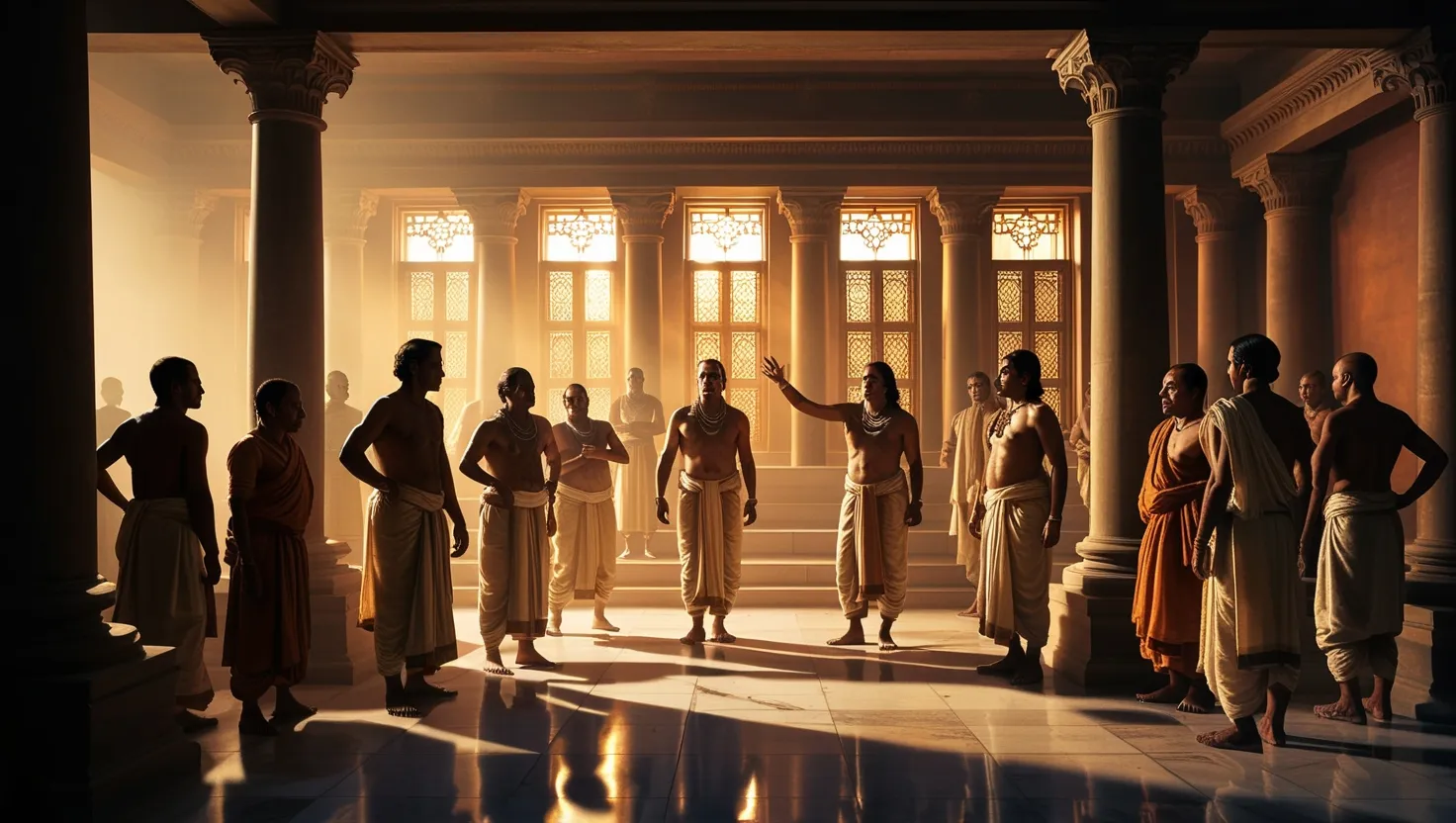
Now let us look at Vidura. Vidura is not a hero of war. He is not a god. He does not have dramatic weapons. He is a quiet, clear-thinking counselor in the Kuru court. He speaks plain truth. He sees through lies. He warns Dhritarashtra about Duryodhana’s nature from the time the boy is young.
Vidura keeps saying simple things like, “If you do injustice today, it will come back to you tomorrow.” He advises against the dice game. He stands against the public humiliation of Draupadi. His moral compass works. He is like the one honest employee in a corrupt office, constantly pointing at the rulebook.
So why does no one listen?
The answer is hard: Vidura has no real power. He is born to a servant mother. He is not a king. He is wise but does not sit on the throne. Dhritarashtra hears him, even agrees sometimes, but then goes back to fear of his son, love mixed with weakness, and the pressure of others.
This shows a brutal fact: the truth by itself does not rule. It needs some muscle behind it: social power, courage to act, willingness to accept loss. Vidura has insight but not the authority to impose it. His words float through the court like smoke.
Have you ever been the only one in a group saying, “This is wrong,” and watched everyone nod, then keep doing the wrong thing anyway?
Vidura teaches us about helpless wisdom. Knowing what is right does not mean you can make it happen, especially if you are outside the circle that holds power. We often tell people, “Speak your truth.” The Mahabharata quietly asks, “And then what, if no one with power cares?”
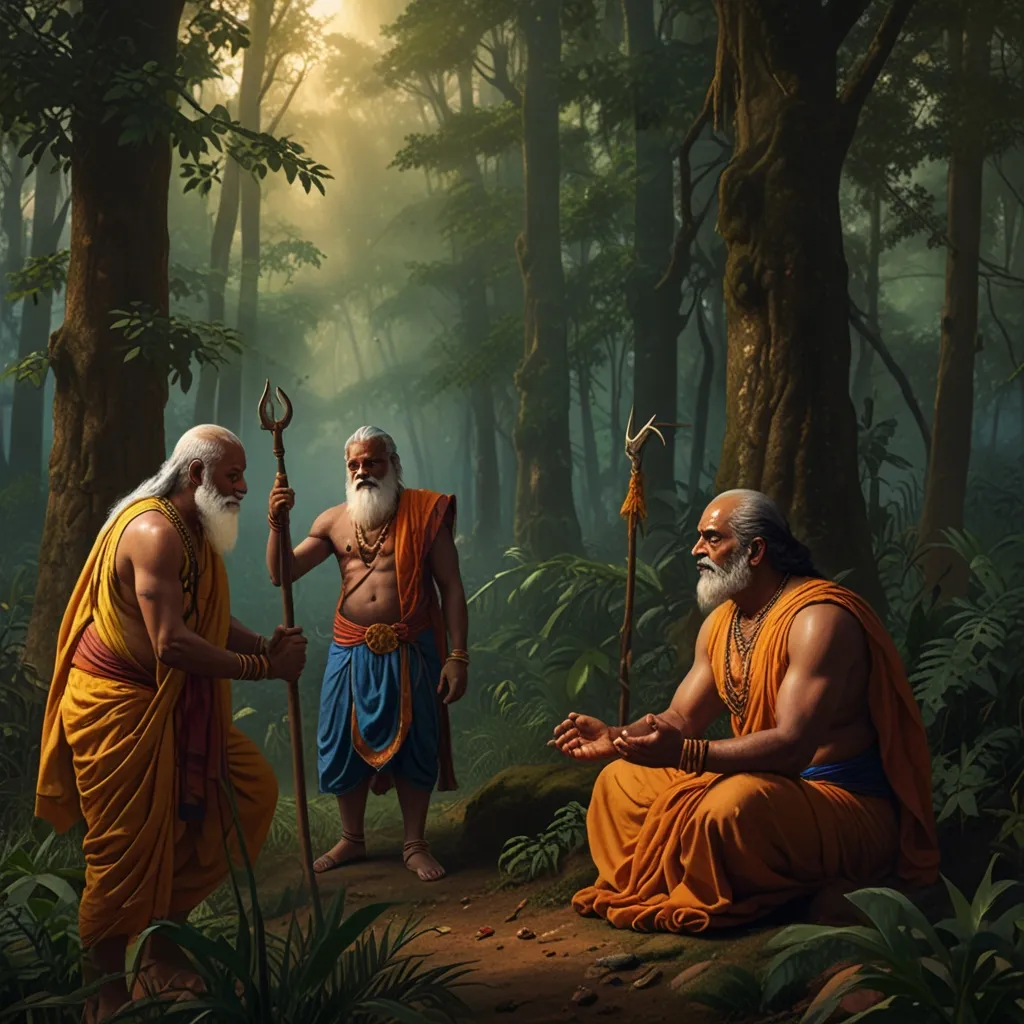
Around these major figures are many seers and sages. They often appear, give prophecies, pronounce curses, or offer blessings. You might think of them as spiritual consultants. But look closely: do they really guide people out of danger, or do they mostly describe the trap?
A sage curses a king, and that curse sets off a chain of events that leads to war. Another sage predicts that someone will be the cause of great destruction. Prophecies become self-fulfilling. People act out of fear of them or in reaction to them. The wise men tell what will happen, but they rarely show a clear path to escape.
This is another form of failed guidance: knowledge that describes, but does not heal.
In modern terms, it is like a doctor who explains your illness in great detail but cannot offer a treatment. You may walk away “better informed” but not better in any real sense.
So across the epic, we see many types of guides:
Bhishma, trapped by his old vow.
Drona, corrupted by favoritism and ambition.
Krishna, speaking cosmic truth that does not stop human bloodshed.
Vidura, right but powerless.
Sages, accurate but not helpful in changing outcomes.
If we place them side by side, a pattern appears. Each one has something essential but misses some other crucial piece.
Bhishma has duty, but not the courage to break a harmful promise.
Drona has skill, but not equal respect for all his students.
Krishna has vision, but not a way to make it soften the hearts of the stubborn.
Vidura has truth, but not the throne.
The epic seems to say: wisdom is not one thing. It is a mix of many things—clarity, courage, fairness, power, timing, and the willingness to bear personal loss. Without the full mix, even great guides can fail.
Let me ask you: when you look at your own life, which of these parts do you tend to value most—knowing, speaking, or acting? Which ones do you neglect?
Another quiet point in the Mahabharata is that students are not passive. We like to blame the mentors for failing, but disciples are also responsible. Duryodhana hears Bhishma, Vidura, and Krishna tell him he is wrong. He refuses. Arjuna needs the entire Gita because he is paralyzed by his own conflict. Dhritarashtra knows in his heart that his son is dangerous, but he cannot say “no” to him.
The text is harsh in its honesty: the world is not short of good advice; it is short of people willing to take the cost of following it.
In some ways, the Mahabharata is not a story about villains versus saints. It is a story about mixed humans who know better but still choose comfort, fear, loyalty, or pride over painful change. Even the “good” mentors have blind spots that match their deepest attachments.
Let us also notice something interesting: often, the clearest guidance comes from voices on the edge of power—Vidura, Draupadi, even outsiders who are not kings or gods. But the system is built to ignore them. The epic quietly criticizes this structure. It shows a world that gives authority to birth, status, and old vows, instead of listening to whoever is speaking truth right now.
Does this sound familiar in today’s world—where experts, elders, leaders talk endlessly, yet big crises keep growing?
There is a famous line from the epic that fits here well:
“Time cooks all beings in its cauldron.”
Time in the Mahabharata is like a slow pressure cooker. It exposes every weakness. Vows that once looked pure show their cracks. Guidance that looked strong reveals its limits. Under pressure, even divine counsel cannot fully protect human hearts from the results of long-term injustice.
Here is another line, from the Gita, that people often quote:
“You have the right to action, but not to the fruits of action.”
This is Krishna telling Arjuna: you control what you do, not what happens afterward. In the context of failed mentors, this is sharp. A guide can offer truth, walk the path himself, and still watch the world ignore him. By this rule, a mentor is judged not only by results, but by whether he stayed loyal to what was right, even when no one listened.
On that measure, someone like Vidura is spiritually “successful” even though politically he fails.
So when we talk about “failed mentors” of the Mahabharata, we should be careful. Did they fail as human beings? Some did, like Drona, who allowed ambition to twist his role. Some failed more in terms of outcomes than in terms of effort, like Vidura and even Krishna’s peace mission.
The epic pushes us to hold two truths at once:
A guide can be noble and still see his world collapse.
A guide can be brilliant and still cause harm.
Instead of giving us simple heroes, the Mahabharata gives us complicated adults. It invites us to grow up.
If we strip it down to simple lessons for ourselves, they might look like this:
Knowing what is right is not enough. You must be ready to lose things—position, comfort, even your own pride—to stand by it.
Teaching requires more than expertise. It needs fairness and humility. Otherwise, knowledge becomes a weapon in the wrong hands.
Spiritual wisdom does not replace political responsibility. Cosmic talk cannot excuse moral laziness on the ground.
Truth without power is often ignored. If you care about justice, you cannot avoid the question of who holds authority and how it is used.
And maybe the most painful one: you cannot save everyone. Even the best guide will meet people who will not listen.
So where does this leave us? The Mahabharata does not tell us to stop seeking mentors. It simply tears down the fantasy that a wise elder, teacher, or god will fix everything for us. It forces the weight back onto the learner.
As you read these stories, you might ask yourself:
If I were in that court, whose side would I actually take?
Would I dare to break a harmful promise, like Bhishma could not?
Would I welcome a student like Ekalavya as equal, or protect my favorite?
Would I listen to a “Vidura” in my own life—the quiet voice saying what I don’t want to hear?
The failed guides of the Mahabharata are like mirrors with cracks in them. They do not show us a perfect model to copy. They show us the kinds of mistakes even the wise can make. If we study those mistakes honestly, maybe we will demand more from our own leaders—and from ourselves.
Because the epic’s hardest claim is this: the world usually does not collapse from lack of knowledge. It collapses because people, knowing enough, still choose not to act.