If you and I were sitting together and you asked, “What is a Vedic yajna, really?” I would not start with Sanskrit or philosophy. I would start with something very simple: imagine a fire in front of you, and every time you put something into that fire, you are training your mind to give, to let go, and to trust that what you give does not vanish; it changes form and moves into a wider order of life. That, in plain words, is what the Vedic yajna is about.
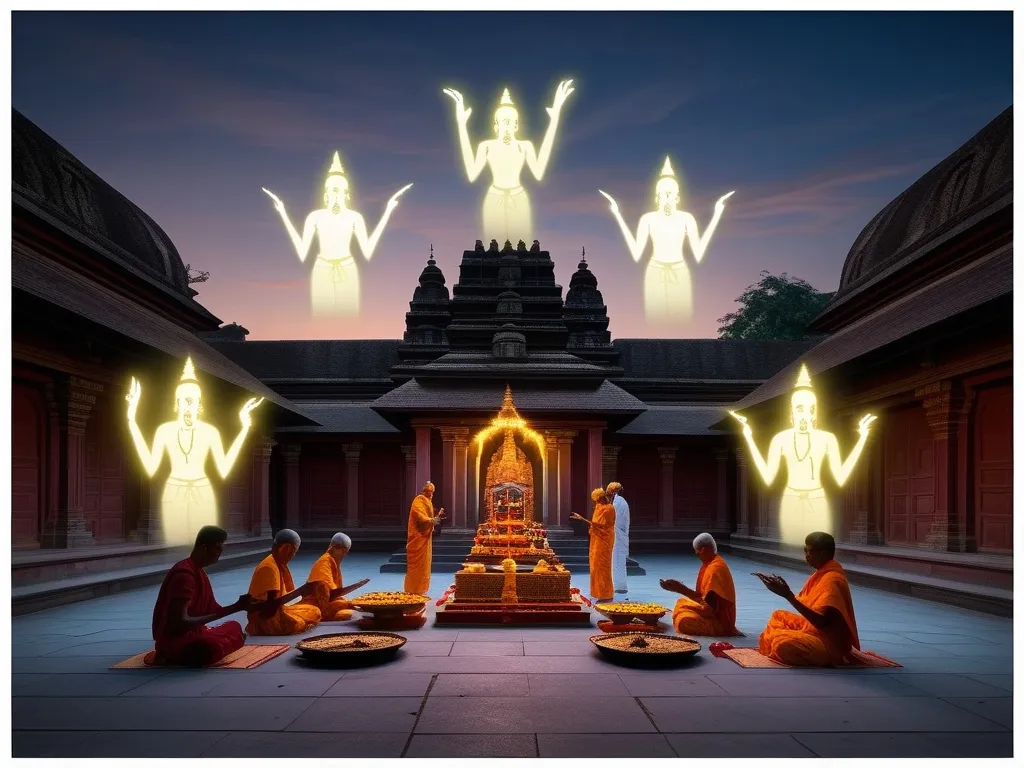
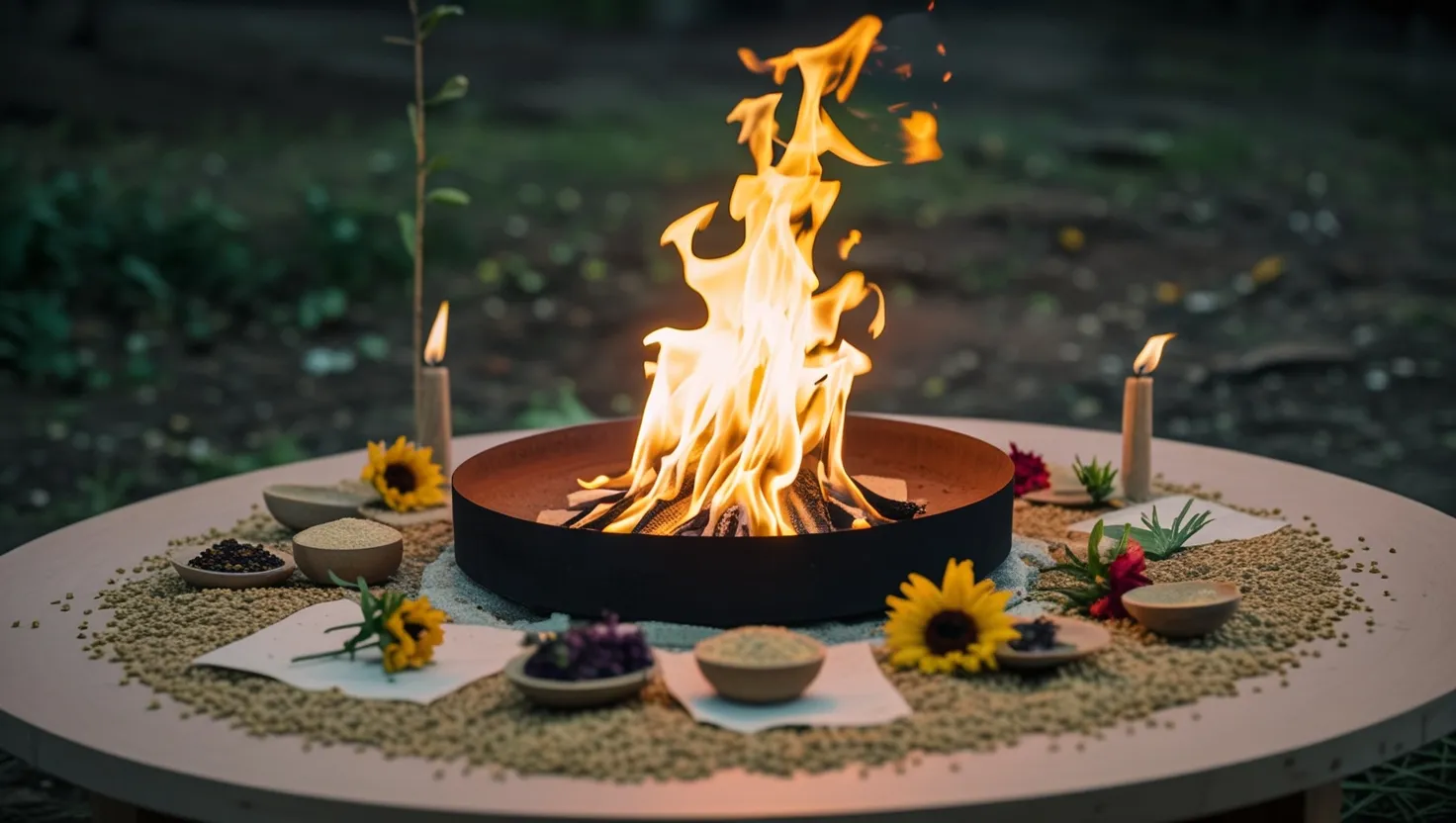
At first sight, yajna looks like a very technical ritual. There is a carefully built fire altar. There are measured bricks, clear shapes, and exact directions. There are special woods, ghee, grains, herbs, and long mantras chanted in a steady rhythm. It can look like a religious performance done to please some distant gods.
But if I speak to you as simply as possible: it is a practice designed to educate human beings. It teaches us how to live in a world where nothing stays the same, where we must keep giving and receiving, where holding too tightly hurts us, and where every act has a ripple in the larger whole. Have you ever noticed that the more you cling to something, the more afraid you become of losing it? Yajna goes straight at that fear.
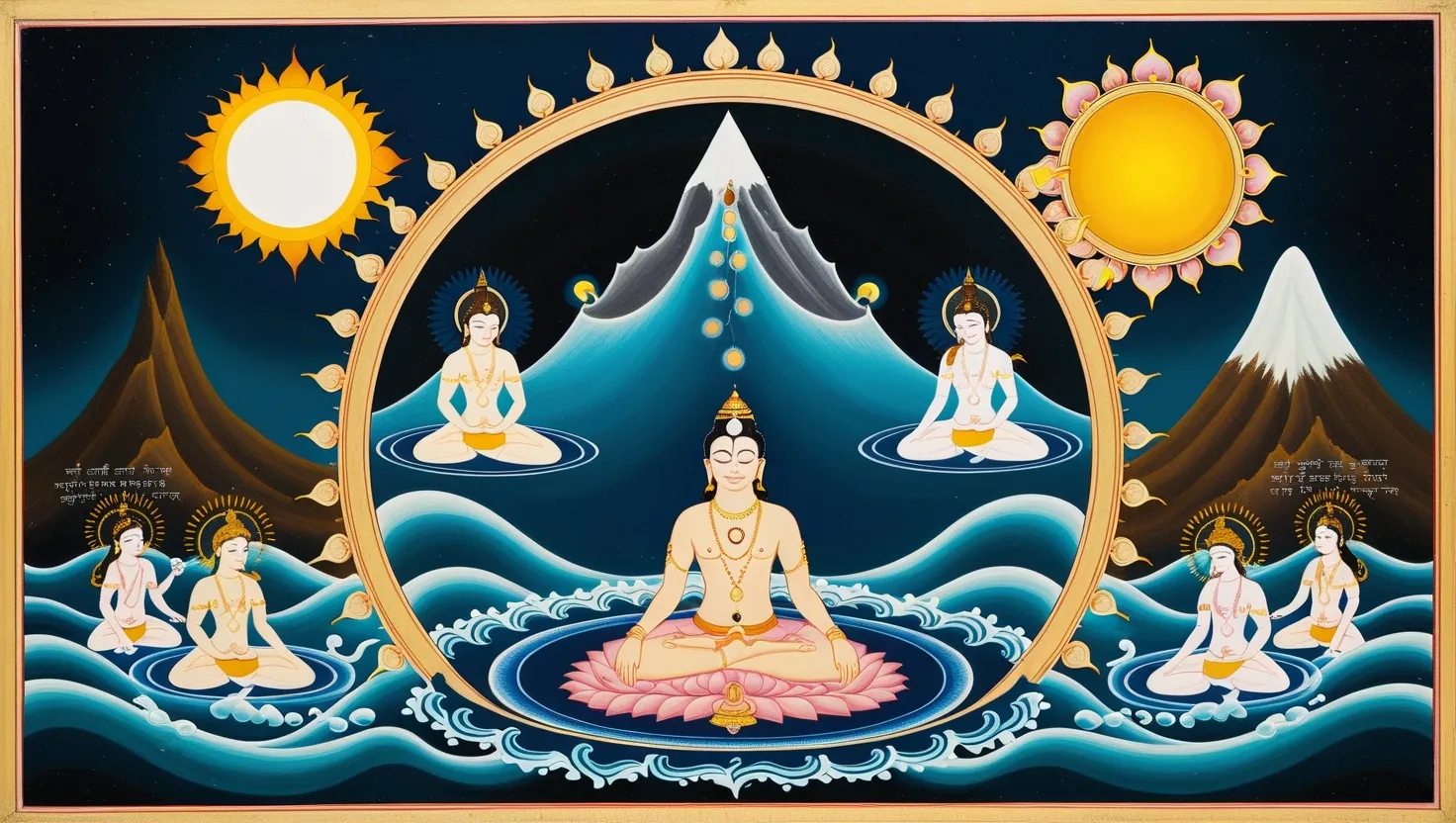
One less-known thing about the Vedic fire altar is that it is built as a model of the universe. The number of bricks, the shapes, the layers, the directions, even the choice of animals and plants involved, all mirror ideas about space, time, and cosmic cycles. To a modern mind, this might sound like symbolic overkill. But there is a very simple idea behind it: when I act in this small space, I am never acting alone. I am always acting inside a larger pattern.
In old texts, the fire, called Agni, is praised again and again as “messenger.” To a child, that sounds like a story: the fire takes the offering to heaven. But think about what fire really does. You put a spoon of ghee into it. The ghee does not disappear; it turns into heat, light, and subtle particles that move into the air. The yajna uses that obvious physical change to train a deeper habit of mind: when I give something, it does not die; it shifts level and enters a larger network. Can you feel how that alone can soften the fear of loss?
Many people know that the Vedas speak of a cosmic being, Purusha, who is “offered” and from whose sacrifice the world arises. What we often miss is the logic behind this picture. Creation needs cost. Every form that comes forward burns some fuel. The sun is constantly giving away itself as light. A cloud empties itself to become rain. The soil lets go of its minerals to feed a plant. Life is not free. It is constant exchange.
So the yajna is a way of saying: “I see this law. I will not pretend I can only take and never give.” Instead of learning this lesson only through pain and loss, the ritual lets us rehearse it in a controlled, conscious way. We choose the offering. We place it. We watch it change. We accept that we cannot pull it back.
Here is where another subtle point enters. In many modern minds, sacrifice sounds like self-harm or forced duty. But the Vedic view is quieter: sacrifice is how reality moves. You and I already practice sacrifice every day, but we rarely notice it. When you pay attention to your child instead of staring at your phone, you are sacrificing your private comfort to give presence. When you study late at night, you are sacrificing some sleep for knowledge. When you share an idea with a team, you are giving up the safety of silence for the risk of speaking.
The fire ritual simply makes this invisible economy visible. It says: do it on purpose. Do it with awareness. Do it with a sense of inner offering, not only outer action.
A famous line often quoted is: “You must be the change you wish to see in the world.” I can read this as a kind of personal yajna: if I want more honesty, I must offer my own honesty first. If I want more care for the earth, I must offer my own habits as fuel for that intention.
Have you ever thought of eating as a ritual? In the Vedic vision, digestion itself is described as a fire. What we eat is an offering to that inner flame. If I eat mindlessly, I treat my body like a trash bin. If I eat with some awareness, even a simple meal can become a quiet inner yajna: food given to the body, body given to action, action given to a purpose larger than my own comfort. This is not poetry; it is a very practical way to see ordinary life.
The same applies to work. I can do my job as a way to inflate my ego, collect praise, and feel superior. Or I can see my work as an offering: my time, focus, and skill poured into a fire whose heat warms many people I will never meet. Which way of seeing do you think will bring more stability to your mind?
One unusual angle that many people do not connect with yajna is its relation to ecology. The old seers were very clear: if you keep taking from nature without a conscious sense of give-and-take, things go out of balance. The ritual fire constantly repeats a simple training: you do not just consume; you return. Not in the same form, but you give back energy, attention, care, and restraint.
If I see my daily use of water, electricity, fuel, and food as part of a yajna, I will naturally ask, “What am I offering back?” Maybe it is planting trees. Maybe it is wasting less. Maybe it is supporting those who heal damaged land. This is not guilt; it is restoring a sense of fair exchange.
There is also a less obvious psychological face of yajna that I find extremely useful. When someone in the ritual puts precious ghee or grains into the fire, they are rehearsing non-attachment. They are telling their mind, “I can let this go.” Over time, this exercise can be applied to inner things.
What would it mean to “offer” anger into the fire of awareness? It means that instead of acting from anger, I watch it fully, feel its heat, and allow that heat to burn without pouring it on someone else. Have you ever tried just sitting with a strong emotion and watching it like a flame? At first it is hard. But if you stay, the emotion changes form, just like the ghee in the fire. The mind learns that feelings, too, are offerings that can be transformed.
The same goes for jealousy, fear, and pride. Each can become fuel. The key is this simple step: instead of saying “This is me,” I say, “This is something I can place in awareness.” Then awareness becomes an inner Agni, an inner messenger that carries the energy of that emotion into a larger clarity. The old ritual is now happening inside the nervous system.
A well-known saying is: “What we think, we become.” This can be read as another form of yajna. Every thought is an offering into the inner fire of attention. Whatever we keep feeding grows. If we constantly feed resentment, that fire burns our peace. If we feed understanding, that fire lights up insight. So a very basic question arises: what am I feeding my inner fire today?
Another lesser-discussed dimension of yajna is its social side. In an old hymn, society itself is described as a kind of cosmic sacrifice, where different groups and roles arise from the body of the primordial being. This is often quoted for political reasons, but there is a deeper psychological reading: a healthy society is one where each person sees their role as an offering, not as a throne.
Think of any community you are part of. Some people teach. Some build. Some heal. Some protect. Some organize. When each says, “I offer my best for our shared life,” the social fire burns bright and everyone benefits. But what happens when each role is used only for self-gain, status, and control? The same fire turns into conflict and exhaustion.
Have you ever worked in a team where at least one person clearly saw their work as a gift to the whole? Did you notice how their attitude changed the whole mood, even if they were not the boss? That is a living yajna in action.
On the very inner level, the most radical form of yajna is the offering of the sense of “I” itself. This may sound abstract, but let me put it in simple words. For most of us, there is a constant inner voice saying “I, me, mine.” It claims successes, pushes away blame, defends itself, and fears death. The old teachings say: this bundle of thoughts and habits is not the deepest truth of what we are. It is more like a mask worn by a deeper awareness.
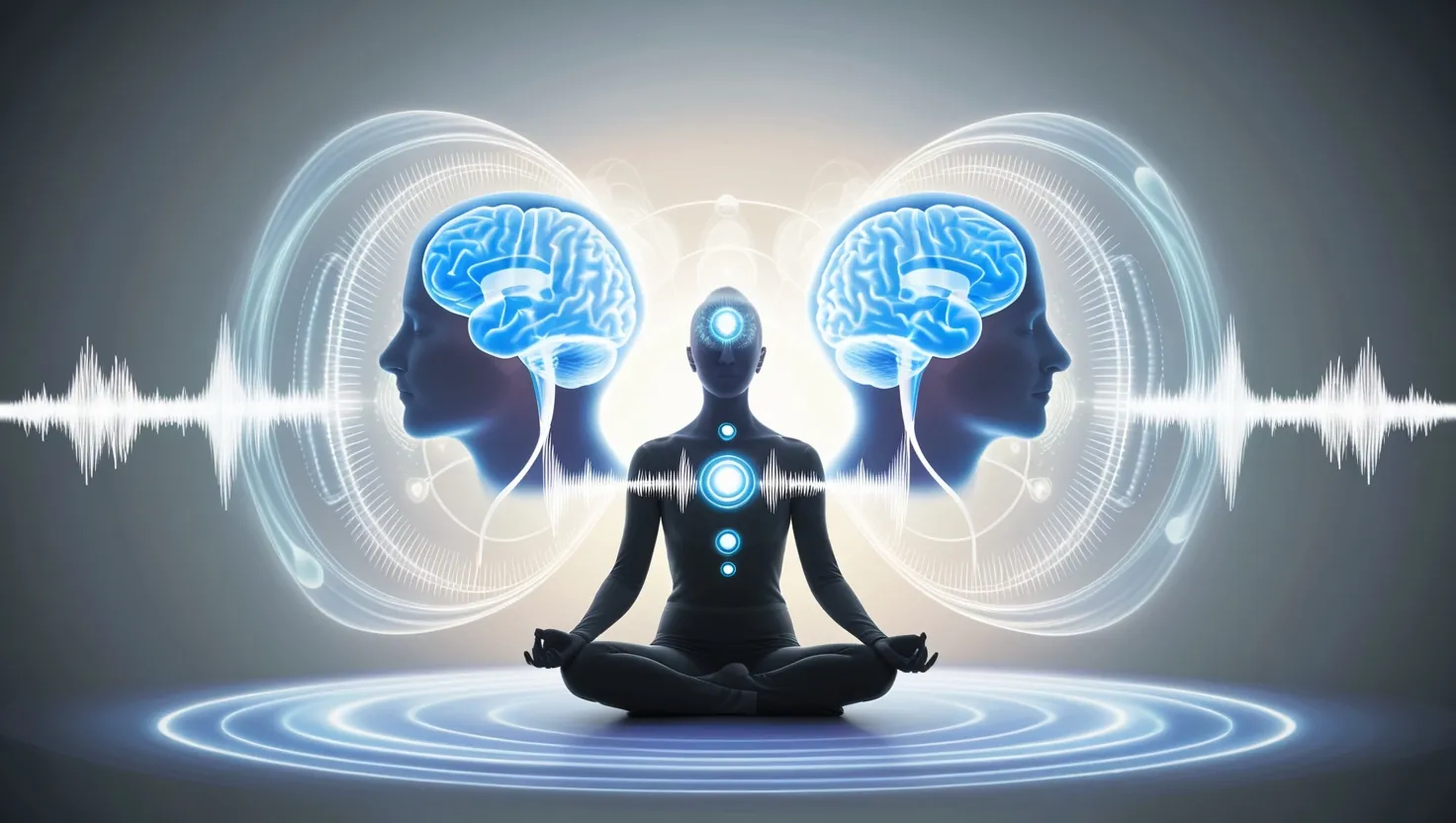
Meditation, seen through the lens of yajna, is not just “relaxing.” It is slowly offering this mask into a silent inner fire. When I sit quietly and watch thoughts, I begin to see that they rise and fall on their own. The sense of being a tight, separate “me” starts to loosen. This does not make me passive. It tends to make me more responsive, less defensive, because I no longer feel so fragile.
There is a famous statement: “The wound is the place where the light enters you.” Read this as yajna and it becomes very concrete. Your pain, your loss, your failures can either harden you, or they can be placed into a larger awareness that turns them into understanding and compassion. The crucial difference is whether you cling to them as “my tragedy” or allow them to become part of a greater fire of learning.
You might ask, “All this sounds good, but what do I actually do?” Let me keep it very simple and direct.
When you eat, pause for one breath and mentally offer your meal to the fire of your body, wishing that the energy you gain will serve something worthwhile.
When you work, pick at least one task in a day and say to yourself, “This is my small yajna today. I give it fully, without complaining inside, and I will not obsess over the result.”
When you feel a strong negative emotion, before acting, sit quietly for one minute and notice it as heat in the body. Watch where it burns. Ask yourself: can I let this be fuel for clarity instead of fuel for reaction?
When you use resources—water, food, fuel—ask yourself, “What can I give back?” Even a small act of care counts. The point is to recover the sense of exchange.
When you sit in silence, even for five minutes, imagine that the feeling of “me” with all its worries is sitting near an inner fire. Let it relax there. There is nothing to push; just see what remains when you do not cling to any story about who you are.
All these are very small, almost “dumb-simple” steps. Yet they carry the same pattern as the grand Vedic ritual: conscious giving, inner letting go, and trust in transformation.
Another famous line often repeated is: “In the depth of winter, I finally learned that within me there lay an invincible summer.” This, too, can be seen through the lens of yajna. Even when outer life feels cold and harsh, the inner fire of awareness and offering can stay warm. You may lose things, people, positions, but if the habit of offering is alive, you do not collapse completely. You bend, burn, and somehow grow.
So when you next see a simple candle flame, you can remember all this without any complex philosophy. Fire takes in, changes, and gives out. That pattern is the secret teacher behind the Vedic yajna. The real question for you and me is very direct: what are we pouring into the fire of our days—resentment and fear, or attention and generosity? And what kind of world are we heating with those offerings?