Sankalpa: The Ancient Vedic Science of Intention That Modern Psychology Finally Confirms
Discover the ancient Vedic concept of Sankalpa — a heart-centred resolve that shapes reality. Learn how to set intentions that truly stick and transform your life.

The Vedas open with a peculiar question that most of us never think to ask: what was there before the universe existed? Not darkness, not light, not even silence. Just a single impulse — the desire to be. That impulse is what the ancient seers called Sankalpa.
Most of us have heard the word thrown around in yoga classes, usually translated loosely as “intention.” But calling Sankalpa a mere intention is like calling the sun a lightbulb. Technically accurate, dramatically underselling it.
“In the beginning was the Word, and the Word was with God, and the Word was God.” — Gospel of John
The Vedic tradition says something strikingly similar, centuries before that was written. The Rigveda describes the cosmic being forming a single resolve before creation. Not a plan, not a strategy — a resolve. And from that one focused point of will, the entire universe unfolded. Think about what that actually means. The whole of existence — every star, every ocean, every thought you’ve ever had — began as something functionally identical to what happens when you sit quietly and decide who you want to become.
So, what exactly makes Sankalpa different from just wishing for something while staring at the ceiling?
The word itself gives you the answer. San means “conceived in the heart.” Kalpa means “a vow” or “a rule to be observed above all others.” Put them together and you don’t get a wish. You get a commitment that comes from the deepest part of you, not from your surface-level wants and mood swings.
This is where most people get it wrong. They confuse intention with desire. Desire says, “I would love to be healthier.” Sankalpa says, “I am someone who honours their body.” One is reaching for something outside you. The other is declaring something true about who you already are. The Vedic seers were exceptionally precise about this distinction.
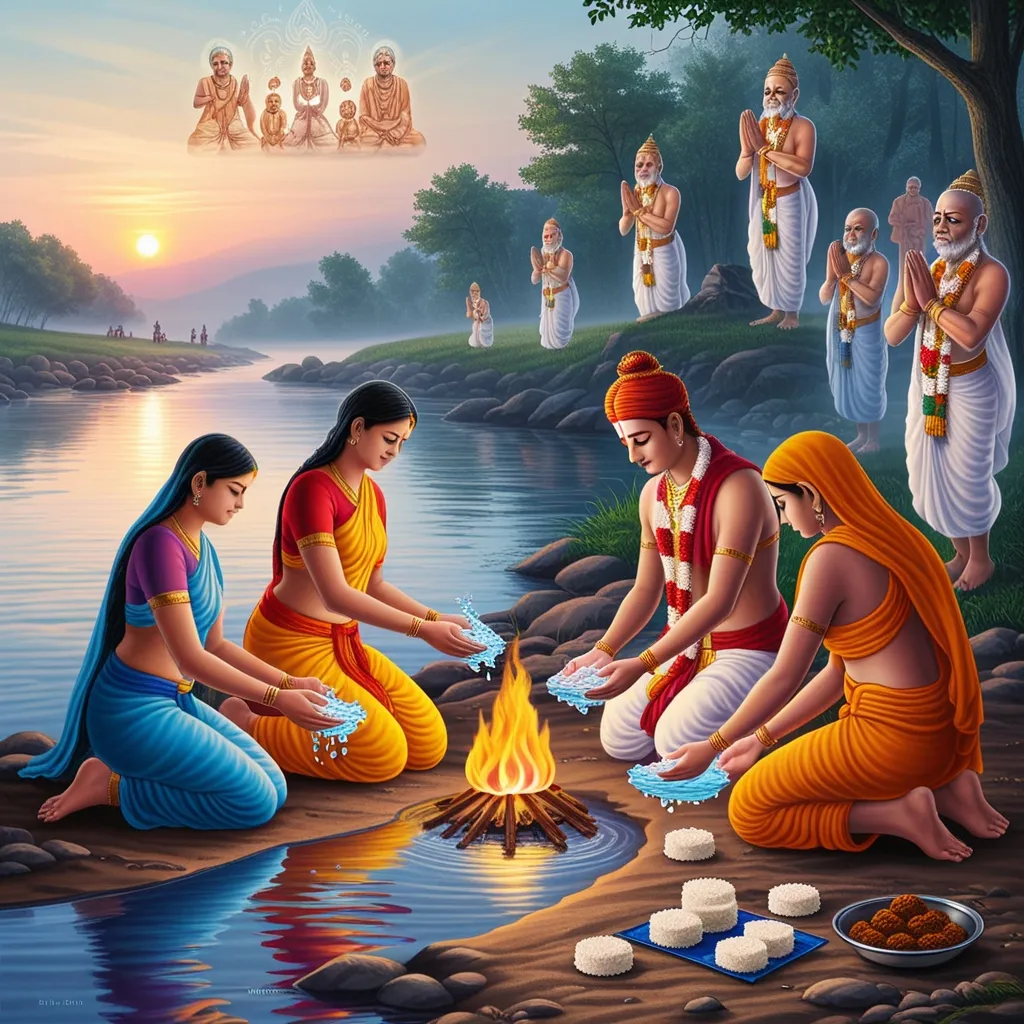
Every Vedic ritual begins with a formal Sankalpa. Before the fire is lit, before a single mantra is recited, the practitioner makes a declaration — out loud, with a clear mind, using specific words. This isn’t poetic theatre. The spoken word was understood as a technology. Sound carries vibration. Vibration shapes reality. The declaration wasn’t addressed to any god waiting to grant favours. It was a message sent inward, to the deepest layers of one’s own being.
“Whatever you can do or dream you can, begin it. Boldness has genius, power, and magic in it.” — Johann Wolfgang von Goethe
Modern psychology, interestingly, has arrived at a similar place through a completely different route. When you state a clear intention with genuine emotional weight behind it, you aren’t just making a mental note. You are issuing a directive to your subconscious mind. Your nervous system begins to reorganize itself around that instruction. Your attention starts filtering for information relevant to your resolve. Your choices, often without your conscious awareness, begin bending toward the stated goal.
This isn’t mysticism. Neurologists call it “selective attention.” The Vedic seers called it the power of Sankalpa. The mechanism is the same.
Ask yourself honestly: how many intentions have you set in your life that you actually held with full conviction? Not the ones you wrote in a journal and forgot. Not the New Year resolutions you abandoned by February. The real ones — the resolve you made when something in you finally stopped negotiating.
Those are the ones that changed your life, aren’t they?
The reason vague intentions produce vague results is almost embarrassingly simple. Your deeper mind cannot act on ambiguity. “I want to be successful” gives it nothing to work with. “I commit to spending two hours every morning building the skill I know I need” — that’s a directive it can follow.
The Vedas are almost stubborn about this precision. They don’t romanticise the fuzzy feeling of aspiration. They demand specific vision, specific language, and specific practice. A practitioner didn’t resolve to “grow spiritually.” They committed to waking before sunrise, performing their practice, controlling their speech, and studying specific texts. The Sankalpa was a contract, not a wish.
“He who has a why to live for can bear almost any how.” — Friedrich Nietzsche
There’s a lesser-known aspect of Sankalpa that rarely gets discussed in modern wellness circles: the concept of congruence. A resolve that contradicts your essential nature — what the Vedas call svabhava — creates internal friction. It cannot sustain itself no matter how hard you push. This is why some goals exhaust you even when you achieve them. They were never genuinely yours. They were borrowed from someone else’s idea of success.
The Vedic tradition prescribes honest self-examination before setting a Sankalpa. Where is this resolve actually coming from? Is it arising from fear of judgment? From ego? Or is it coming from that quieter place inside you that knows what’s true? A Sankalpa rooted in your actual nature doesn’t feel like pushing against a wall. It feels like water finding its natural course.
Obstacles to Sankalpa are real, and the Vedas don’t pretend otherwise. The biggest one isn’t external resistance. It’s the phenomenon of holding multiple contradictory intentions at the same time. Part of you wants to write the book. Part of you is terrified of being seen. Part of you craves financial freedom. Part of you secretly believes you don’t deserve it. These competing currents cancel each other out.
The Vedic remedy for this is tapas — disciplined practice designed to burn away contradiction. Not punishment, not deprivation, but the consistent application of effort that clarifies what you actually want. The more you practice, the quieter the noise gets. A purified mind holds a Sankalpa the way a steady hand holds a flame — without spilling a drop.
“The secret of getting ahead is getting started. The secret of getting started is breaking your complex, overwhelming tasks into small manageable tasks, and then starting on the first one.” — Mark Twain
Here’s what strikes me as genuinely fascinating about this teaching in a broader historical context: the Vedic understanding of intention as a creative force was not unique to India. Ancient Egyptian priestly traditions treated spoken intention as having physical consequences. The Stoic philosophers of Greece wrote about the hegemonikon — the ruling faculty of the mind — and how the quality of one’s inner resolve shapes the quality of one’s outer life. Indigenous traditions across the world embedded intentional declaration into ceremony for the same reason.
These cultures arrived at the same understanding without talking to each other. That kind of convergence tends to point at something real.
What’s remarkable is how thoroughly modern culture has lost this. We are swimming in choices, drowning in possibility, and yet a striking number of people feel they are accomplishing very little. The ancient diagnosis would be clear: scattered attention producing scattered results. The ancient prescription would be equally clear: choose one thing. Mean it completely. Let everything else serve that.
Sankalpa teaches what self-help culture endlessly talks about but rarely captures correctly — the difference between half-hearted effort spread across twenty directions and the focused force of a mind that has genuinely committed. The latter doesn’t just work harder. It works differently. It sees differently. The resolve itself begins to organise reality around it.
The most profound application of Sankalpa in the Vedic tradition isn’t for success or health or even happiness. It’s for liberation — the resolve to know what you actually are beneath all the accumulated identities, fears, and stories. The practitioner makes this the singular intention of their life. Every other goal either serves this one or it falls away.
“You have power over your mind — not outside events. Realize this, and you will find strength.” — Marcus Aurelius
This highest Sankalpa is described not as striving toward something distant, but as remembering something already present. The resolve for self-knowledge doesn’t take you somewhere new. It strips away everything false until what remains is what was always there.
Which brings us back to that original question — what existed before existence? The Vedic answer: pure potential, holding the resolve to become. You are made of the same stuff. The capacity to form a genuine resolve isn’t something you develop. It’s something you remember how to use.
The only real question is: what are you actually committed to?