Journey Through Cosmic Flames: Unveiling Panchagni Vidya
Cosmic Dance of the Five Fires: Decoding Ancient Wisdom's Role in Modern Life
In the vast landscape of Hindu philosophy, there’s a fascinating concept called Panchagni Vidya. This ancient wisdom delves into the mysteries of creation, sacrifice, and the universe’s interconnected nature. Originating from the Upanishads, particularly the Chandogya Upanishad, it weaves a tale of how our bodies link to the cosmos and the real essence of the mind.
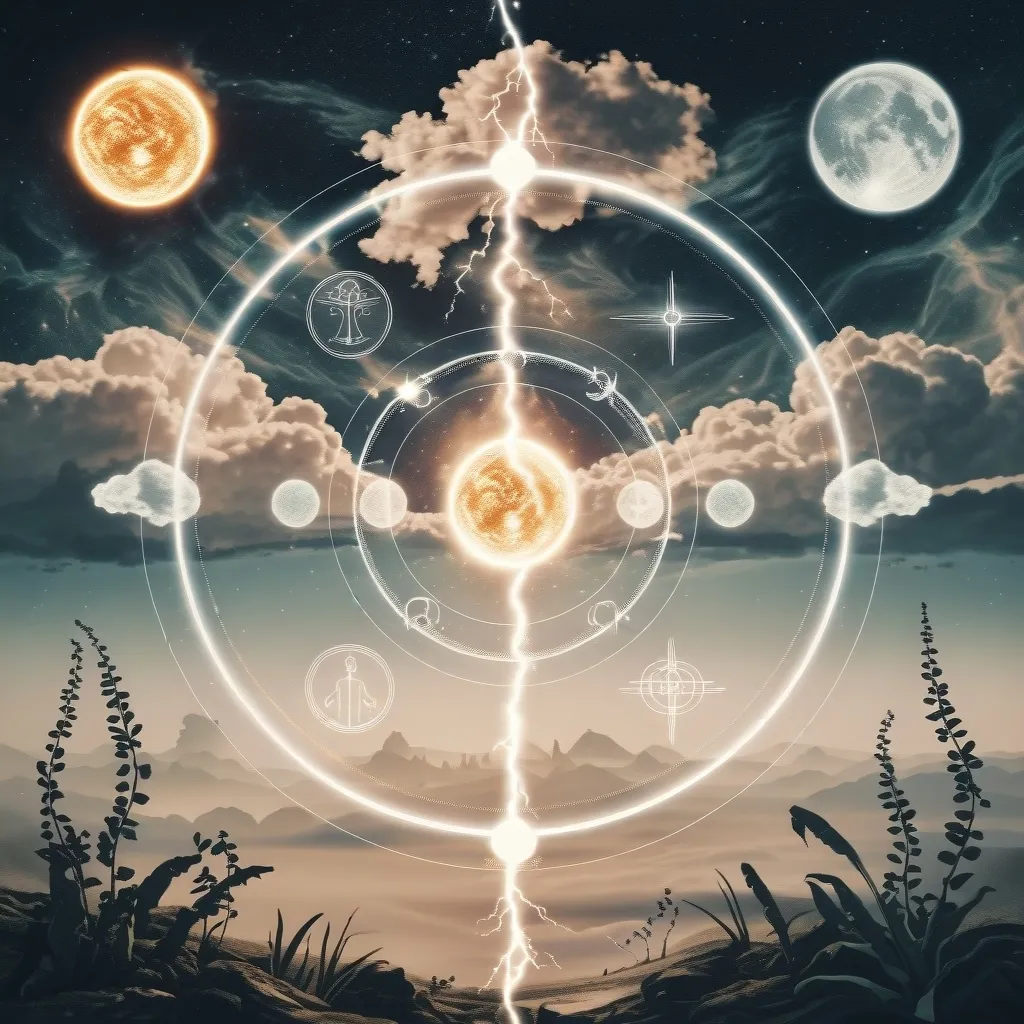
Panchagni Vidya, or the Knowledge of the Five Fires, isn’t about actual flames we light, but a symbolic, meditative journey. The five fires represent different creation stages, each connected to a universe aspect. Imagine the first fire as a celestial realm, where the sun is the sacrificial stick, its rays the smoke, the day the flame, the moon the ember, and the stars the spark. This celestial fire is like our intro to the cosmic cycle of creation and destruction.
Next up is the atmospheric fire, where Parjanya, the god of rain, takes center stage. Here, air is the fuel, clouds the smoke, lightning the flame, and thunderbolt the spark. This fire shows the importance of natural elements in keeping life going on Earth. Then, the third fire ties to the earth itself, munching on rain as fuel, belching out food as smoke, with vegetation growing as the flame.
Now, humans get involved. The fourth fire is linked to mankind. Picture an open mouth as the fire, food as the offering, and seed as the result. The fifth fire is all about women, where the seed is an offering, and a child’s birth is the ultimate outcome. This part of Panchagni Vidya highlights human significance in the vast cycle of creation and life.
Panchagni Vidya also delves into the soul’s journey, often called the “Doctrine of Descent.” It describes how the soul enters a physical body through various stages, each aligning with one of the five fires. Understanding these fires helps decode the soul’s path and how actions shape its journey, leading to either the wisdom-seeking Devayana (the Northern path) or the worldly Pitriyana (the Southern path).
At its core, Panchagni Vidya imagines the universe as a giant sacrificial altar, where every event – from a child’s birth to molecule formation – is part of this universal sacrifice. It paints a picture of everything being interconnected, with sacrifice lying at each creation stage’s heart. The mantras chanted during yajnas (sacrifices) are viewed as sacred intentions, and the offerings to various deities are part of this grand cosmic ritual.
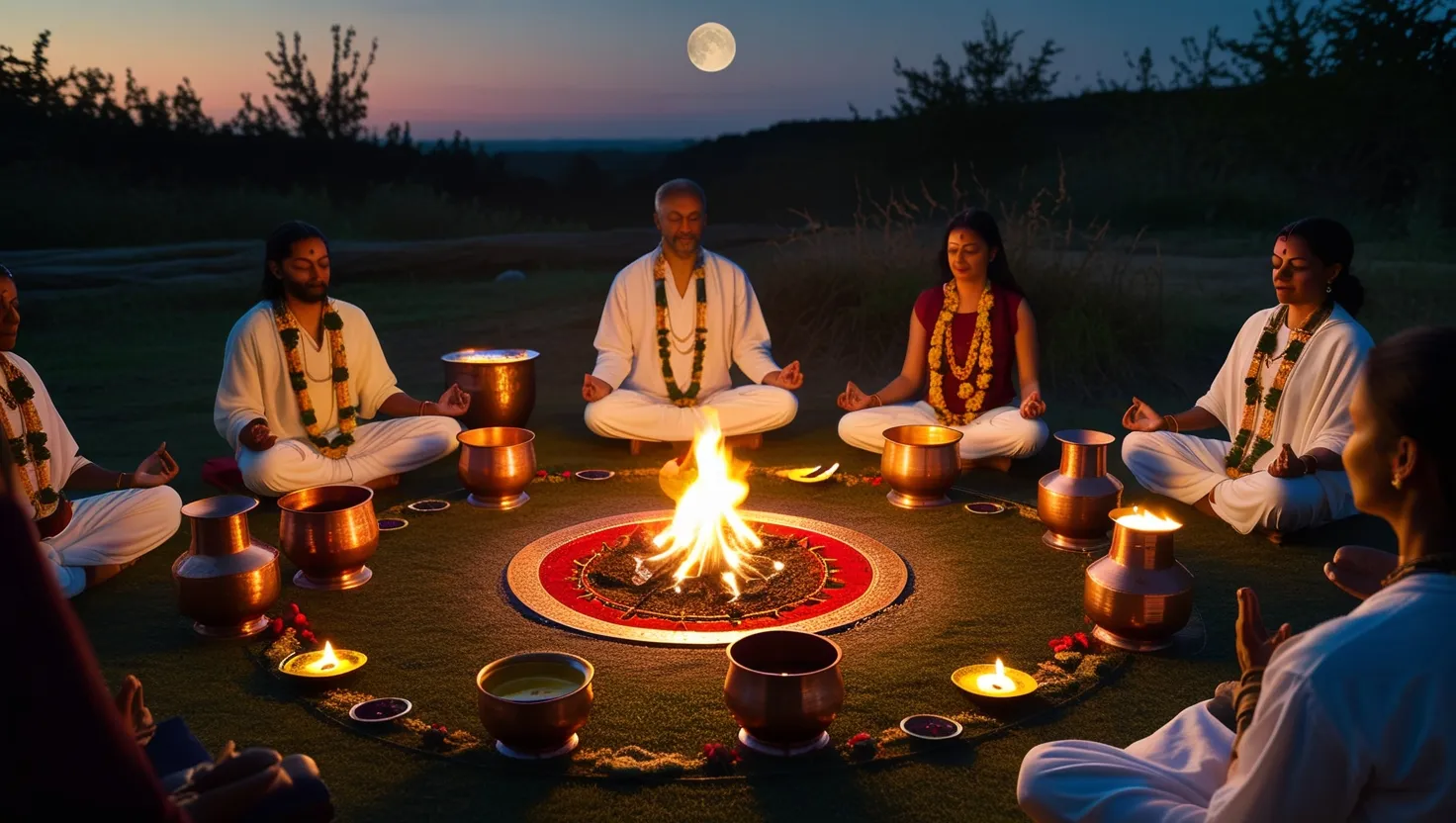
Besides being a theoretical concept, Panchagni Vidya is also a practical guide to meditation. It urges us to ponder the mind’s true nature and its role in manifesting will in the universe. Meditating on these five fires helps understand ultimate reality and the interconnectedness of existence. This wisdom can purify even amid negativity, ensuring a trip to the world of good and pure after death.
Fire, or Agni, has a special place in Panchagni Vidya, symbolizing physical and metaphysical transformations. Within Vedic rituals, Agni sometimes goes by Rudra, emphasizing its fierce and transformative nature. The three sacrificial fires—Garhapatya, Anvaharyapachana, and Ahavaniya—offer different insights into ultimate reality, helping practitioners grasp the deeper cosmos and self-understanding.
The beauty of Panchagni Vidya lies in its practical day-to-day applications. It teaches us that every action and event is part of a broader cosmic cycle. Recognizing this interconnectedness, we can align our actions with universal principles of sacrifice and creation, leading to more harmonious and meaningful lives. This doctrine promotes a holistic life view, turning every moment into a potential spiritual growth and self-realization opportunity.
In a nutshell, Panchagni Vidya is a rich and intricate doctrine offering profound insights into the universe and our role within it. Through its symbolic fires, it takes us on a journey of self-discovery and spiritual growth, stressing the interconnectedness of all existence. Its ancient wisdom still holds relevance, providing a deep and meaningful framework for meditation, contemplation, and living a balanced life. By embracing the knowledge of the five fires, we can navigate life’s complexities with more clarity and purpose.