Did Ancient Vedic Rituals Hold The Secret to Modern Meditation Bliss?
The Bridge from Ritual to Inner Enlightenment through Vedic Meditation
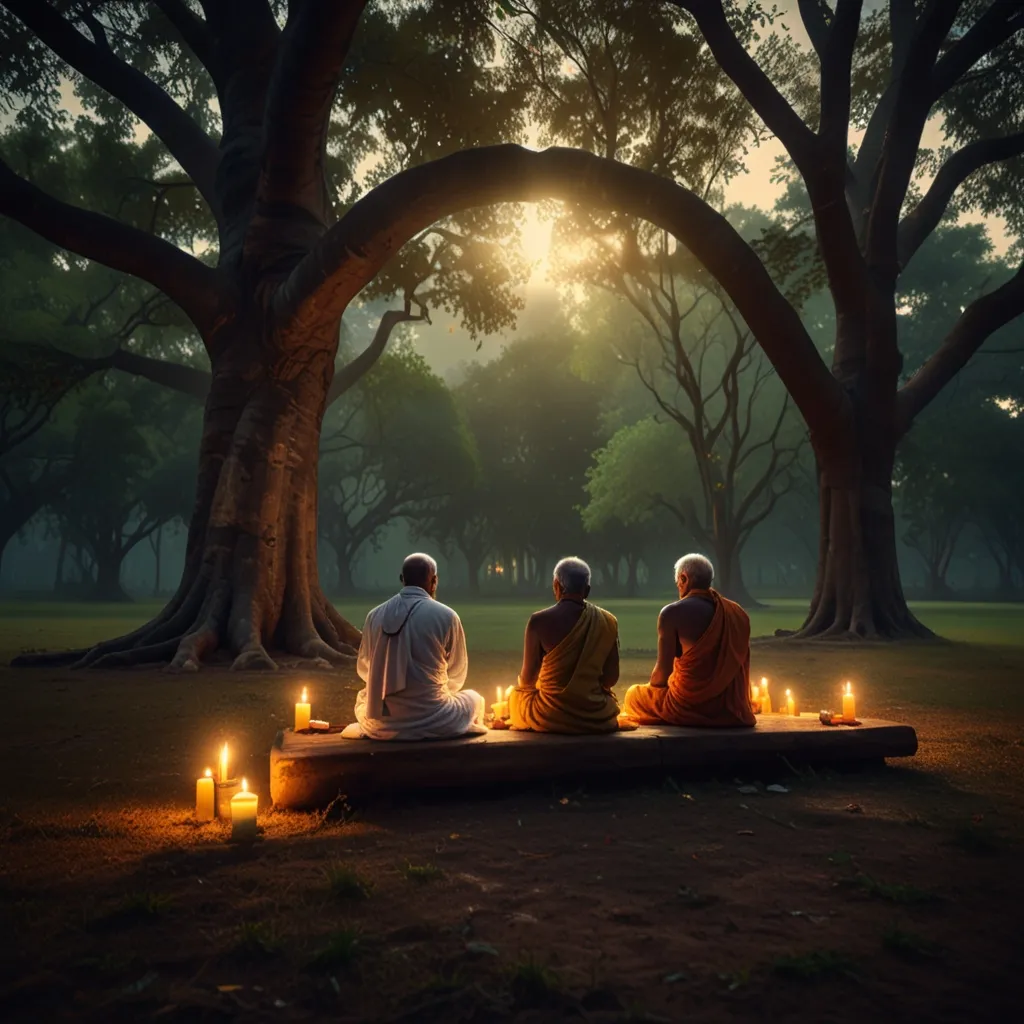
Meditation’s origins can be traced back to the ancient Indian scriptures known as the Aranyakas, part of the Vedic texts. These scriptures are a bridge between the ritualistic Brahmanas and the philosophical Upanishads, providing a blend of both ritual practices and metaphysical concepts.
The Aranyakas delve into deeper philosophical questions surrounding rituals. Take the Katha Aranyaka, for instance; it discusses rituals related to the Pravargya, while the Aitareya Aranyaka examines the Mahavrata ritual from both ritualistic and symbolic angles. These texts represent a time in history when there was a growing interest in understanding the deeper meanings of rituals, the nature of the self, and the cosmos.
The Aranyakas mark a significant shift in Vedic thought. They move from external sacrificial rituals to internal philosophical inquiries. The Chandogya Aranyaka, which is tied to the Sama Veda, illustrates this transition beautifully. It guides practitioners from external rituals towards internal meditation and philosophical insights, signaling a time when rituals were valued not just for material gains but also for spiritual enlightenment.
Several key practices define meditation in the context of the Aranyakas. The journey often begins with Dhāraṇā (concentration) and Dhyāna (meditation). Dhāraṇā involves focusing the mind, while Dhyāna is about deep contemplation. Together, these practices purify the mind and help in understanding the ultimate reality, leading to spiritual freedom.
Chanting Vedic hymns is another significant aspect. The Chandogya Aranyaka gives precise methods for chanting Sama Veda hymns, emphasizing the importance of correct intonation and rhythm. These chants are not just ritualistic but also meditative, helping to concentrate the mind and connect with the deeper spiritual aspects of rituals.
Daily and seasonal rituals detailed in the Aranyakas, like the Agnihotra (daily fire sacrifice) and the Chaturmasya (seasonal sacrifices), become meditation when performed mindfully. These rituals, infused with Sama Veda hymns, help focus the mind and achieve inner peace.
The philosophical reflections in the Aranyakas guide practitioners to comprehend the deeper meanings behind rituals. For example, the Kaushitaki Aranyaka explores the deeper implications of the Agnihotra ritual, explaining how all divine aspects are inherent in the Purusha (the cosmic being). Such understandings internalize rituals, making them part of one’s meditative practice.
Practicing Vedic meditation can be simple. One technique involves sitting comfortably with your back supported and eyes closed. Use a personalized mantra repeated silently in the mind to settle it to quieter levels. Allow the mind to settle naturally without forcing control. This effortless technique is more about letting go than about concentrating hard.
Vedic meditation offers myriad benefits. It purifies the mind, leading to a clearer understanding of reality. It brings inner peace and a sense of calm, even amidst chaos. The ultimate goal is to achieve spiritual freedom, which comes through deep understanding and realization of the self.
The Aranyakas suggest integrating meditation into daily life. The Chandogya Aranyaka provides detailed instructions for daily rituals performed in a meditative state. This helps make meditation a regular part of life, leading to a more balanced, spiritually fulfilling existence.
In the Vedic tradition, learning meditation often happens through a guru-shishya (teacher-disciple) relationship. This bond is crucial for grasping deeper meditation aspects and receiving personalized guidance. While modern techniques exist, traditional methods emphasize learning from a qualified guru.
Meditation from the Vedic Aranyakas is a holistic practice that combines ritualistic details with philosophical teachings. It offers a profound way to connect with the ultimate reality, achieve inner peace, and attain spiritual freedom. Following the simple yet effective practices outlined in these ancient texts can lead to a journey of self-discovery and spiritual growth. Whether through chanting, rituals, or philosophical reflections, Vedic meditation provides a rich, rewarding path for deepening spiritual practice.