Are the Upanishads the Key to Unlocking the Universe's Secrets?
Infinite Wisdom from Ancient Texts: How the Upanishads Shape Minds Across Centuries
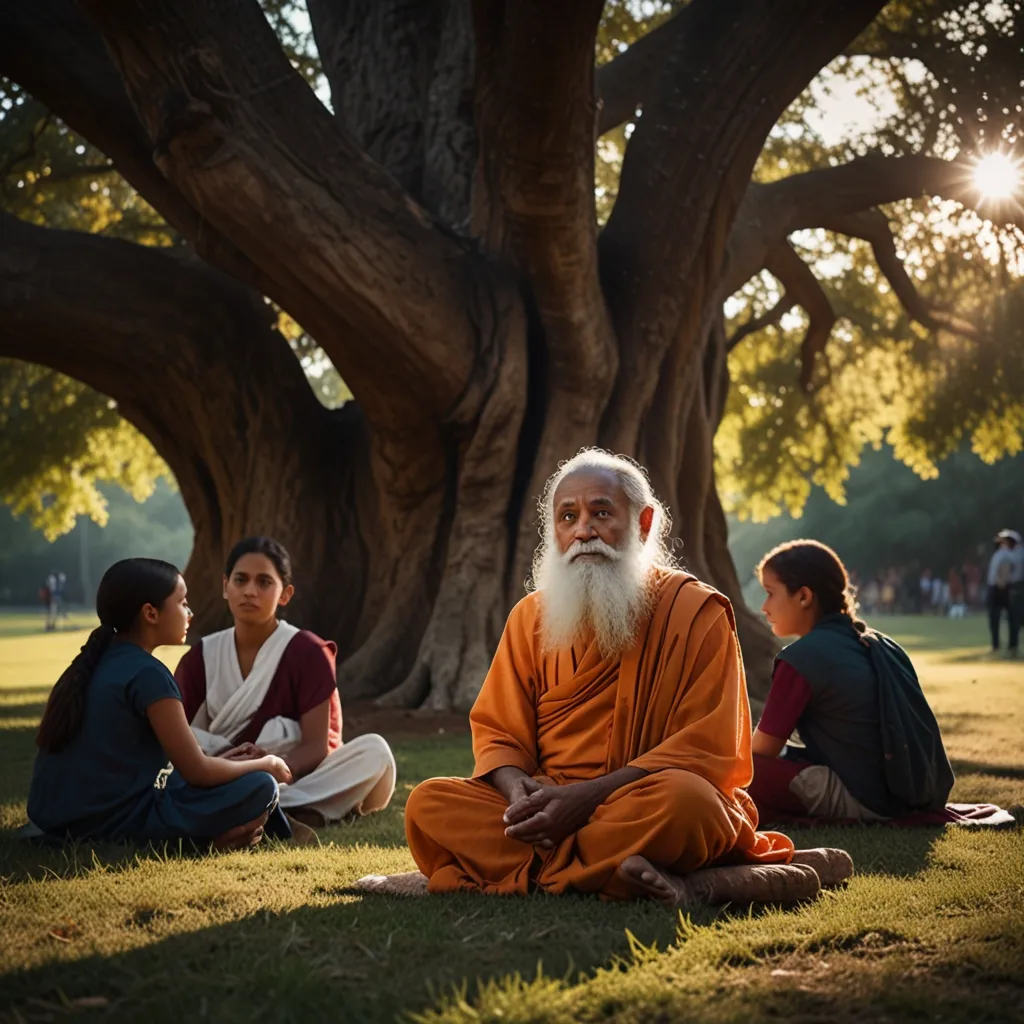
The Upanishads are true gems among Hindu scriptures, brimming with deep wisdom that has been shaping minds for centuries. These old texts are the final bit of the Vedas, the earliest and holiest writings in Hinduism. The word “Upanishad” means “to sit near a teacher” or “to annihilate bondage.” They’ve always been about guiding people towards spiritual freedom.
Think of it like sitting at the feet of a wise old guru, soaking up all the secrets of the universe. That’s what reading the Upanishads feels like. They’re not just religious scripts but profound philosophical musings on existence, consciousness, and ultimate reality. They serve as a bridge between the ritual-heavy Vedas and the more reflective, introspective facets of Hinduism.
With over 200 Upanishads out there, only a handful are considered the biggies. Some of the oldest and most well-respected ones are the Brihadaranyaka and Chandogya Upanishads. They’re filled with dialogues between sages and their students, diving deep into questions about life, death, and the very nature of reality. These aren’t just theoretical talks; they’re practical spiritual guides.
Central to the Upanishads are the ideas of Atman and Brahman. Atman is the individual self, while Brahman is the ultimate, all-encompassing reality. These texts explore how the two are connected, often concluding that they’re essentially one. The famous phrase “Tat Tvam Asi” or “That Thou Art” captures this unity beautifully.
The impact of the Upanishads on Hindu philosophy and culture is immense. They’ve shaped various schools of thought like Vedanta and influenced important texts such as the Bhagavad Gita, found in the epic Mahabharata. The Gita’s lessons on duty, selfless action, and spiritual growth are rooted in Upanishadic wisdom.
But the Upanishads’ relevance isn’t confined to India. They’ve inspired Western philosophy and literature, especially in the 19th and 20th centuries. Thinkers like Arthur Schopenhauer and poets like T.S. Eliot found them captivating. Their teachings even influenced movements like Transcendentalism, which aimed to explore deeper human nature.
Today, the Upanishads continue to be a wellspring of wisdom. They offer lessons on living a meaningful life, finding peace within, and understanding the interconnectedness of everything. For many Hindus, these texts aren’t just relics but living wisdom that’s applicable in daily life.
The Upanishads are also a testament to Hinduism’s lasting power. Composed over 2,000 years ago, these texts remain incredibly relevant. They address universal human questions and yearnings, making them valuable for anyone after spiritual growth.
In a nutshell, the Upanishads are the heart of Hindu scriptures, offering timeless insights on existence, consciousness, and ultimate reality. Their influence has stretched far beyond India, shaping Western thought and literature. For both Hindus and non-Hindus, they remain an ever-relevant source of spiritual guidance and wisdom.