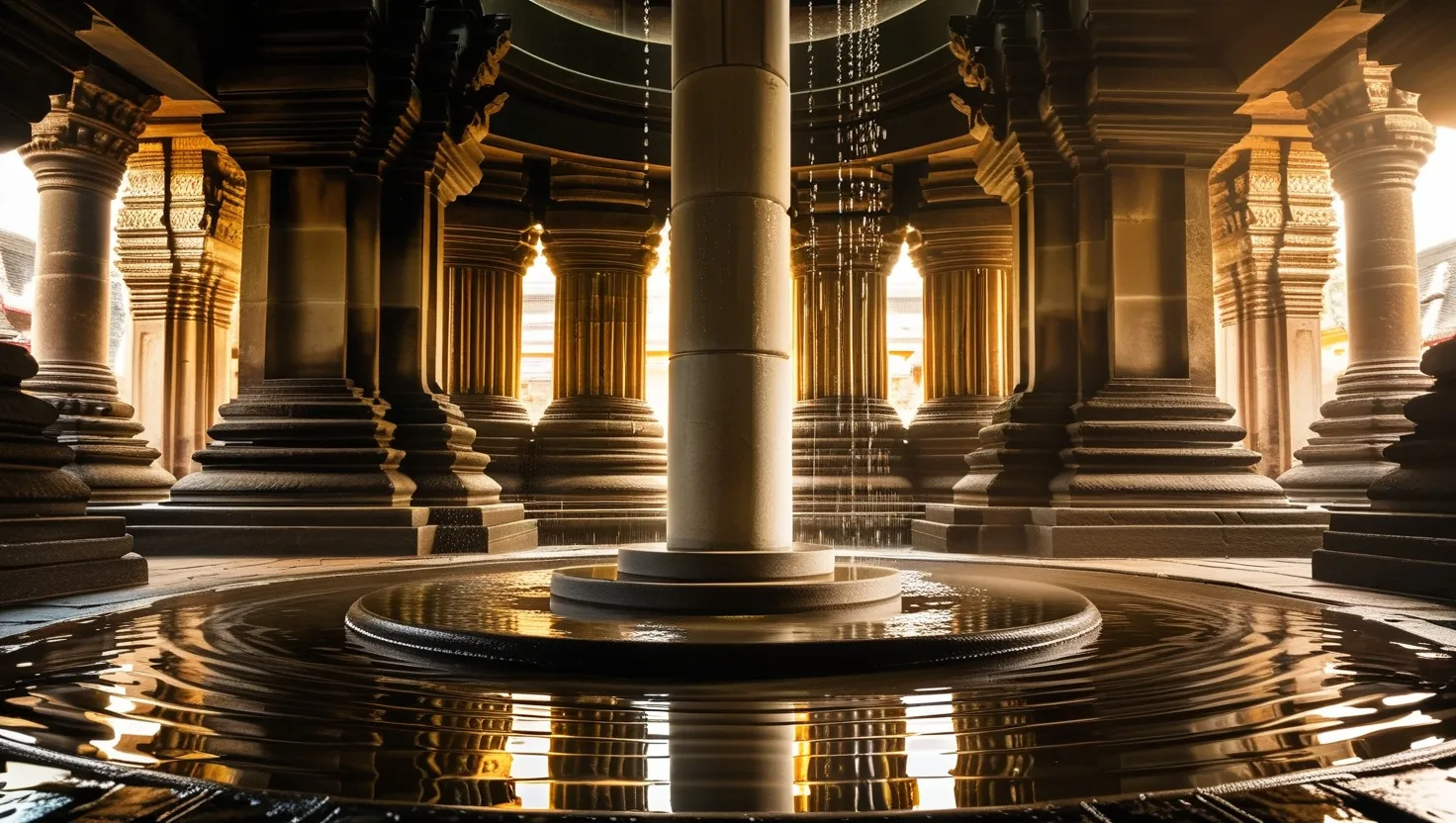
Have you ever looked at a Shiva Linga and wondered why this simple shape has so much meaning? If you walked into any Shiva temple, you’d see devotees pouring water over a rounded stone, offering flowers, sometimes just sitting in silence nearby. It’s easy to think this is only about ritual or tradition. But the stories and teachings found in the Linga Purana show that the Shiva Linga is so much more than just a religious object. Allow me to show you some sides of it that might surprise you and hopefully make this ancient symbol much easier to understand.
When I first heard the story of the infinite pillar of light, it sounded like a fantasy to me. Brahma and Vishnu, two gods, arguing over who is greater and then getting humbled as they try to find the ends of a pillar that just never ends. Odd, right? But there’s a simple point here: the linga isn’t just a form; it’s the sign of something with no limits, something you can’t track from start to finish. If you’ve ever stared into the night sky and felt small, you already sense this. By showing both gods unable to reach the beginning or the end, the story says, “The truth is bigger than your mind can imagine.” What happens to your ego when you accept that? Doesn’t it shrink a little?
Now, the Shiva Linga, at a glance, is quite plain. But in its very shape is a deep lesson. The cylindrical stone rising from its base is not just random. The base—called the yoni—stands for energy, for Shakti, the creative aspect. The pillar itself represents Shiva, consciousness. Put together, it’s about balance. I like to think of it not as two things joined, but as two parts that make the world happen. All around us—night and day, movement and stillness, energy and awareness. The linga teaches that nothing is complete by itself. Why do we focus on opposites and forget that one depends on the other? That’s a practical reminder from a stone.
It’s interesting how the rituals for the linga are so easy compared to many complex ceremonies you see elsewhere. Anyone can join in. Water, a little milk, some bilva leaves: these are the basic offerings. You don’t need expensive gifts. This feels like an invitation. In a way that’s as modern as ancient, the Linga Purana suggests that feeling, not wealth or status, brings you closer to the divine. If everyone can worship, isn’t that a statement about real equality? At its heart, this symbol connects us all beyond social boundaries.
“Mystery creates wonder and wonder is the basis of man’s desire to understand.” – Neil Armstrong
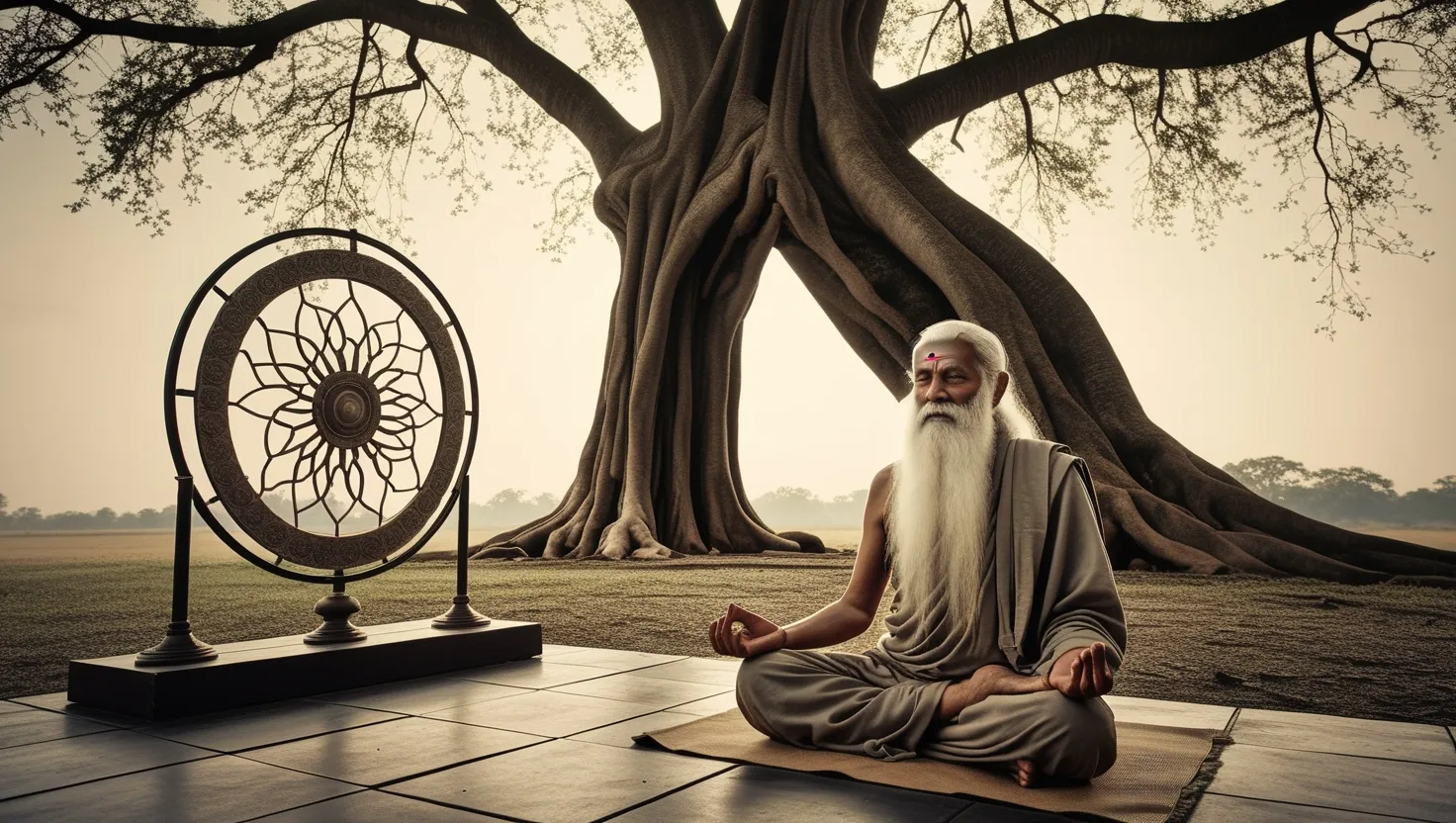
Let me tell you a small secret from the text: meditation on the linga is encouraged not out of habit, but because of its pure, uninterrupted form. When you sit in front of this smooth, complete shape—no sudden angles, no faces, no distractions—it does something funny to the mind. It makes it easier to settle. Your eyes and thoughts both stop jumping around. Meditation becomes a little simpler. When everything distracts us in the world, a blank symbol might be what we need most.
Everywhere you go in India, you’ll find lingas not just in big temples but under trees, by rivers, at busy crossroads. This didn’t happen by accident. Kings and sages once did this on purpose, choosing spots and dedicating them so that wherever people lived or traveled, the idea of the sacred was close by. Doesn’t this change how we see our surroundings? That patch of ground, that old tree—maybe it’s not just any place after all. The linga reminds us the holy isn’t far away or only in silence; it’s wherever we choose to see it.
Idolatry—worshipping an image as the ultimate reality—comes up in arguments about Hindu imagery. And yet, in the Linga Purana, the linga is not an idol. Its design is abstract, avoiding human or animal forms. This is on purpose. It’s a quiet way to say, “Don’t settle for the visible. There’s more.” In fact, the linga is meant to direct your thoughts past what you see with your eyes to what you can only feel or sense. It’s a stepping-stone, not a wall. If you’ve ever asked, “Is God really just this?” the linga says, “No, look deeper.”
“Not everything that is faced can be changed, but nothing can be changed until it is faced.” – James Baldwin
There’s another angle that is easy to miss. For centuries, some have looked at the linga and dismissed it as just ancient art, or even made jokes about it. The traditions, though, say otherwise. Did you know in some villages, the pouring of water over lingas becomes, for people, a way to connect directly with the groundwater table below? It’s not only about prayers for rain or crops—sometimes it’s a practical act, a reminder of nature’s cycles. For the agrarian society, this link between water, stone, and earth becomes a chant for their survival. We rarely realize how these symbols serve both spirit and body together.
If I asked you what the linga is made of, you might think of black stone or crystal. That’s not the only important thing. The Linga Purana describes lingas that are made of earth, sand, even rice or butter for special occasions. Some are built just for a day or two and then given back to a river. Think about that. This is not about lasting monuments; sometimes the most sacred thing is meant to disappear. It’s a lesson: what we build, what we cherish, must sometimes return to where it came from. Is that perhaps a gentle way of teaching us detachment?
“He who is devoid of attachment, who is the same in praise and blame, and possesses silence, contentment, and meditation, is dear to me.” - Bhagavad Gita
Have you ever noticed children playing around a temple linga, not really aware of its gravity? To them, it is just another smooth object to touch and circle. There is a kind of wisdom there—we wrap these symbols with layers of tradition as adults, but to a child, a linga is simply present, as natural as a rock or a stream. If the divine is in everything, then shouldn’t we also learn from the simplicity with which children accept the world? Sometimes it takes a child’s openness to really see what’s in front of us.
Another idea worth exploring is that the linga is not a mark of something ‘other’—a god outside us. The stories say that the linga also stands for one’s own higher mind or consciousness. When you focus on the linga, you’re also invited to see yourself, the silent witness within. Why do so many spiritual paths talk about “the observer” inside you—the part that is calm, unruffled, always watching? Maybe the linga is just a tool to point you there.
There’s a tradition in which devotees whisper their wishes to the linga, believing their words are carried straight to Shiva. It’s easy to dismiss this as superstition, but think about it: voicing a wish, giving hope shape, is the first step to action. The ritual becomes a gentle nudge toward clarity. How often do we bottle up what we most want, only to have it drift away? Speaking out, even to a symbol, is sometimes enough to spark change.
“Wherever you go, go with all your heart.” – Confucius
It’s also interesting that even as the linga stands still and silent, the world around it moves. Worshippers circle it, always clockwise. Life, death, seasons, cycles—all are brought into focus by simply walking around a stone. If you ever feel lost, don’t fancy meditation, or struggle to pray, try just walking in a circle. Sometimes an ancient practice is a physical way to draw your mind away from worry and back to basics.
Let’s get practical for a moment. Several legends in the Linga Purana link the installation of lingas with the turning points in people’s lives—an end to drought, survival against disease, or finding guidance when nothing else worked. Even today, when someone’s in trouble or grateful for help, building or installing a linga is considered meaningful. It is not just a static object but a marker of life’s most important decisions and transitions.
“The greatest truths are the simplest, and so are the greatest men.” – Julius Charles Hare
When I think about all these dimensions, I realize the Shiva Linga is like a blank slate—simple, yet overflowing with meaning. It bridges gaps: between what we see and what we sense, between ritual and direct experience. It doesn’t force anyone into a box. There’s enough room for scholars, poets, scientists, farmers, and children.
If you ever find yourself in front of a Shiva Linga, take a breath and just sit—not to expect miracles, but to rest in the middle of so many stories, ideas, and silences. Ask yourself: what’s really here? What am I bringing to this moment, and what am I willing to let go? The Linga Purana suggests that the real pilgrimage is not walking to some distant mountain or river, but turning your attention within—right here, right now, as you are.
“To see a world in a grain of sand, And a heaven in a wild flower, Hold infinity in the palm of your hand, And eternity in an hour.” – William Blake
In the end, the Shiva Linga teaches us by being both simple and complex, clear and mysterious, present and beyond reach. Next time you pass one, remember: it isn’t there to impress you, but to invite you—to see life itself as miraculous, sacred, and deeply your own.