Mahabharata's Cosmic Ledger: How Boons and Curses Reveal the Hidden Price of Every Gift
Discover how Mahabharata's curses and boons reveal karma's hidden cost. Explore Kunti, Karna, Bhishma's fates and life's moral ledger today.
Let me ask you something before we start. Have you ever received a gift that turned out to cost you more than you expected? Maybe a promotion that stole your free time, or a favor that tied you to someone for life? The Mahabharata figured this out thousands of years ago, and it built an entire moral system around this simple truth. Nothing is free. Not even blessings from gods.
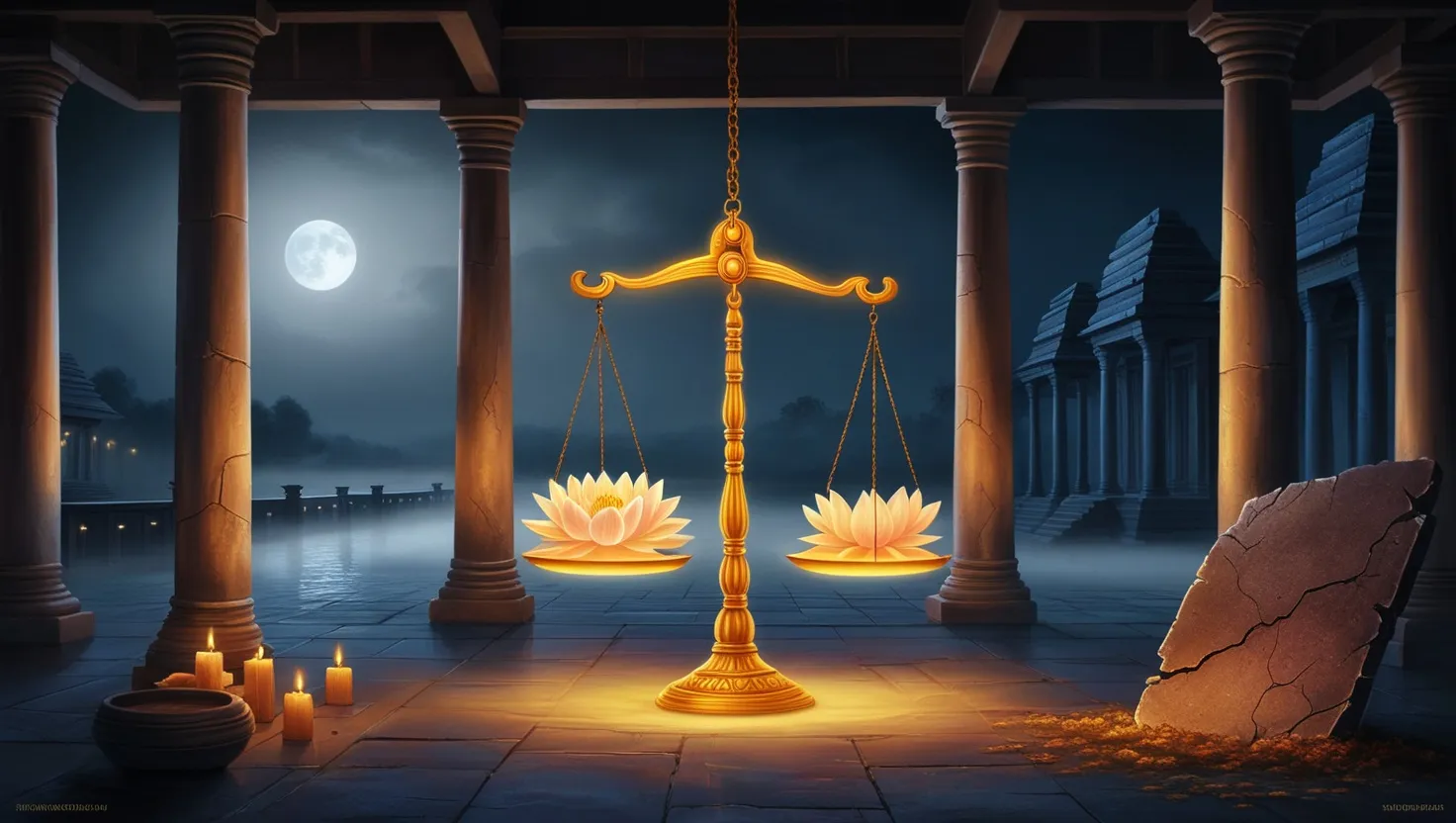
The epic treats curses and boons like entries in an account book. Someone gains, someone pays. Someone speaks words in anger, and those words become unbreakable law. Someone receives a divine favor, and that favor quietly plants a problem that will bloom years later. This is not magic for the sake of drama. It is the universe keeping track.
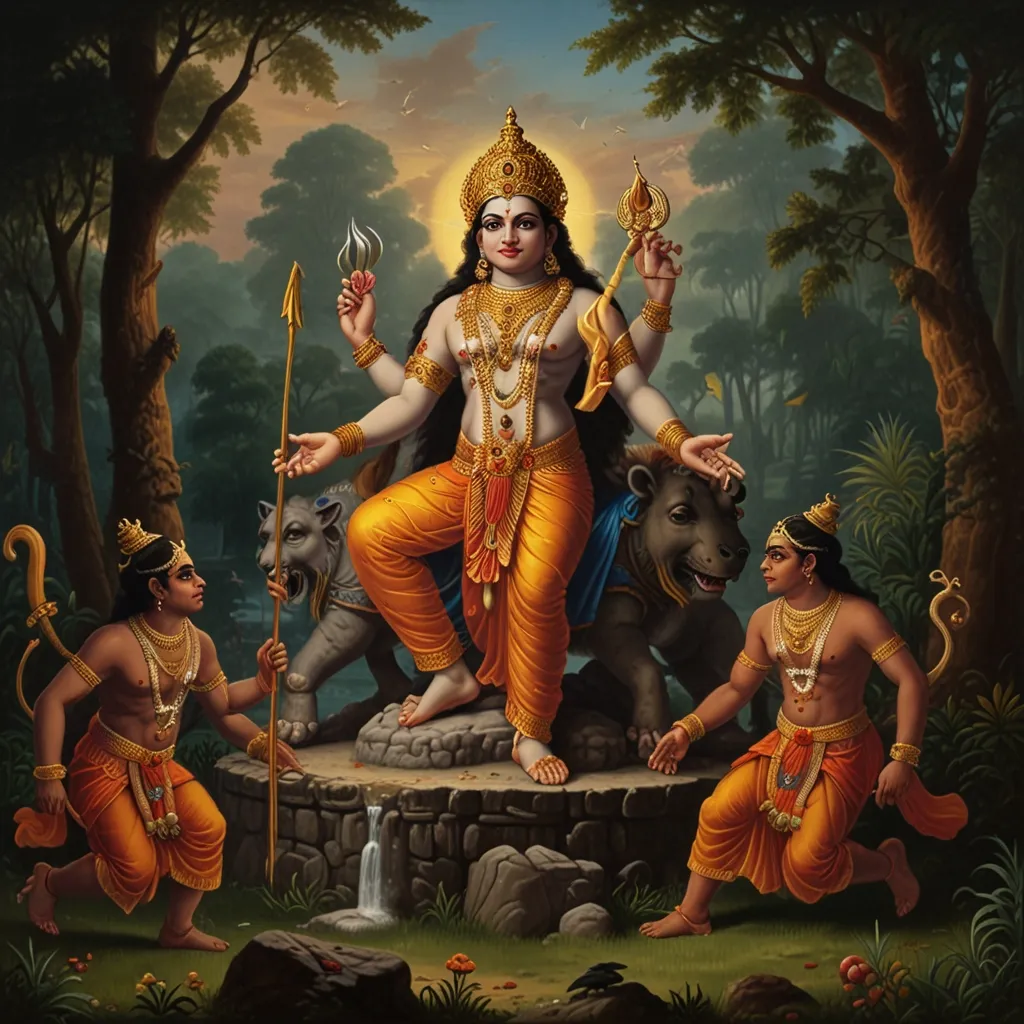
Take Kunti. As a young girl, she is given a boon that lets her call any god and have a child by him. She tests it out of curiosity, not wisdom, and ends up pregnant before marriage. Terrified of shame, she sets her baby, Karna, afloat on a river. That single moment of panic becomes a wound that tears through the entire epic. Years later, the same boon gives her five more sons, the Pandavas. But it also means she has a son on the enemy’s side, a brother the Pandavas will have to kill without knowing who he is. The boon was generous. The price was brutal.
“Whatever you do will be insignificant, but it is very important that you do it.” This idea runs through the epic like a quiet warning. Every choice, however small, writes itself into fate.
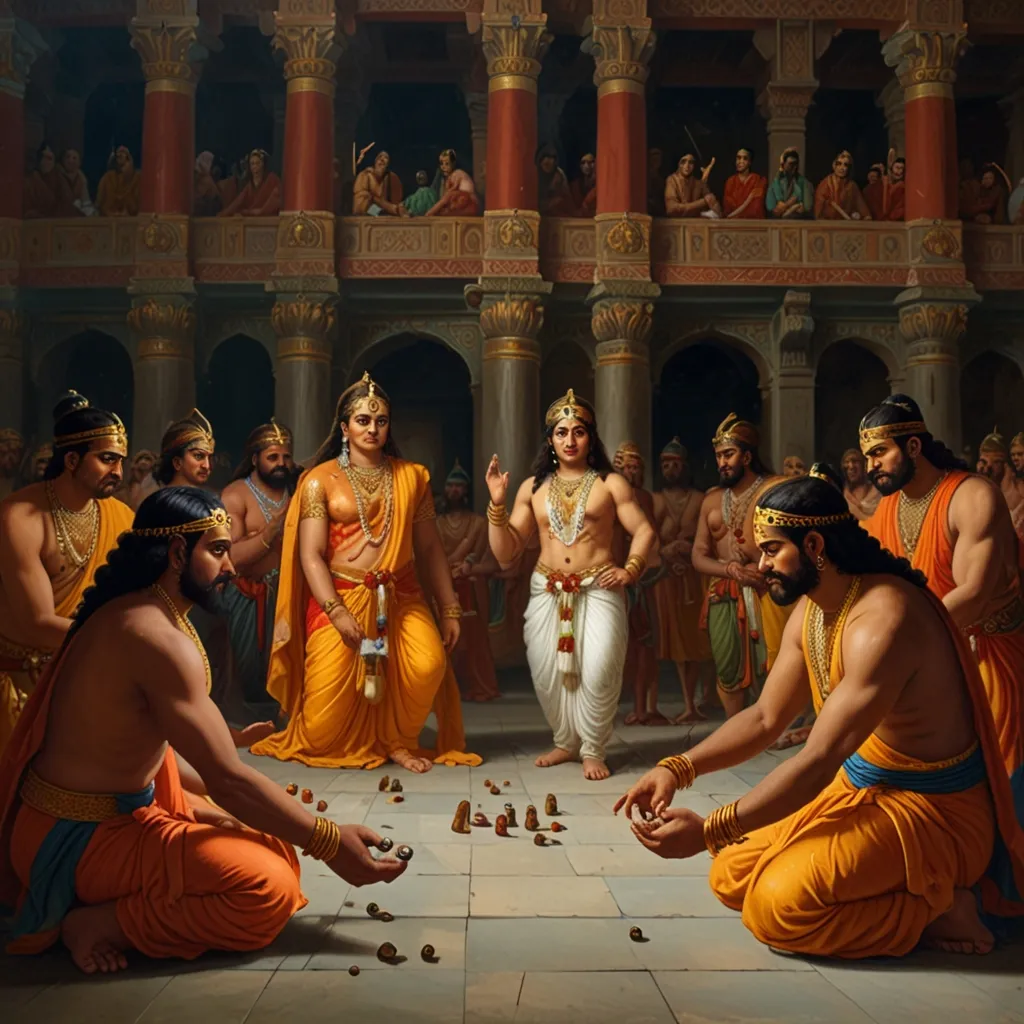
Draupadi’s story carries a similar weight. She is married to five brothers at once, a strange and uncomfortable solution to a problem created by Kunti’s careless words. It works, in a way. It creates one of the most unusual households in all of literature. But it also means that when the Kauravas drag her into the gambling hall, none of her five husbands can agree fast enough on how to protect her. Five husbands should mean five protectors. Instead, it means five men frozen by their own rules. Ask yourself, would you rather have five people responsible for you, or one person who takes full ownership?
Bhishma’s boon looks like a dream on the surface. He gets to choose the moment of his own death. Who wouldn’t want that kind of control? But look closer. This gift becomes a prison. He lies on a bed of arrows for fifty-eight days during the war, watching his family destroy itself, unable to die until the sun shifts its path. His boon does not save him from pain. It forces him to sit through all of it, fully conscious, fully aware, with no escape.
Curses work the same way, just from the other direction. Karna is cursed by his own teacher, Parashurama, for lying about his caste to gain knowledge. The curse makes him forget the exact weapon he needs at the exact moment he needs it most, during his final battle with Arjuna. It feels unfair. But this curse is the only reason Arjuna survives. Without it, the entire war might have ended differently. The curse punishes Karna’s old lie, but it also protects the larger balance of the story.
“Where there is righteousness in the heart, there is beauty in the character.” Karna never quite gets the chance to prove this about himself, and that is what makes him one of the most tragic figures ever written. Doesn’t it make you wonder how different he could have been without that single curse?
Pandu’s curse seems almost cruel when you first read it. A sage curses him that if he ever embraces his wives, he will die instantly. This happens because Pandu, while hunting, accidentally kills the sage in the form of a deer, caught in a private moment with his mate. The curse strips Pandu of something deeply human. But it also forces a workaround. His wives call upon gods to father children in his place. Without this curse, the Pandavas as we know them would not exist. The curse becomes the strange engine behind the entire next generation of the story.
Even Krishna is not above this ledger. Gandhari, grieving the death of all hundred of her sons, curses him. She says his own family, the Yadavas, will destroy each other the same way her sons destroyed one another. Krishna does not argue. He does not use his divine power to escape it. He accepts it, almost peacefully, as if he already knew this moment was coming. If the one being everyone calls divine has to pay his dues, what does that tell you about the rest of us?
Karna’s life shows this system in its most painful form. He is cursed by his teacher. He is cursed by a Brahmin whose cow he kills by accident while practicing archery. He is cursed, in a way, by his own mother’s silence about his birth. Each curse chips away at him, limits him, boxes him in. Yet these same curses are what make him feel real. He is not evil. He is a man stuck inside rules he never agreed to and never fully understood.
“It is better to perform one’s own duties imperfectly than to master the duties of another.” This single idea might explain why so many characters in the epic suffer when they try to escape their given role, whether through a boon that promises too much or a curse that punishes too harshly.
This entire system mirrors the idea of karma, where every action creates a reaction, intended or not. But it is not fair in the way humans want fairness to work. It is cosmic, bigger than any one person’s sense of justice. The Mahabharata keeps telling us, again and again, that life runs on obligations. Take a gift, and you owe something back, even if you don’t know what yet. Speak a curse, and you become bound to watch it play out, whether you wanted it to or not.
What strikes me most is that almost none of these characters understand the terms of their own deals. Kunti doesn’t know her boon will create a lifelong secret. Bhishma doesn’t know his gift will become his prison. Gandhari doesn’t fully grasp that her curse will take decades to arrive but will land exactly where she aimed it. They act in the moment, out of joy, fear, or grief, and the ledger silently records it all.
So here is the real question the epic leaves us with. If you knew every gift came with a hidden cost, and every curse eventually served a purpose, would you still act the way you do? The Mahabharata doesn’t give you an exit from this ledger. Nobody gets to skip the accounting. What it gives you instead is a way to see the pattern clearly, so that when your own moment comes, whether it’s a blessing or a punishment, you can meet it with open eyes instead of surprise.