How the Kurukshetra War Shows That Rules Die One Small Exception at a Time
Explore how Kurukshetra's warrior code collapsed one exception at a time — and what the Mahabharata reveals about ethics, war, and moral compromise. Read the full breakdown.
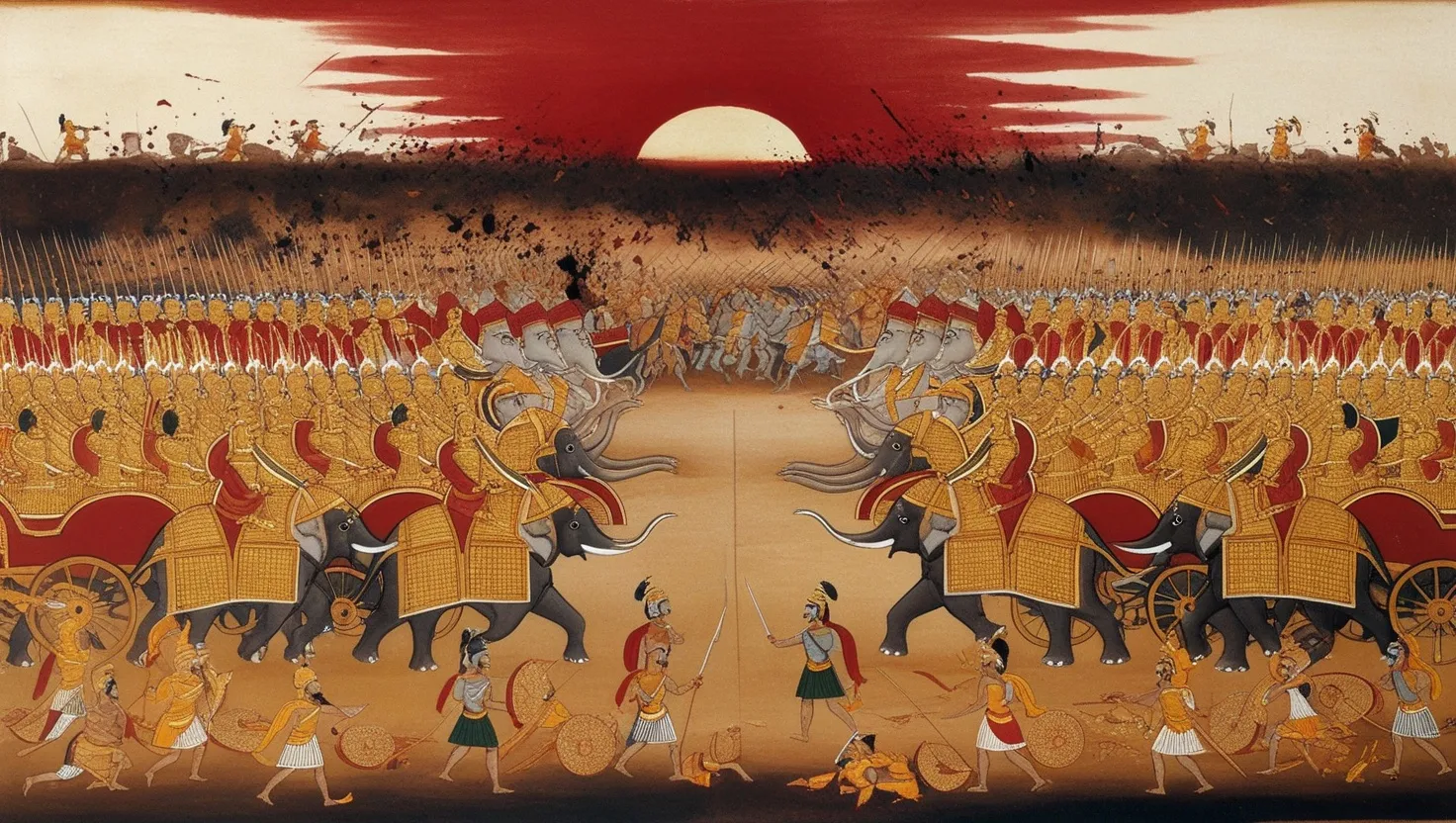
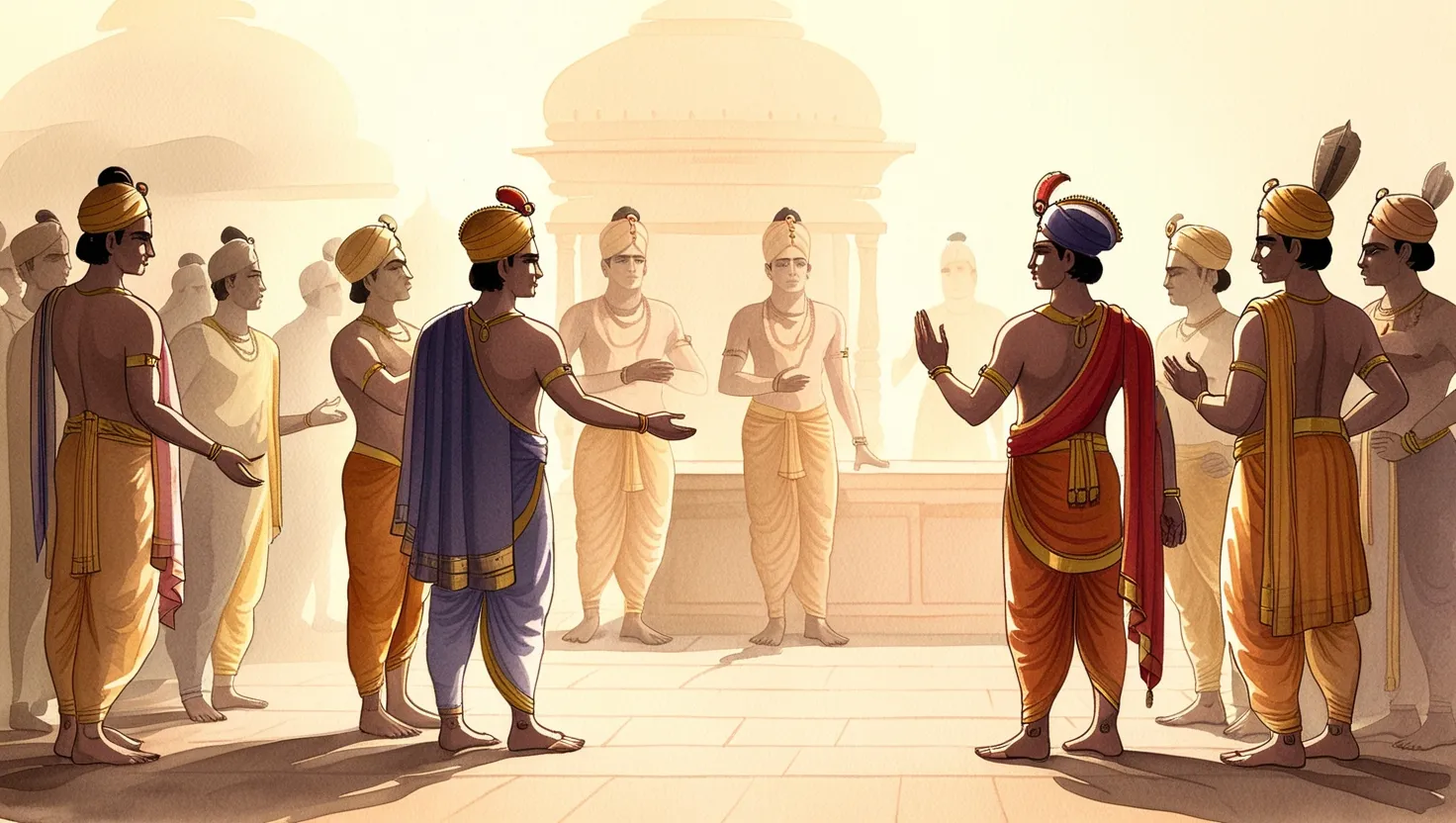
There is something almost naive about the opening hours of a battle that killed millions. Before the first conch sounded at Kurukshetra, both armies announced the rules out loud. Chariot would fight chariot. Elephant would meet elephant. You did not strike a man whose weapon had broken, whose chariot had lost its driver, or who had turned away from the fight. Mace fighters kept their blows above the waist. An arrow would not seek a sleeping man, a surrendered man, or a man who had simply stopped fighting. When the sun went down, the fighting stopped. No one needed to sign that agreement. Warriors understood it the way they understood breathing.
Eighteen days later, every single one of those rules was dead.
What makes the Kurukshetra war so uncomfortable to read about — even centuries after it was composed — is that the rules did not collapse in a single dramatic moment. They were chipped away, one careful exception at a time, until there was nothing left to chip. Each breach produced a justification. Each justification became a template. By the time the last mace blow landed, the men who called themselves righteous had used every method they condemned.
Think about that for a second. Have you ever watched something decent get ruined not by one terrible decision, but by twenty small ones that each seemed reasonable?
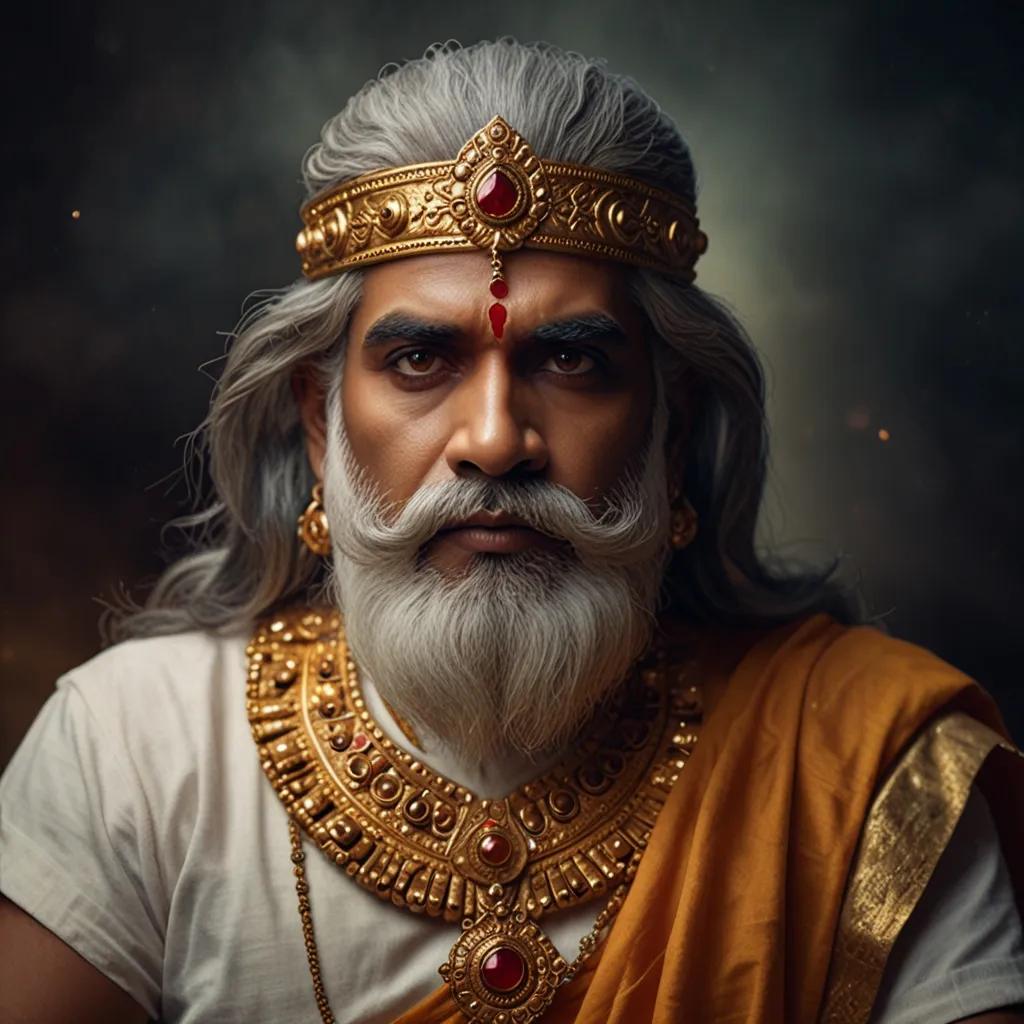
Bhishma’s fall on the tenth day is where the fracture begins. The grandsire of the Kuru dynasty was genuinely undefeatable in straight combat. His own vow made him a fortress — he would not raise weapons against someone who was not, in his understanding, a male warrior. Shikhandi, who had been born the woman Amba, sat exactly on that boundary. Krishna saw the opening. He placed Arjuna behind Shikhandi on the field, using Bhishma’s private restraint as a shield wall for Arjuna to shoot through. Bhishma himself had hinted before the war that this was the only way. He offered his own defeat like a gift, because death on the field was his exit from a life of impossible obligation.
The paradox is worth sitting with. A man who had governed himself with iron discipline for his entire life could only be brought down when the people around him agreed to abandon the rules on his behalf. He did not fall to greater strength. He fell to the careful use of his own conscience against him.
“He who has no enemy in the world, and who is indifferent to honour and dishonour, he who is patient and content, and who is self-restrained, is dear to Me.” — Bhagavad Gita
Fifteen days in, the wound went deeper. Drona, who had trained half the warriors on that field, was unbeatable while his spirit was intact. So his spirit was targeted. The Pandavas circulated a rumour that his son Ashwatthama had been killed. Yudhishthira, the one man whose word no one doubted, confirmed it — but added the name of an elephant named Ashwatthama under his breath while drums drowned out the qualification. Drona’s heart broke. He sat down on his chariot floor, eyes closed, weapons abandoned. In that moment, Dhrishtadyumna walked up and took his head.
No part of the epic celebrates that moment. It records it with the flatness of something shameful. The greatest teacher of his generation was killed while unarmed, disengaged, and grieving. The code said you do not do that. The code died in that instant as clearly as Drona did.
But here is what people miss: the code had already been shown to be negotiable two days earlier, on the thirteenth day, when Abhimanyu was killed.
The boy rode into the Chakravyuha — a rotating disc formation — alone, because only he knew how to enter it and no one else could follow. What happened inside is one of the most disturbing passages in the entire epic. The greatest warriors of the Kaurava side surrounded a single teenager. They broke his bow. They killed his horses. They cut down his chariot. And when he lifted a chariot wheel as his only remaining weapon, they swarmed him until he collapsed. Seven or more senior warriors against a boy who had run out of weapons.
The law of single combat was not bent. It was publicly murdered in front of both armies. And once both armies watched that happen and the sun still rose the next morning, every warrior on that field understood something new: the rules applied only when it was convenient to follow them.
“The destruction of the family destroys its eternal law, and when the law is destroyed, lawlessness overwhelms all the family.” — Bhagavad Gita
Does it surprise you that after Abhimanyu, the violations came faster?
When Karna’s chariot wheel sank into the earth on the seventeenth day, he stepped down to free it and called on Arjuna to wait. His voice carried the full weight of the warrior code. A man in distress was entitled to patience. Arjuna hesitated. Then Krishna spoke — and what Krishna said was not a defence of the code but a precise autopsy of who had killed it first. He listed Abhimanyu’s encirclement. He described Draupadi being dragged by her hair into an open assembly. He reminded Arjuna that Karna had participated in or approved of every one of those violations when they benefited the Kaurava camp. Where was Karna’s code when the boy needed it?
Arjuna shot. The arrow landed. The question of whether it was just or merely necessary has no clean answer, and the epic does not pretend it does.
The last honest duel the war could offer came on the eighteenth day. Bhima and Duryodhana with maces, everything on the outcome. Then Bhima struck below the waist, shattering the thighs he had sworn twelve years earlier to break. Duryodhana fell, and as he fell, he screamed about the rules. He was not wrong. The blow was forbidden in mace combat. The fact that Bhima was on the righteous side did not make the blow righteous. And Duryodhana, a man who had spent his life trampling others with impunity, died invoking the very principles he had never respected.
That is the quiet, terrible irony the Mahabharata places at the centre of its war. The man who began the chain of violations gets to name each final one. He is accurate. And his accuracy changes nothing.
“In the assembly, the Pandavas were wronged. In the forest, they were wronged. At every turn, they were wronged. Yet the wrong they do not acknowledge is the wrong they have become.” — Vidura, Mahabharata
Krishna answered Duryodhana’s accusation with a ledger. Every sin was itemised. The accounting was correct. But a correct ledger does not restore a dead code. It only explains why the code had to be killed. The Pandavas were in the position every army eventually reaches when it fights a war long enough: to win, they had to use the weapons of the enemy. By the time they used those weapons, the distinction between justice and revenge had thinned to nearly nothing.
The final horror arrived at night. Ashwatthama, son of the murdered Drona, crept into the Pandava camp when every warrior was asleep and killed everyone he could find. He killed the five sons of Draupadi. Children. Sleeping. Posing no military threat in the dark. The massacre had a personal logic — grief and fury at how his father died — but no warrior logic at all.
No rule could condemn that act because no rule had survived long enough to condemn anything.
The sun rose on a war where the winners sat in a field of corpses that included their own sons, their teachers, their grandfather, and every moral position they had held when the conches first sounded.
What the Mahabharata is actually teaching — quietly, through eighteen days of accumulated damage — is that the rules of war are not laws of nature. They are a shared agreement between people who choose, every single day, to be bound by them. The moment one side decides that a particular exception is necessary, the other side learns to make exceptions too. And each exception makes the next one easier to justify. A ruse here. A technical lie there. A blind eye turned away from a boy surrounded by veterans. Each one feels necessary in the moment. Each one becomes the reason for the next.
The path from the first broken rule to the night massacre is not a cliff edge. It is a gentle slope, and you only notice how far you have walked when you look back and can no longer see where you started.
That is not a story about ancient India. That is a story about every institution, every relationship, and every conflict in which people decide that this one time, the rules do not apply — and then spend years explaining why they were right, long after the damage is done.