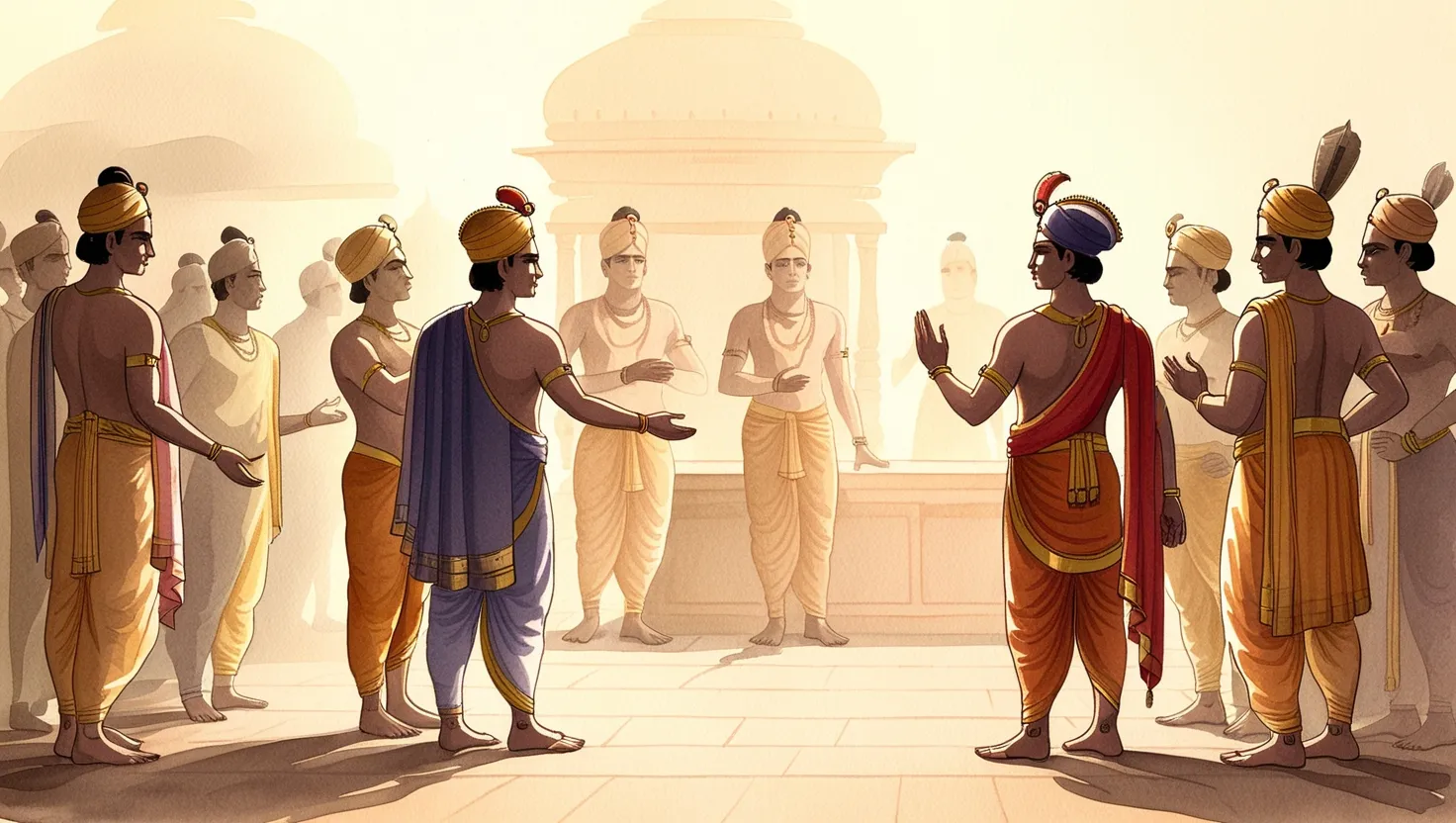
Imagine this: the Mahabharata feels like a massive storm of gods, arrows, and kings clashing. But stop for a second. What if I told you the real twists came from folks in the background? Not the heroes with shiny swords. Regular people, servants, even a talking cow. They nudged the whole story off its path. Let’s walk through it together, step by step. I’ll keep it simple, like we’re chatting over tea.
Think about Vidura first. He’s Dhritarashtra’s half-brother, born to a servant woman. No throne for him. Just a sharp mind and a good heart. Every time trouble brewed in the palace, Vidura spoke up. “Hey, king, don’t favor your son Duryodhana so much. He’s heading for disaster,” he’d say. Dhritarashtra ignored him, every single time. But Vidura kept talking. His words hung in the air like smoke you can’t ignore.
“The highest dharma is to speak truth, but with kindness.” – That’s Vidura’s own line from the epic. He lived it.
Why do you think kings like Dhritarashtra tuned him out? Was it pride? Or fear? Vidura wasn’t powerless. His steady voice reminded everyone what right looked like. Without him, the court might have crumbled faster. He was the quiet voice saying, “This is wrong.” Try picturing your own life. Who’s that one person giving advice you skip?
Now, shift to Sanjaya. He’s just a charioteer. But Vyasa, the sage who wrote the whole tale, gives him special eyes. Divine sight. Sanjaya sits safe in the palace and describes the entire Kurukshetra war to blind Dhritarashtra. Arrow by arrow, death by death. But it’s not dry talk. Sanjaya sighs. He weeps. “Oh king, your sons are falling,” he says with pain.
This isn’t just reporting. It’s like he’s the war’s heartbroken narrator. Through him, we feel the mess. Warriors act brave, but Sanjaya shows their fear. The gods watch from above, but he makes it real for us. Have you ever heard a story that hit you because of how it was told? Sanjaya does that here. His words turn glory into grief.
Picture the end of the war. Krishna’s driving his chariot. Along comes Uttanka, a simple sage. He grabs the reins. “Krishna, remember your old promise? Avenge my guru’s insult.” Krishna smiles, crushes some food in his fist. Out pours blood, sand, bits of bone. “See? That’s all that’s left of the Kauravas. I ate them up for you.” Boom. The war’s over, shown in one gross handful.
Uttanka’s tiny stop feels random. But it seals the deal. No more enemies. Just dust. Why does the epic squeeze this in? To show even gods tidy up loose ends personally. Next time you’re rushing, ask: what small promise might change everything?
Shikhandi takes it weirder. Born a princess named Amba. She loved Bhishma, but he rejected her. She burns herself to ash, vows revenge. Reborn as a man. Trained for one job: stand in front of Bhishma. See, Bhishma swore never to fight anyone born female. Shikhandi just exists there on day ten of the war. Arjuna hides behind him. Bhishma drops his bow. Dead.
No sword swing from Shikhandi. Just being there. A lifetime of pain boils down to standing still. Isn’t that wild? Fate uses a gender twist to topple the unbeatable grandpa of the clan. What if your biggest role was just showing up? Shikhandi proves bodies can be weapons too.
“Vows are chains we forge ourselves.” – Bhishma might say that, reflecting on his end.
Then there’s Karna’s charioteer. No name. Just a guy doing his job. Karna’s dueling Arjuna, the big finale. Karna’s wheel sinks in mud. He jumps down to pull it free. The charioteer yells, “Master, fix the wheel first! Rules of war say no fighting till it’s done.” Karna listens. Pauses. Arjuna’s arrow flies. Head off.
That shout? Pure duty. No drama. But it dooms Karna. Cosmic fate hides in everyday rules. Imagine if the charioteer stayed quiet. War changes. One worker’s sense of order flips the script. Ever followed a rule that backfired big?
Even the earth gets in on it. Prithvi, the goddess as a sad cow. She moans to the gods: “These kings are too heavy. Cruel. Squash them.” Gods send down avatars. Vishnu as Krishna. The whole Mahabharata starts because dirt complains. Not a king. Not a warrior. The ground itself kicks off the cleanse.
This sets the tone. The war isn’t family feud. It’s world reset. Prithvi’s plea makes it cosmic housecleaning. Why a cow? Simple. Cows mean earth, motherhood. Her cry starts the bloodbath. What burdens your world enough to spark change?
Let’s dig deeper into these shadows. Take Ekalavya. Wait, not the archer everyone knows. There’s lesser talk of minor hunters who tipped off Pandavas about Kaurava camps. Unnamed scouts. They whisper paths through forests. Supply lines cut. Armies starve. No glory. Just feet on ground, eyes sharp.
Or Barbarika, Karna’s son in some tales. He wants to watch the war, invisible. Krishna tricks him into giving his head first. That head comments from a hill, seeing all. Minor? Sure. But his view ties loose ends. Krishna uses even a severed head.
What about the hunter who kills Krishna later? Jara, blind man. Mistakes Krishna’s foot for deer. Arrow flies. God dies. Tiny mistake ends the avatar. No fanfare. Just bad aim.
These bits show the epic’s genius. Big stars shine, but plot needs extras. Vidura’s ignored wisdom builds tension. Sanjaya’s play-by-play builds dread. Uttanka’s snack proves victory. Shikhandi’s stance breaks vows. Charioteer’s call seals fate. Prithvi’s moo launches it all.
“In the game of dice, small throws decide the pot.” – Like Shakuni’s loaded dice, but for lives.
Ever wonder why the Mahabharata loves these? It teaches power hides everywhere. Not just muscles or crowns. A word. A wait. A duty. Kings rage, but bystanders steer.
Let’s talk Vidura more. Lesser known: he quits the court once. Yudhishthira begs him back post-war. Vidura’s brain helps rebuild. Moral smarts over war smarts. He fathers Yuyutsu, the good Kaurava son who switches sides. Family ripple from a servant’s boy.
Sanjaya? After war, he wanders forests. No riches. Just peace. His sight fades, but he saw truth. “I saw dharma die,” he might mutter.
Uttanka’s curse nearly curses Krishna post-war. But Krishna’s trick food calms him. Shows even gods dodge bullets with props.
Shikhandi’s arc? Amba’s souls swap chills spines. Rebirth for revenge. Bhishma sees her soul in him, lays down arms. Passive power.
Karna’s wheel? Earth swallows it on Krishna’s curse from earlier life. Charioteer unknowingly pulls the trigger.
Prithvi? Her story echoes real floods, famines in ancient lore. Earth rebels.
Now, unconventional angle: these minors are us. You and me. Not headliners. But our small acts bend lives. Boss ignores your idea? Like Vidura. Tell a tough story? Sanjaya. Stand firm? Shikhandi.
Question for you: who’s the Vidura in your story? That friend warning you?
Another gem: the bird messenger. Tiny tale. A heron family dies because Yudhishthira shoots wrong. Teaches mercy mid-war. Bystander deaths highlight waste.
Or the dog who follows Yudhishthira to heaven. Stands for dharma. Gatekeeper blocks it. Dog reveals as god. Minor loyalty wins.
These threads weave tight. Epic says fate uses anyone. Servants. Sages. Animals. No one idle.
“Great rivers start from small springs.” – Ancient wisdom fits.
Think modern. Wars turn on aides’ notes. Leaks. Pauses. Mahabharata nails it first.
Barbarika’s head, from folk versions, judges the war fair. Says Pandavas cheated, but dharma won. Krishna bows to that view.
Vidura’s talks fill the Udyoga Parva. Whole book of “what ifs.” Ignored roadmaps.
Sanjaya narrates 18 days. His “alas” counts more than kills.
Uttanka shows Krishna’s human side. Hungry? Crushes armies.
Shikhandi embodies karma’s long game. Centuries for one stand.
Charioteer? Duty’s blind blade.
Prithvi? Nature’s vote.
Lesser fact: Maya the architect builds for Pandavas, but his work distracts foes. Minor builder shifts battles.
Or the saint who curses Karna’s bow early. Tiny hexes stack.
Why unconventional? Epic glorifies might, but credits margins. Women, servants, earth. Subverts power tales.
Imagine no Vidura. Dhritarashtra wakes up? No war? But he stays blind.
No Sanjaya? Blind king clueless. Story dies.
No Uttanka? Loose end dangles.
These pivots prove: history’s hinges are small.
What small act changed your path? Think.
In end, Mahabharata whispers: watch edges. Stars fall, but extras lift or drop them.
Yudhishthira rules, asks Vidura advice. Circle closes.
Krishna exits stage, world shifts.
Quiet ones catalyzed it all.
So next tale you hear, spot the shadows. They move worlds.
(Word count: 1523)