How the Mahabharata's Hidden Identities Reveal Timeless Truths About Human Nature and Destiny
Discover how disguises in the Mahabharata reveal profound truths about identity, karma, and destiny. Explore masks as spiritual tools for transformation. Read more.
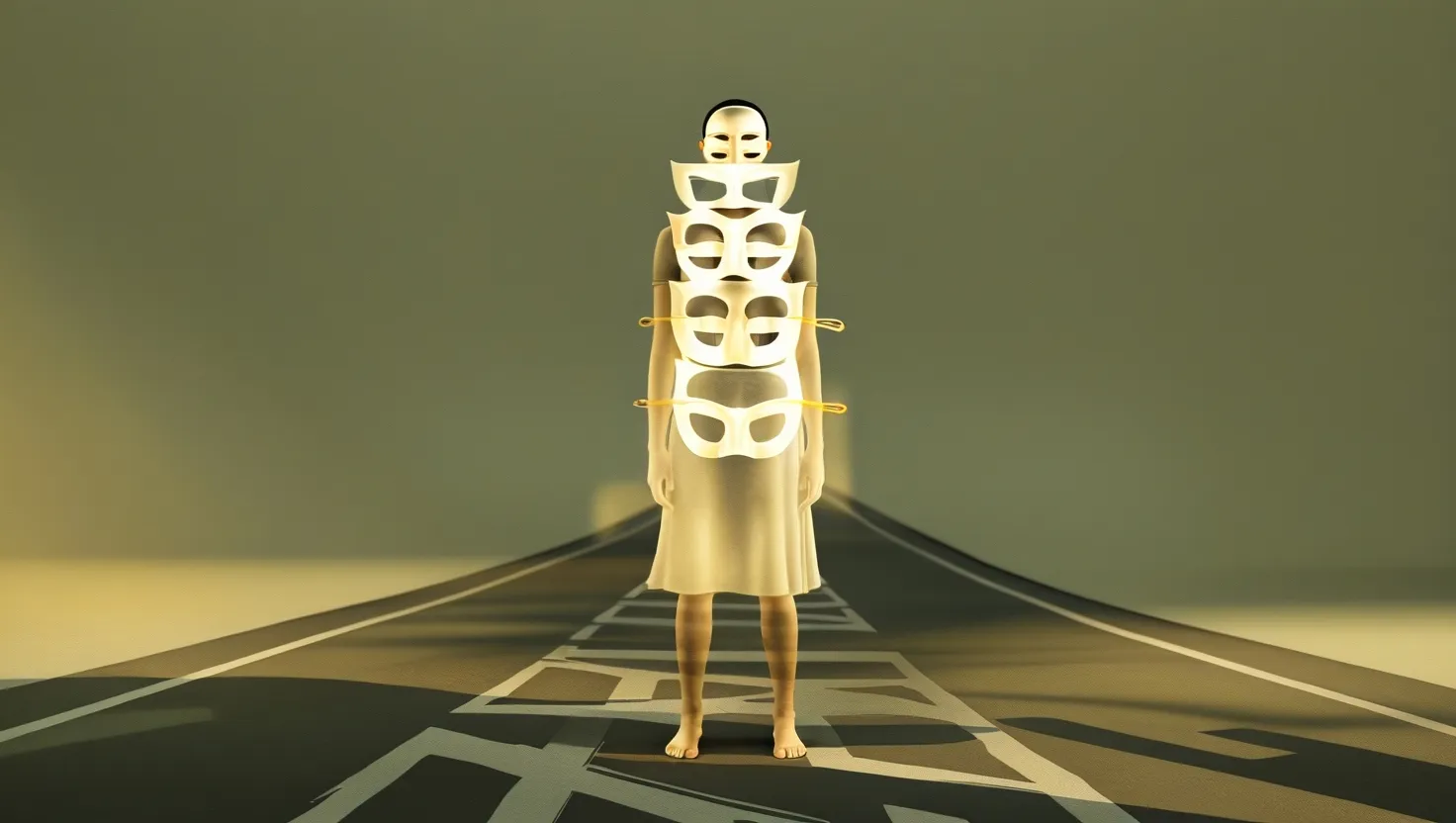
What does it mean to wear a mask, not on your face but over your soul? The Mahabharata does not merely tell us tales of hidden identities and clever disguises. It challenges us to consider how masks shape fate—sometimes saving lives, sometimes setting tragic wheels in motion. Let’s walk through these threads of deception, questioning at every turn: is what we see ever the whole truth?
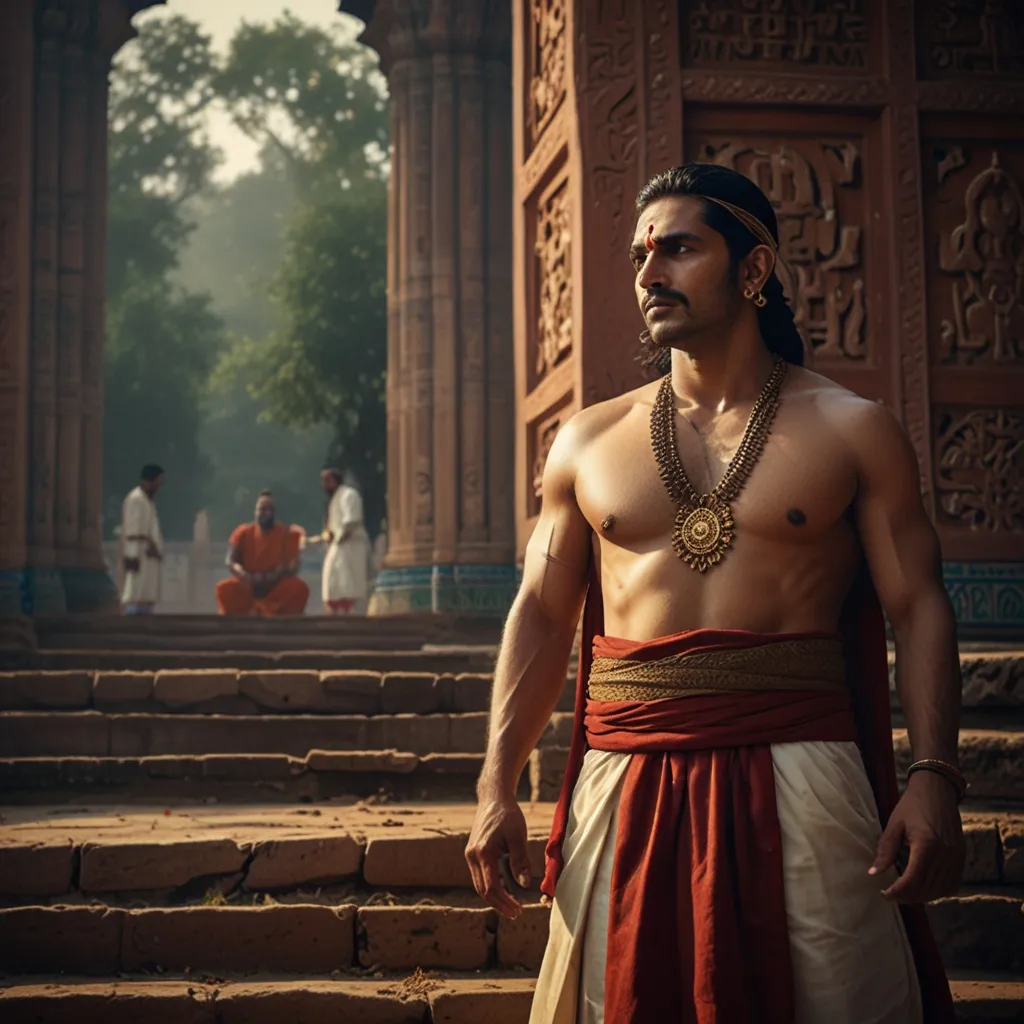
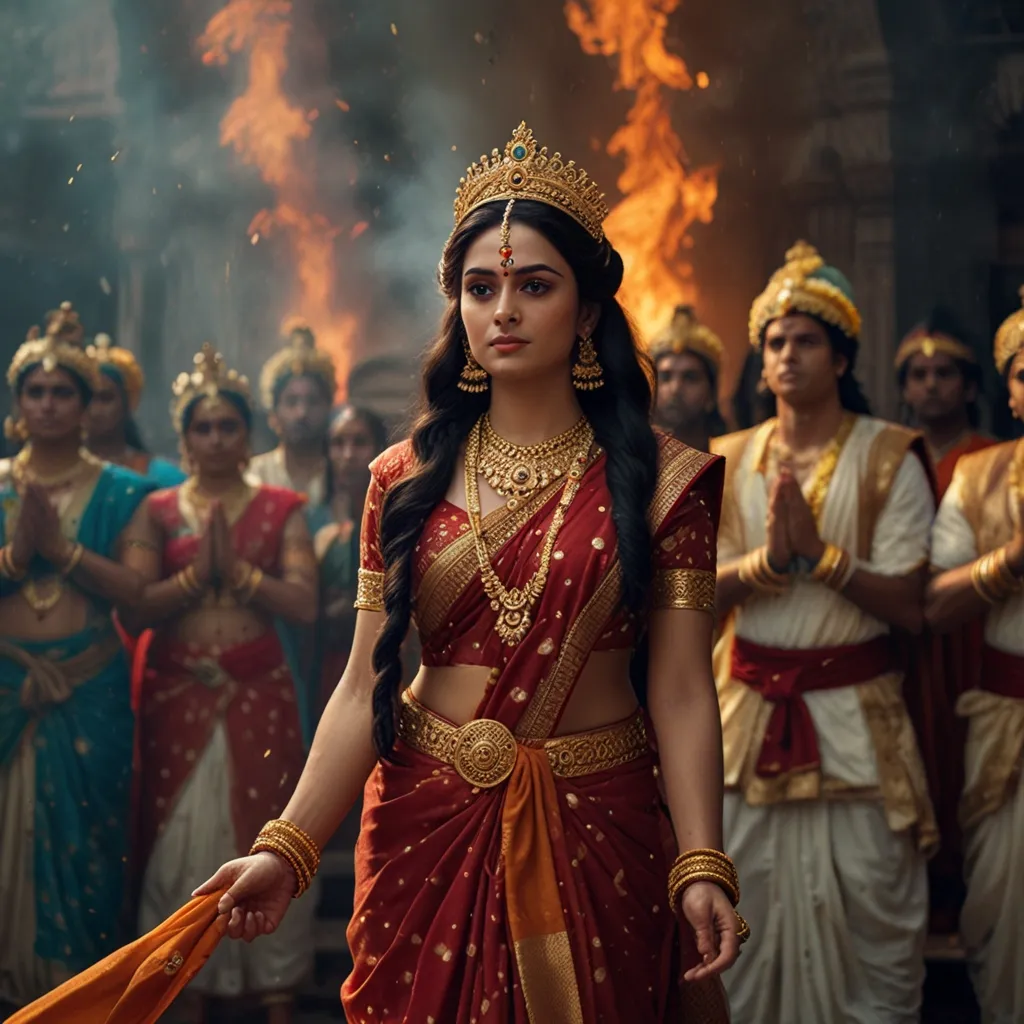
If I were to picture the Pandavas in their thirteenth year of exile, I’d see not just noble kings forced into servitude, but humans forging humility through necessity. Imagine Yudhishthira, once a monarch, now a courtier skilled in dice, walking softly in the hallways of King Virata’s palace. Bhima’s hands—once deadly with mace—are now busy stirring pots in the kitchen. Arjuna, who had felled mighty warriors, now ties bells to his ankles and teaches dance to the royal princess. Sahadeva herds cattle, Nakula grooms horses, and Draupadi, their queen, keeps her head bowed as a maid. Can you picture the discomfort of that transformation—the way pride must ache in such small tasks? Would survival taste bitter or would it temper the soul like fire tempers steel?
“Appear weak when you are strong, and strong when you are weak.” - Sun Tzu
Their disguises were not just cloaks to escape detection, but crucibles for growth. For a year, their greatness was invisible. Each brother lived a humble truth he could have easily ignored. Each day was a test: not of strength, but of patience and adaptability. It’s easy to appreciate humility in theory; it’s harder when every day demands it. Doesn’t that raise a question—would we recognize the lessons hidden in our own forced retreats from pride?
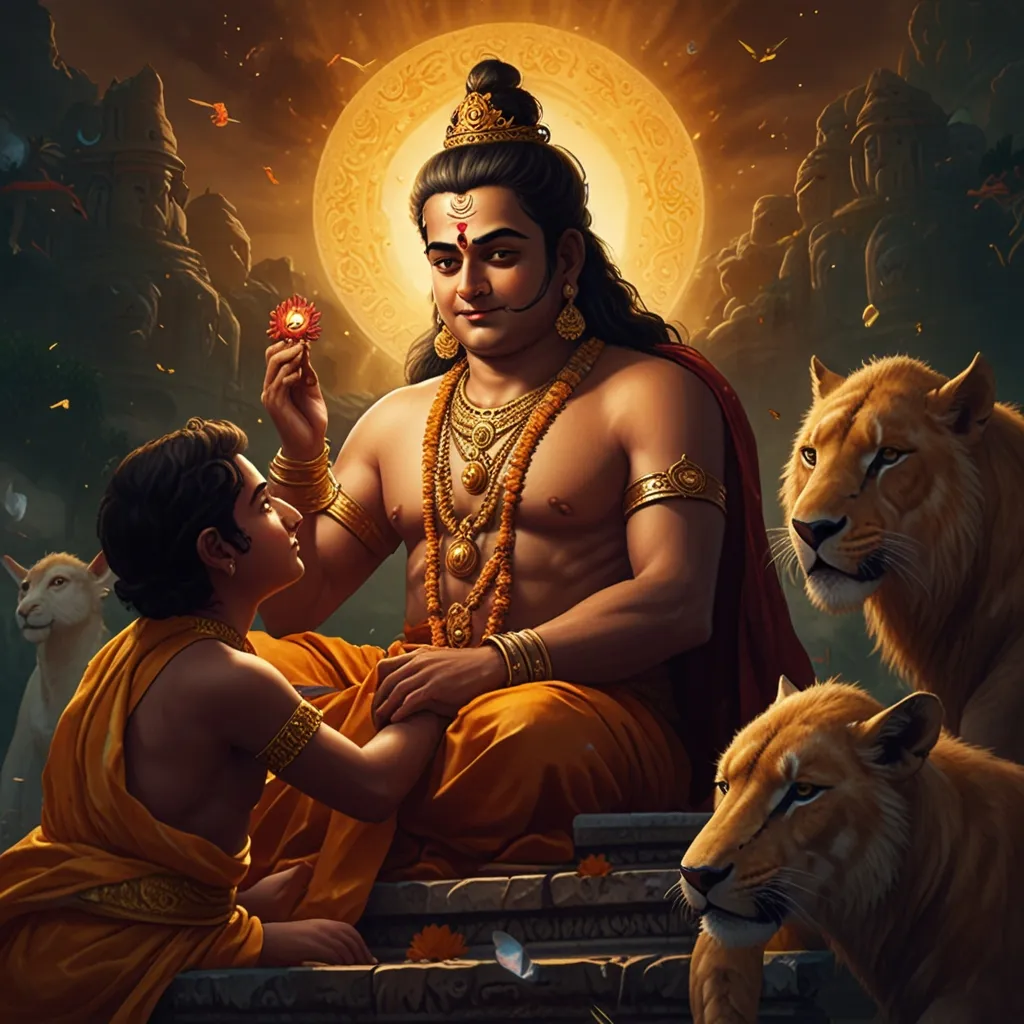
Krishna’s role in the saga takes the idea of disguise to an existential plane. He enters Hastinapura as a simple envoy, unarmed and outwardly vulnerable. Yet, his power transcends the weapons he chooses not to carry. His true strength lies in subtlety, not spectacle. When he becomes Arjuna’s charioteer, he places himself in the humblest of roles. Imagine watching him, reins in hand, guiding Arjuna through the chaos of the battlefield. From this seat of apparent servitude, he delivers the Bhagavad Gita. Would a king—or a god—have been heard as deeply had he thundered his wisdom from a throne? Or is it the humbleness of his station that amplifies his guidance?
“God disguises himself as everything.” - Alan Watts
Power, in Krishna’s hands, is never loud. It whispers. It hides. It waits, offering choices rather than commands. By choosing simplicity as his cloak, Krishna proves that true influence does not need to announce itself. How many times in our own lives do we overlook wisdom because it arrives unadorned? When was the last time you dismissed advice, only to realize later you were speaking to a master in disguise?
Karna stands as the epic’s most poignant lesson in the cost of lifelong concealment. His story aches with irony. Born a prince, raised as a charioteer’s son, he spends his life hiding his royal birth. This disguise opens doors—he earns a place in the world through merit alone—but it locks others. The moment his secret comes to light, he finds himself trapped in loyalty. His devotion to Duryodhana becomes a mask as rigid as his fabled armor. What strikes me is how his internal conflict sharpens when his true heritage is revealed. Does identity rest in birth or in chosen allegiance? What happens to a man who hides so long that the mask fuses to his face?
“We all wear masks, and the time comes when we cannot remove them without removing our own skin.” - André Berthiaume
For Karna, the armor is not just a gift—it is a prison. When it is finally stripped away, so is his last defense. His tragedy compels us to look at our own secrets: how often do we hold onto an old disguise, not because it protects us, but because we fear what lies beneath?
Shikhandi’s very existence bends the idea of disguise into something cosmic. Born as a woman, raised as a man, Shikhandi carries the weight of an ancient vow. On the battlefield, she stands unrecognized as the key to Bhishma’s downfall. In this moment, fate itself wears a mask. The resolution of past karmic promises arrives not through a straightforward act of revenge, but through the complex, ambiguous presence of one who is both—and neither—what she appears. Does karma itself work in disguise, granting resolution not as retribution, but as transformation?
The notorious game of dice is pure theater—deceit masked as entertainment, crime presented as sport. Shakuni’s loaded dice work silently. Duryodhana’s greed hides behind ritual. The entire court indulges a collective pretense, calling injustice a fair victory. What does it say about us—as individuals, as societies—when we accept appearances as reality? How much of our own world is propped up by similar charades, where power justifies the terms and dissent is silenced by ritual?
“The greatest trick the Devil ever pulled was convincing the world he didn’t exist.” - Charles Baudelaire
Disguise, in the Mahabharata, is not reserved for mortals. The gods, too, wrap themselves in humble forms to test humanity. Dharma appears to Yudhishthira as a mere crane, then later as a stray dog. The lesson never arrives with trumpets or grand declarations. Wisdom prefers simplicity. In these moments, the epic nudges us: would you recognize the divine if it approached you quietly, or would you dismiss it as ordinary?
Challenge laces through the story at every turn. When the Pandavas meet the Yaksha in the forest, anonymity becomes a crucible for learning. The brother’s wisdom is tested not in their own names, but through veiled inquiry. Truth emerges, as it so often does, not by proclamation, but by peeling back assumptions. In our own lives, how often do we seek answers by digging deeper instead of accepting easy surfaces? Are the greatest teachers those who test us when we least expect it?
What makes the Mahabharata’s masks so striking is that deception itself is never marked as good or evil. The morality always hinges on purpose. To protect the innocent, concealment is noble. To preserve injustice, it is corrupt. The question we are left with is not “Who hides?” but rather, “Why?” The mask is merely a tool. Its meaning derives from the cause it serves. This urge to look past the disguise and ask about the motive is perhaps the epic’s most subtle gift.
I find myself returning to these lessons, wondering at their relevance today. In a world saturated with image, where identities shift and presentations are carefully curated, how do we tell mask from face? Is there a moment in your life when disguise saved you? Or perhaps when it led you astray? When have you encountered a truth that wore humble clothes?
“To be yourself in a world that is constantly trying to make you something else is the greatest accomplishment.” - Ralph Waldo Emerson
The Mahabharata refuses to hand us easy answers. Its characters wear disguises not just to escape harm, but to become something new. In the pressure of concealment, virtues are tested, flaws are exposed, destinies are altered. The thread that runs through every act of deception is intention. The epic dares us to examine motive before judgment, to see beyond the surface, and to recognize that sometimes the only path to truth winds through the territory of disguise.
If there is one lasting message from these ancient tales, it is this: never trust appearances alone. Wisdom, power, duty, even divinity—they all move quietly, hidden in plain sight. The greatest transformations often take place behind the simplest masks. And perhaps, as we look back at the epic and forward into our own lives, the real challenge is not to unmask others, but to question the purpose of our own disguises.
So, what masks do you wear, and what destinies do they shape?