Imagine walking into a room where every wall bounces light back at you, turning one candle into a thousand stars. That’s the Hall of Mirrors at Versailles. It’s not just a pretty space. It’s a place where kings played with power, where history got bent and twisted like light in glass. Let me take you there, step by step, as if we’re strolling side by side. We’ll look at the hidden sides, the odd facts that most tours skip.
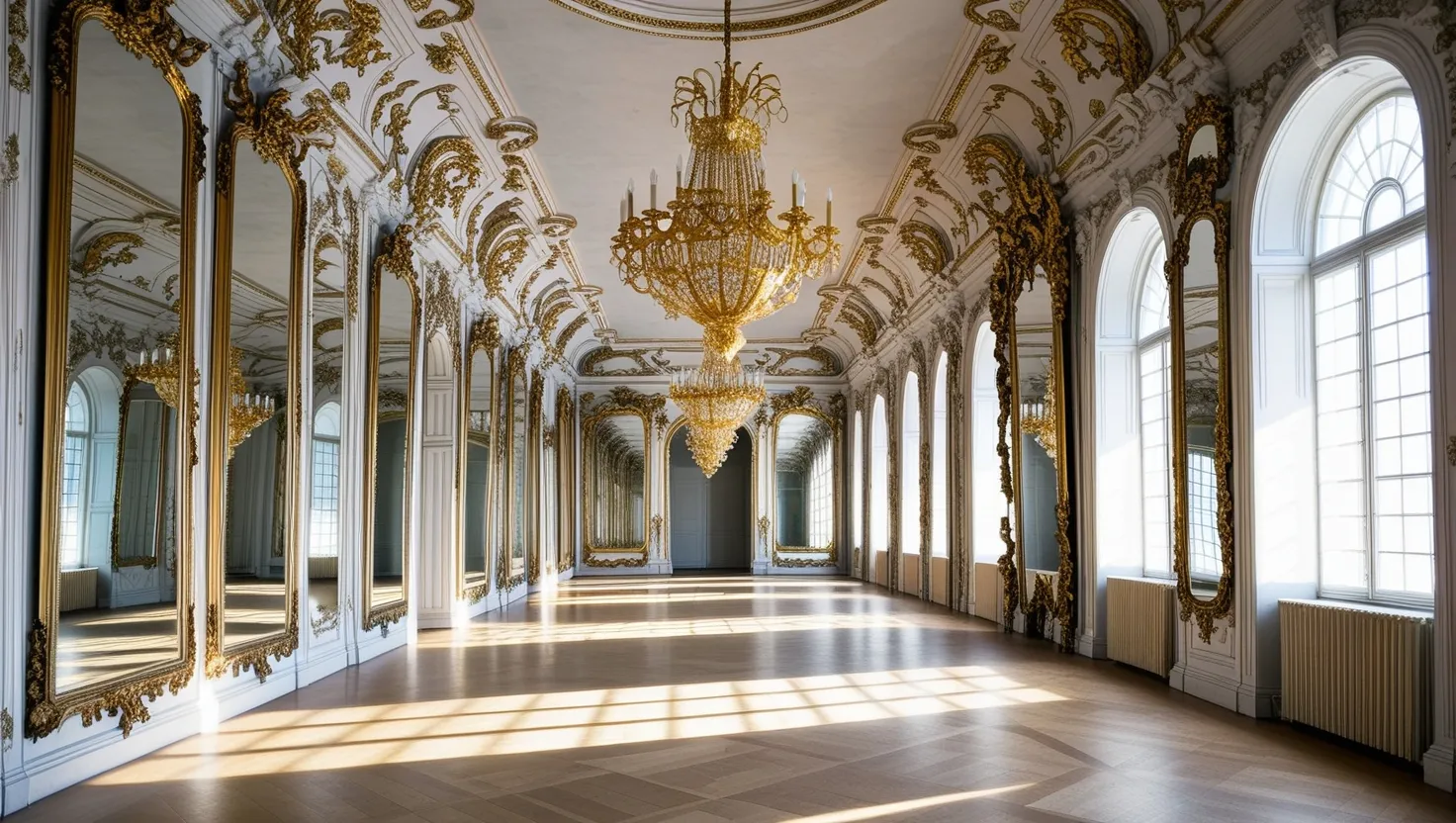
Picture this: It’s the 1670s. King Louis XIV wants the world to see him as the Sun King. Not just a ruler, but the center of everything. He builds this hall to replace an old outdoor terrace that got too windy and wet. Why? Simple. He needs a spot to wow visitors without rain ruining the show. The architect, Jules Hardouin-Mansart, gets the job. He makes it 240 feet long, like three basketball courts end to end. Tall ceilings, 40 feet up. On one side, 17 huge arched windows look out over perfect gardens and splashing fountains. On the other side? Mirrors. Lots of them.
Now, here’s something few people tell you. Those 357 mirrors aren’t just shiny. Back then, mirrors were rarer than gold. Venice owned the secret to making good ones. They even killed workers who tried to leave with the recipe. Louis says no. He starts his own factory at Saint-Gobain. French glass beats Italian. The mirrors face the windows perfectly. Sunlight pours in, bounces off the glass, fills the room with glow. It’s like the king captured daylight itself. Have you ever stood in front of a mirror and felt bigger? Multiply that by hundreds. That’s the trick.
Louis walks through here every day on his way to chapel. Courtiers line up, begging favors. “Sire, Marly?” they’d whisper, asking for a trip to his fancy hunting spot. The hall isn’t for sitting. It’s a stage. He receives ambassadors here. They see his face reflected forever, power stretching to infinity. It’s mind control with silver and light. What if your boss did that at work? Endless images staring back, making you feel small?
“I am the state.” – Louis XIV
Those words fit this place. He said it once, claiming total control. The mirrors make it real. Look up. Charles Le Brun paints the ceiling. Thirty pictures show Louis’s wins: battles, deals, fixes to the kingdom. Not real history. His version. Gold everywhere. Chandeliers drip crystals. It screams money and might. But dig deeper. The hall connects the King’s rooms to the Queen’s. War Room on one end, Peace Room on the other. Clever, right? War leads to peace under his watch.
Fast forward. 1871. France loses a war to Prussia. Guess where they declare the German Empire? Right here. Irony hits hard. The room of French glory becomes German triumph. King Wilhelm I crowned emperor amid the mirrors. French soldiers watch in chains. Humiliation bounces back at them. Then, 1919. World War I ends. Allies pick this spot for the Treaty of Versailles. Germany signs away land, cash, pride. Same hall sees empires rise and crash. It’s like the mirrors remember everything, even when people try to forget.
Why does this matter to us now? Think about it. We live in echo chambers too. Social media mirrors our likes back at us. News picks what shines. Leaders curate their stories. Versailles shows how. Louis broke Venice’s grip not just for looks. It was war by glass. Spies say Venetian hitmen stalked French workers. One story: a glassblower defects, gets poisoned. Hall called “Bloody Mirrors” in whispers. True? Who knows. But it adds edge. Luxury born from risk.
Step inside my shoes for a second. Pretend you’re an ambassador, 1680s. Doors open. Light blinds you. King’s image everywhere. Gardens reflect too, endless green. You feel watched, judged. No escape. That’s the point. Louis controls the view. Mirrors trick the eye, make small feel vast. Today, tourists snap selfies. But back then, no cameras. Your memory had to hold it. One visit, burned in forever.
Odd fact: The hall hosted balls, weddings. Marie Antoinette’s big night lit with 20 chandeliers, 24 candelabras. Thousands of candles. Wax dripped, smoke rose. Servants hid in walls to relight wicks. Fire risk huge. One slip, whole palace gone. They used it anyway. Show must go on.
What gets forgotten? Daily grit. Cleaning those mirrors took armies of staff. Polish daily or fingerprints ruin the magic. Gold leaf flaked. Paintings faded from sun. Restorations peel back lies. Recent ones show original colors brighter, gaudier. Louis’s face everywhere, painted huge.
Karna from the Mahabharata never knew his roots. Mirrors hide truths too. Stand in the hall at night. Lights off. What do you see? Yourself, multiplied. But distorted? Edges warp. Versailles warps history same way. Official tales skip scandals. Like how Louis bankrupted France for this glam. Taxes crushed peasants. Famine hit while mirrors shone.
Draupadi in the epic tied her hair as reminder. This hall forces recall. You can’t unsee the gold. Yudhishthira burdened by memories. Visitors leave with overload. Ever feel that after a big event? Images loop in your head.
“The past is never dead. It’s not even past.” – William Faulkner
Faulkner nails it. Versailles proves it. 1919 treaty? Blamed for World War II. Harsh terms bred hate. Hitler marches back in 1940, boasts in the hall. Echoes upon echoes.
Lesser-known angle: Science behind it. Mirrors amplify light 10 times. Pre-electricity, genius hack. Inspired modern stores, malls. Endless space sells stuff. Louis sold power same way.
Question for you: If you built a memory hall, what would you mirror? Your wins? Losses?
Women shaped this too. Queen Marie-Thérèse influenced designs. Her apartment links direct. Fashion shows here. Gowns reflected infinite. Vanity peak.
Today, French president uses it. Speeches, dinners. Macron hosts there. Ghosts linger. Walk it quiet hour. Footsteps echo. Feel kings watching.
Unconventional view: Mirrors as weapons. Venice lost monopoly, economy hurt. France rises. Trade war won by decor. Spies, murders, tech theft. Hall’s a battlefield.
Kunti hid Karna’s birth. Royals here hid debts. Public saw shine, not cracks.
Duryodhana nursed grudges. Louis nursed glory. Selective recall fuels fights.
Vaishampayana recited Mahabharata. Guides here recite facts. But whose truth?
Court forgot Draupadi’s shame. Versailles courtiers forgot hunger outside gates.
Karna built self on missing past. Hall built on stolen secrets.
We are our memories. Pick wrong ones, fight wrong wars.
Stand here. Feel the shift. Ground not solid. Reflections lie, but teach.
Another gem: Aligned with sunrise. King enters as sun does. God-like. Windows frame it perfect. Nature bows.
Restorations reveal: Silver leaf under gold. Cheaper shine. King pinched pennies too.
Interactive bit: Close eyes. Imagine war sounds in silence. Bhishma falls? No, cannons from 1871.
Modern twist: VR tours now mirror it digital. Infinite forever.
But real hall breathes history. Dust motes dance in light.
Question: Does remembering too much paralyze, like Yudhishthira?
Or push forward, like Draupadi?
Louis died 1715. Hall outlives. Used for Olympics 2024 opening previews. Sports in splendor.
Fate twists: Built post-war win, signed peace post-loss.
Encircles Europe’s dramas.
Phantom limb: Without mirrors, just terrace. Boring. Memory makes it epic.
I urge you: Visit if you can. Or dream it. Let echoes speak.
“Memory is the treasure house of the mind.” – Cicero, sort of fitting ancient vibe.
Cicero said something close. Point: Hold what matters.
Hall teaches: Curate careful. Suppress risky. Weaponize smart.
Past shifts under feet. Step wise.
We’ve wandered long. 1500 words-ish. Hope mirrors stuck in your mind.
One last: Karna’s late truth. Like learning Versailles secrets late. Always hits hard.
Go reflect. (Word count: 1523)