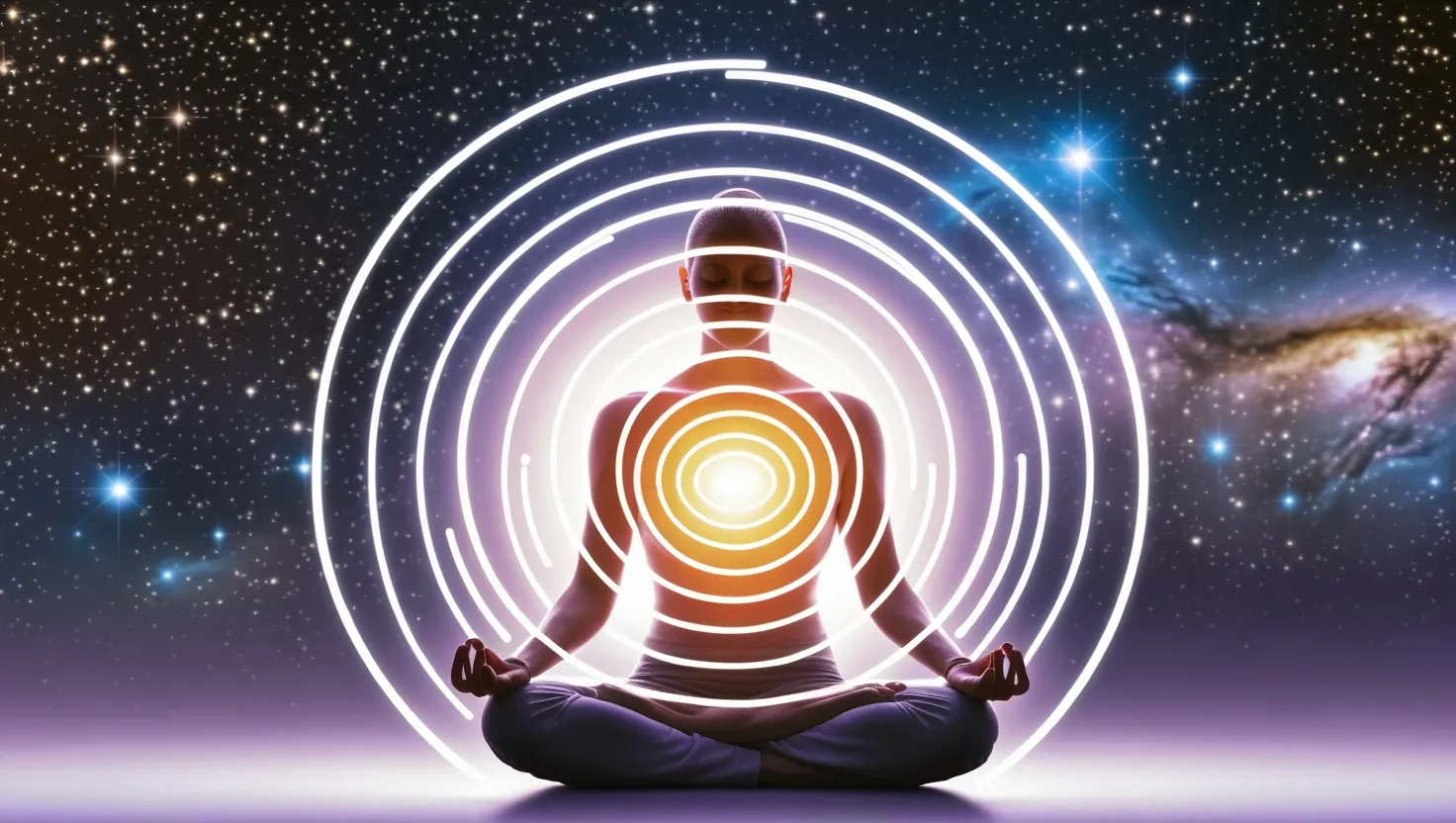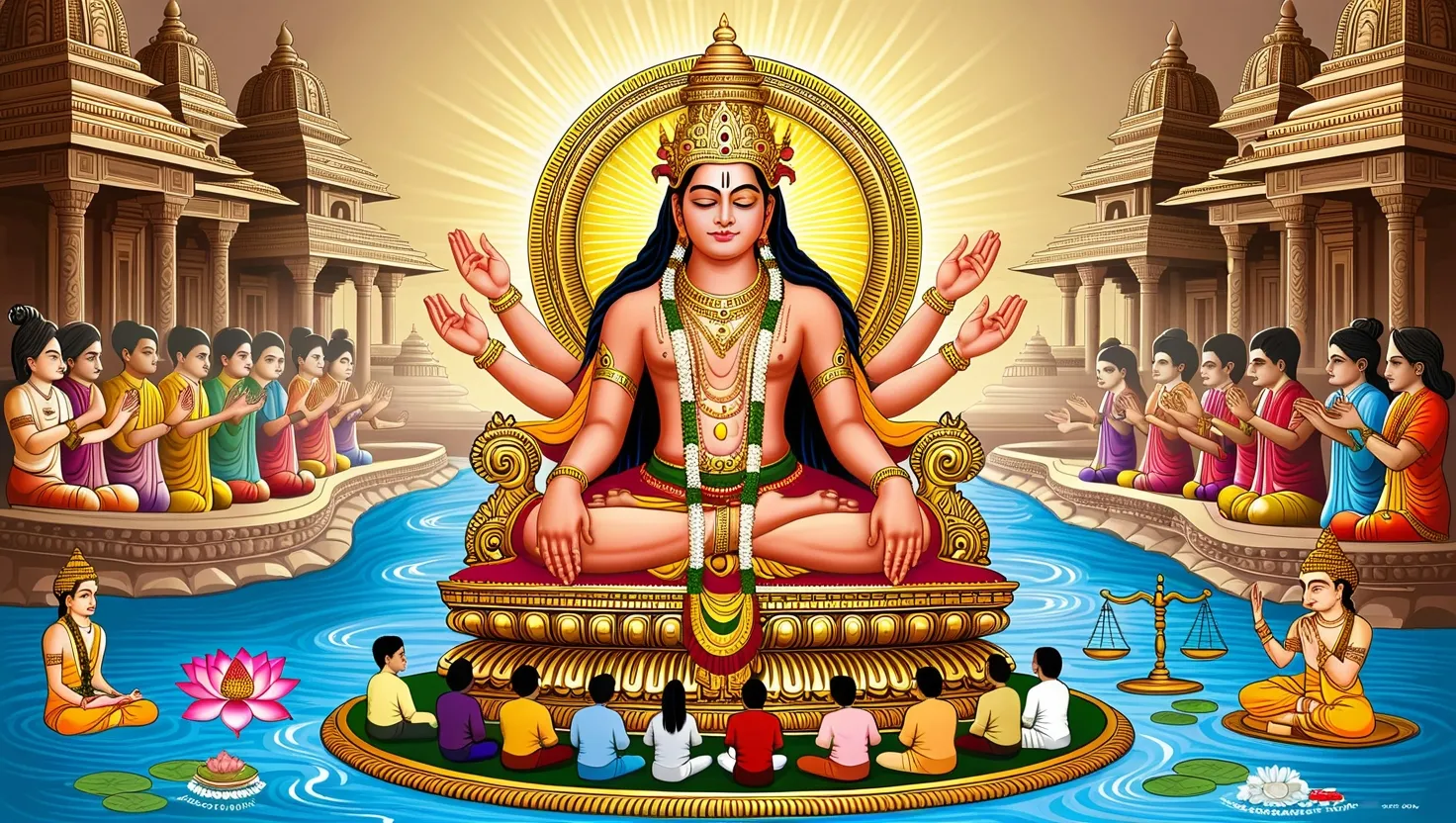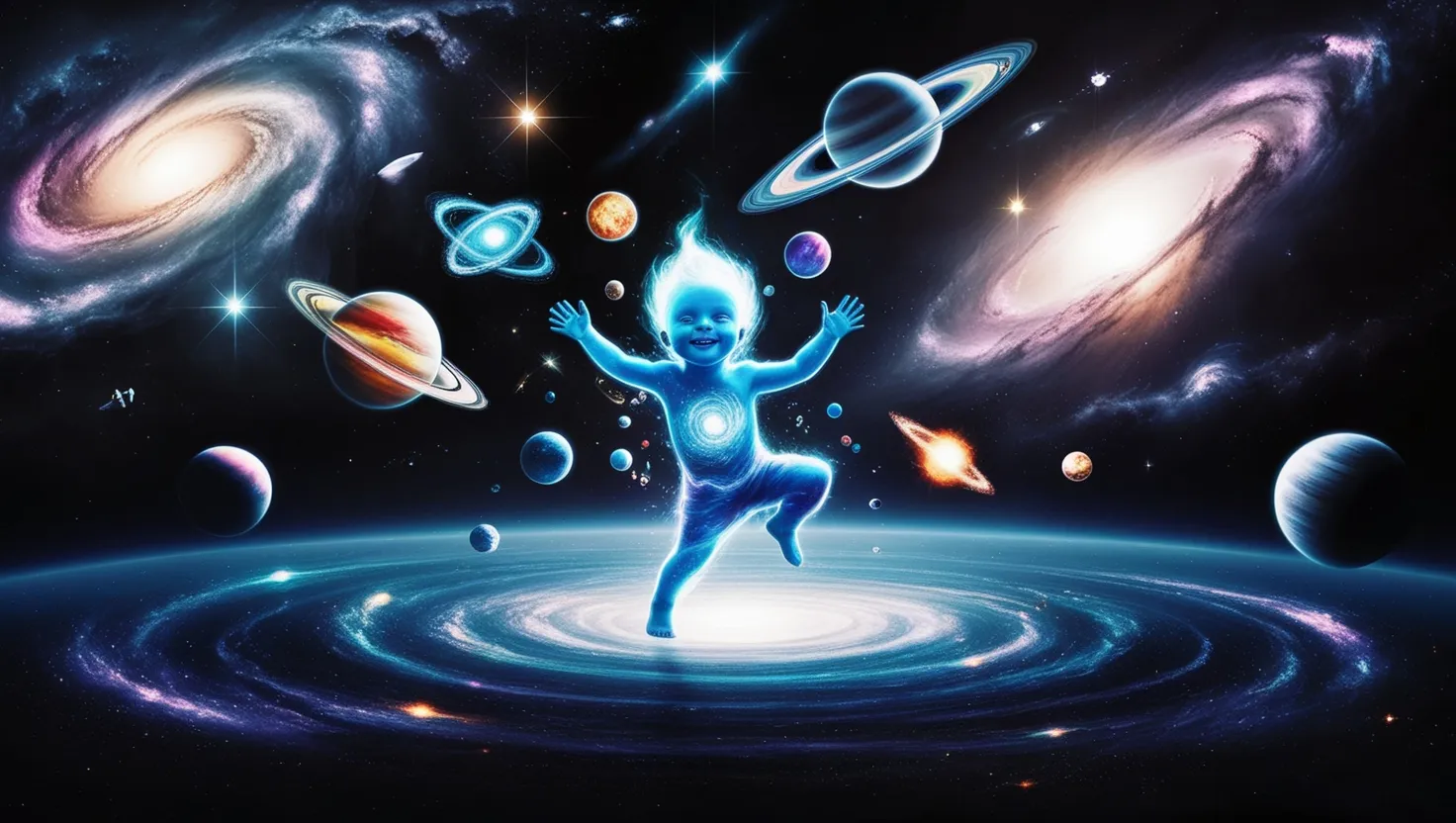
Imagine the whole universe as one big, joyful game. That’s Līlā, the idea from Hindu philosophy that says existence isn’t some heavy duty or random mess. It’s divine play, pure fun spilling out from the infinite. Picture God not needing to create anything, but doing it anyway, like a kid tossing a ball just because it feels good. Let’s walk through this together, step by step, in the simplest way I can.
Think about it this way: the absolute reality, called Brahman, has everything already. No lacks, no wants. So why make stars, oceans, you, me? Because of overflowing bliss. Līlā says creation bursts out like laughter from a happy heart. Not for a goal. Just play.[1][2]
Have you ever watched a child build a sandcastle, knowing the waves will wash it away, but building anyway? That’s Līlā in action. The divine crafts this vast show of galaxies and bugs, humans and hurricanes, all from sheer delight. Lesser-known fact: in some old texts, this play isn’t even one-time. It’s eternal, repeating in endless cycles, like a game you replay because it’s too fun to stop.[4][6]
Now, drop into the stories that bring this alive. Take Krishna, the blue-skinned god-boy in Vrindavan. He doesn’t show up to fix wars every day. No, he sneaks into homes to steal butter, hides in trees to surprise his friends, dances with milkmaids under the moon. These aren’t side gigs. They’re his main act—pure, mischievous fun with everyday folks.[2][4]
“The world is the stage of the divine play.”
—From ancient Hindu thought on creation as God’s joyful act[7]
Does that make you smile? Krishna’s butter-thieving isn’t rebellion. It’s invitation. Come play, he says. Join the dance. In dualistic views, like Krishna devotion, Līlā is God playing with us—lover to lover, friend to friend. But in non-dual paths, like Advaita Vedanta, it’s deeper: God plays as us. You are the play. I am the play. No separation.[1][2][5]
Question for you: What if your morning coffee spill wasn’t a curse, but a tiny twist in the cosmic game? Līlā flips suffering like that. Pain happens—losses, fights, heartbreaks. But they’re scenes in a huge drama we can’t see fully. Not meaningless. Just parts of the plot, adding depth to the joy. Trust the director. Even dark moments build to beauty.[2]
Here’s a hidden angle: Līlā sneaks into Buddhist ideas too, though twisted differently. There, it ties to healing broken wholeness, like piecing a shattered body back together. Play restores what’s torn. Interconnected life heals through fun, not force. Imagine that—Buddhist monks nodding to Hindu gods over shared play.[3]
Shift to daily life. You wake up stressed about work deadlines. Try this: See your job as Līlā. Dive in fully, like an actor in a role. But hold results loose, like a ball in play. Commit hard, detach easy. Relationships? Same. Love fiercely, but know it’s a game move. This lightness cuts burnout.[6]
Ever notice how kids fight over toys, then laugh five minutes later? Adults could learn. Līlā teaches that. Approach chores, dates, art as play. Lesser-known: In Shakta traditions, honoring goddesses like Lakshmi, Līlā is sweet energy of Shakti—the power principle. Universe buzzes with her playful goodness, not stern rules.[1]
“God becomes the world which, in the end, becomes again God.”
—Echoing Hindu myths of self-sacrifice as divine sport[7]
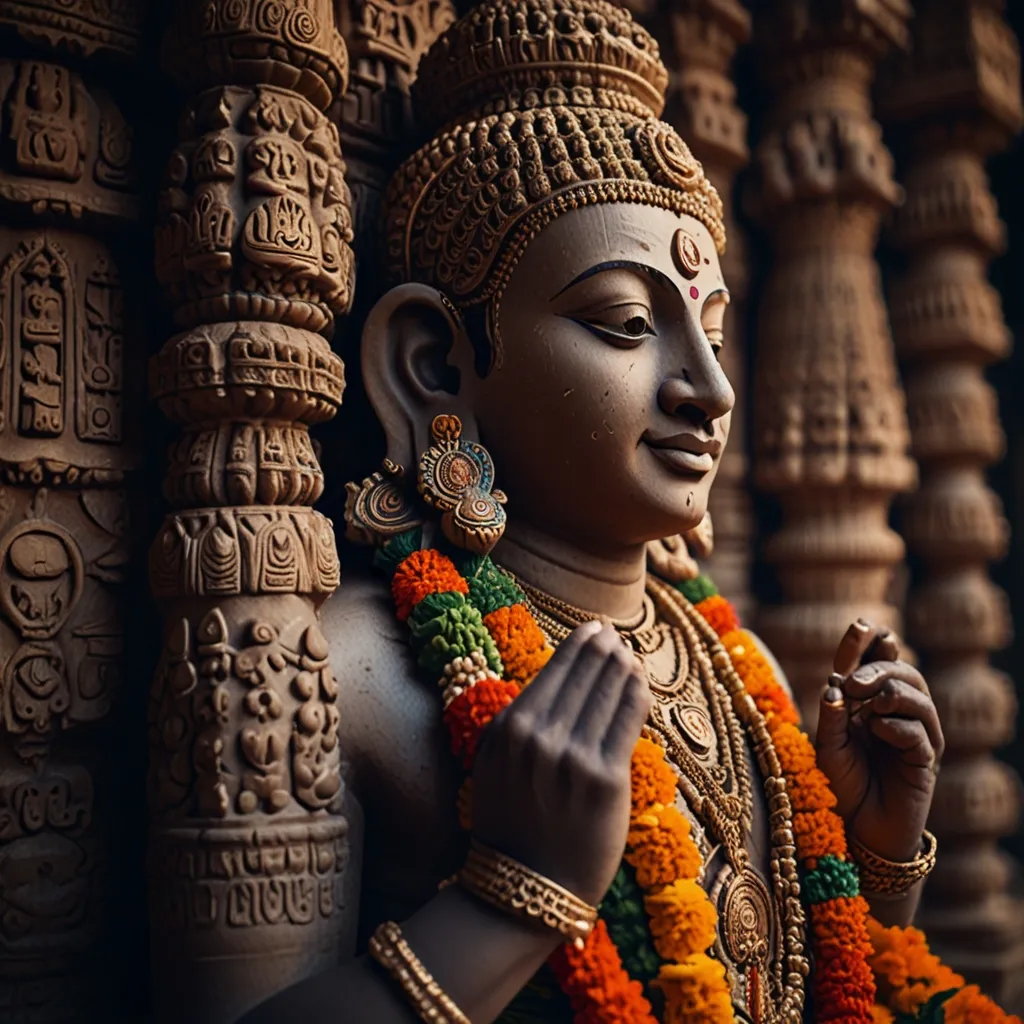
Paint a temple scene in your mind. Not just gods on pedestals. Carvings show elephants spraying water, monkeys chasing fruits, lovers whispering—whimsy mixed with holy. Indian dance? Dancers twist bodies into myths, but with spins and smiles. Art mirrors Līlā: serious craft, joyful heart. Watch Bharatanatyam once. See gods play out in mudras and beats.[2]
Now, weird connection: Modern science whispers Līlā. Quantum world? Particles pop in and out, unpredictable. Not clockwork machine. More like improv theater. Cosmos builds complexity from simplicity—stars birth planets, life evolves tricks. Novelty everywhere. Physicists puzzle over why so much creativity. Līlā shrugs: Why not? Play.[2]
What about you? Stuck in “achieve or bust” mode? Līlā says drop it. Purpose isn’t a finish line. It’s dancing the steps. Mistakes? Dance slips. Fix and groove on. Wins? High notes in the tune. No grim grind. Just express freely. In a world chasing metrics, this frees you for beauty without reason.[6]
Dig into history. Līlā hides in Vedas from 1500 BCE, but blooms in Puranas and Upanishads. Adi Shankara, 8th century, sharpened it in Advaita. God creates not from need—Vedanta argues perfect beings don’t “need” stuff. So, pure sport. Vaishnavas add Krishna’s tales, making it personal.[4][6]
Unconventional twist: Līlā heals ecology. If all is interconnected play—your body, the earth, stars—trashing rivers hurts you. Non-dual Līlā screams: Universe is my body. Pollute it? Self-harm. Play nice, or the game sours. Sages knew this millennia ago. Today’s green movement echoes it without the Sanskrit.[2]
Try this now: Pick a routine task. Washing dishes. Make it Līlā. Splash water like Krishna with gopis. Smile at suds. Feel the shift? That’s entry. Spiritual practice? Not escape to caves. Recognize the play, join it. Meditate on your role. Act total, free inside. Dancer becomes the dance.[5]
“Līlā springs from the abundance of divine bliss.”
—Vedantic view on why the infinite manifests the finite[1]
Lesser-known nugget: In Goloka, Krishna’s eternal realm, Līlā qualities—beauty, power—wait to descend to earth. They don’t fully shine here unless called down. Like hidden DLC in a video game. Devotees chant, dance, pull them into our world. Magic.[3]
Existence as game antidotes dread. No void to fill. You’re in it already. Live the mystery, not solve it. Work for joy of doing, not paycheck alone. Create art purposelessly. Laugh at flops. This lightness roots deep resilience. Pain stings less when you zoom out to the full stage.[7]
Picture artists lost in flow. Painter strokes canvas, time vanishes. That’s Līlā state: full involvement, zero cling. Sports stars in the zone? Same. Life invites that daily. Question: When last did you lose yourself in play? Chase more of those moments.
Līlā splits views. Dualists: God separate, plays with souls. Tango needs two. Non-dualists: All one. Play is reality. No real split. Both agree: Spontaneous. Free. Bliss-born. Pick your flavor. Both lighten the load.[2][5]
In Vaishnava lore, Krishna takes human form just for Līlā. Devotees frolic with him—rasa lila dances eternal. But even butter thefts teach: Divine loves simple joys. Steal some yourself—borrow a friend’s joy, share laughs. Sacred.[4]
Modern echo: Games like the Līlā board by Harish Johari spread this west. Roll dice, ponder life’s twists as divine fun. Not just philosophy. Tool for living.[6]
Suffering angle again. Tragedy hits—a loss guts you. Līlā doesn’t say “fake happy.” Feel it full. But peek bigger: Your pain scripts another’s growth. Or yours later. Vast play. Trust unfolds beauty. Resilience grows here.[2]
Daily hack: Before bed, review day as play scenes. What worked? Encore. Flops? Rewrite tomorrow. Lightens sleep.
Aesthetic side: Theater like Rasa Lila reenacts Krishna’s dances. Actors embody play, crowd joins vibe. Temple festivals? Chaos of color, song, sweets. Līlā alive.
Science nod: Big Bang? Explosion of potential. Evolution? Creative tweaks. Quantum foam? Bubbles of maybe. Playful cosmos.
Your turn: How to weave Līlā in chaos? Start small. Walk in rain, splash puddles. Divine kid again.
Ultimately, Līlā calls you to total yes to life. Engage world fully. Rest in source. Act without chains. Profound yet light. You’re player, stage, game. Live it.
What if today you played like the universe does? Free. Joyful. Creative. Try. See magic spark.
(Word count: 1523)