5 Hindu Deities That Are Changing the Way We See the Universe!
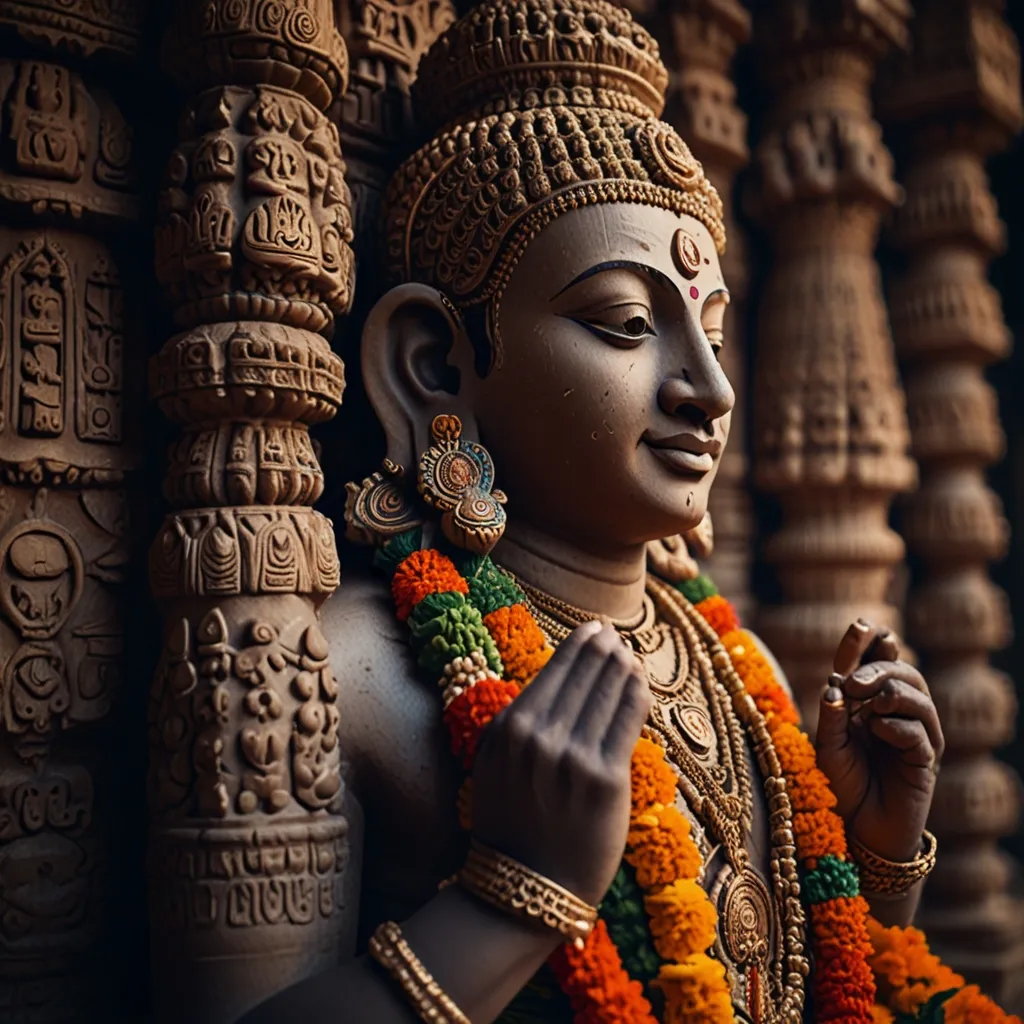
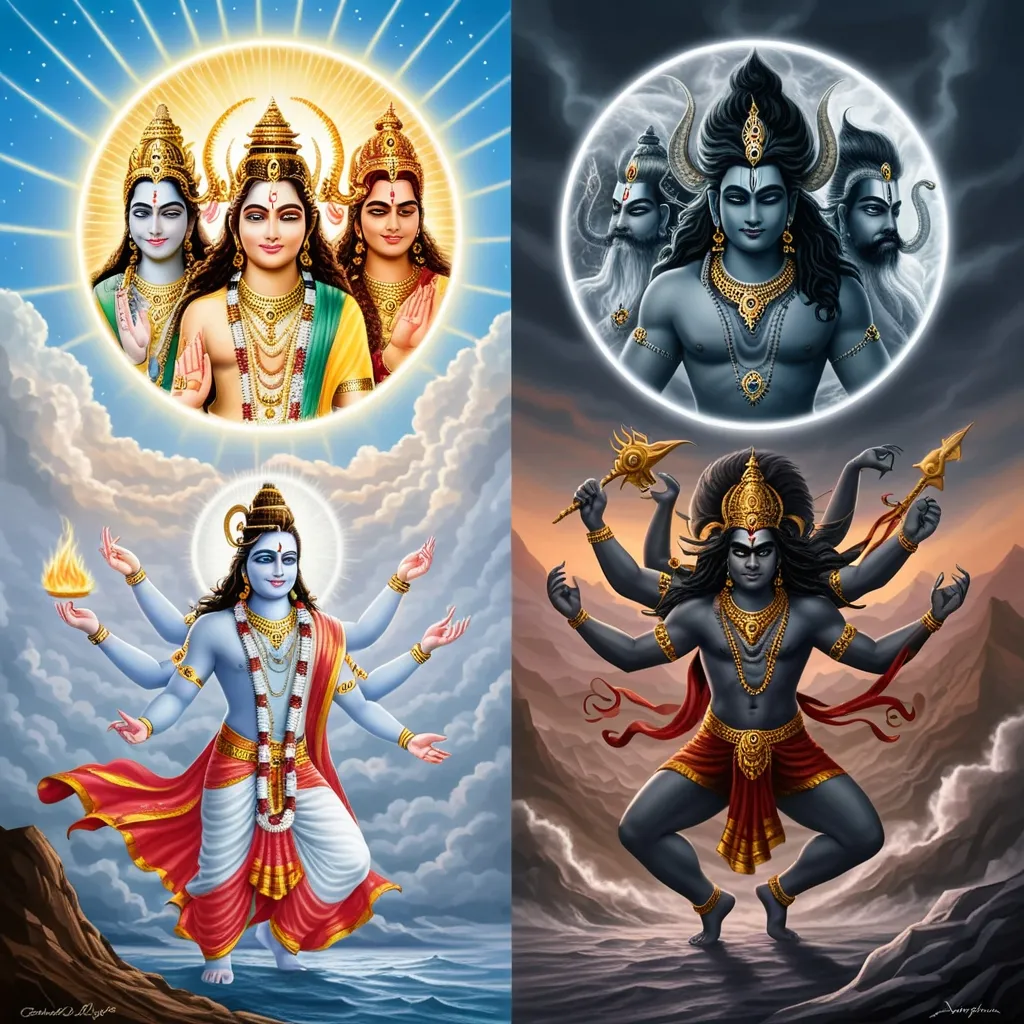
Hindu deities offer profound cosmic insights. Vishnu preserves, Shiva transforms, Kali embodies change, Brahma creates, Durga protects. They symbolize interconnectedness, balance, and the ever-evolving nature of existence, reshaping our understanding of the universe.
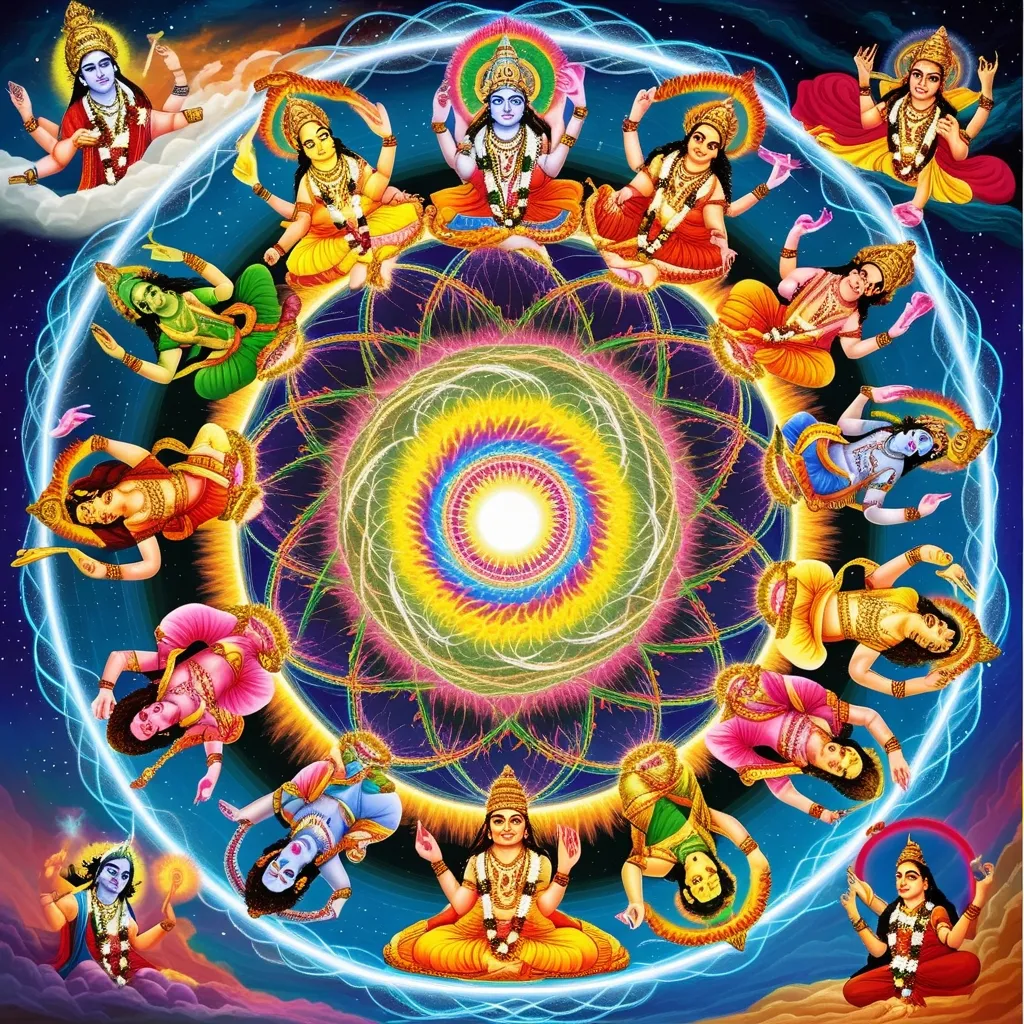
The Cosmic Dance: How Hindu Deities Shape Our Understanding of the Universe
Ever wondered how ancient wisdom could shake up our view of the cosmos? Well, buckle up, because we’re about to take a wild ride through the Hindu pantheon and see how these epic deities are totally changing the game when it comes to understanding our universe.
First up, let’s talk about Vishnu. This dude’s not just lounging around on a cosmic couch - he’s the ultimate multitasker. Imagine being able to pop up anywhere, anytime, in any form. That’s Vishnu for you. He’s like the cosmic superhero, swooping in to save the day whenever things get out of whack. And his avatars? They’re not just cool disguises. Each one teaches us something about life, the universe, and everything.
Take Krishna, for example. This blue-skinned charmer dropped some serious knowledge bombs in the Bhagavad Gita. It’s like he’s saying, “Hey, life’s a battlefield, but don’t sweat it. Just do your thing without getting hung up on the results.” Mind-blowing stuff, right?
Now, let’s shift gears to Shiva. If Vishnu’s the preserver, Shiva’s the party crasher - in the best way possible. This guy’s dance moves could literally destroy the universe. But here’s the kicker: it’s not about mindless destruction. It’s all about transformation. Shiva’s saying, “Out with the old, in with the new.” It’s like a cosmic reset button.
And that third eye? It’s not just for show. It’s Shiva’s way of seeing beyond what meets the eye. Next time you’re stuck in a rut, channel your inner Shiva. Maybe you need to shake things up a bit to see the bigger picture.
Speaking of shaking things up, let’s talk about Kali. This fierce lady is often misunderstood, but she’s actually the ultimate symbol of time and change. Picture this: a warrior goddess, decked out in a necklace of skulls, dancing on Shiva himself. It’s not just metal album cover material - it’s a powerful metaphor for the unstoppable force of time.
Kali’s telling us, “Change is coming, whether you like it or not.” But here’s the cool part: that change isn’t just about endings. It’s about new beginnings too. So next time life throws you a curveball, remember Kali. Embrace the change, and who knows? You might come out stronger on the other side.
Now, let’s rewind to the beginning with Brahma. This four-faced creator isn’t just about making stuff. He’s the cosmic architect, setting the whole universe in motion. Imagine having the power to dream up entire worlds. That’s Brahma for you. He reminds us that creation isn’t a one-and-done deal. It’s an ongoing process, happening every single moment.
Brahma’s story also hits us with some deep truths about knowledge and wisdom. The whole lotus-from-Vishnu’s-navel thing? It’s not just a weird yoga pose. It’s about how everything’s connected. The physical world sprouting from the spiritual realm - mind-bending stuff, right?
Last but definitely not least, we’ve got Durga. This mama bear of the cosmos is all about strength and protection. Picture a badass warrior goddess, riding a lion and wielding weapons in her multiple arms. But Durga’s not just about kicking butt. She’s the ultimate nurturer, showing us that the universe isn’t all chaos and destruction. There’s a protective force out there, looking out for us.
Durga’s story is like the ultimate underdog tale. She takes on impossible odds and comes out on top. Next time you’re facing a challenge that seems too big to handle, think of Durga. Channel that inner strength and remember: you’ve got the power to overcome anything.
Now, here’s where it gets really interesting. All these deities aren’t just hanging out in their own corners of the cosmos. They’re all part of this intricate dance called dharma. It’s like a cosmic balancing act, with creation, preservation, and destruction all playing their parts.
And get this: these gods aren’t stuck in one place or time. They’re everywhere, all at once. It’s like they’ve mastered the art of multidimensional existence. Makes our concept of time seem pretty limited, doesn’t it?
But here’s the coolest part: these deities aren’t set in stone. They’ve evolved over time, picking up new traits and stories as Hinduism spread and mixed with different cultures. It’s like they’re living entities, growing and changing just like we do.
Take Vishnu’s avatars, for example. Depending on where you go in India, you’ll see them depicted in totally different ways. It’s like a divine game of telephone, with each region adding its own flavor to the story. This adaptability is what makes Hinduism so rich and complex. It’s not just one story, but a tapestry of interconnected tales and traditions.
And speaking of interconnected, that’s really what it all boils down to. These deities aren’t just separate entities doing their own thing. They’re all part of this massive, cosmic web. Everything’s connected, from the smallest atom to the biggest galaxy.
It’s like what Krishna says in the Bhagavad Gita: it’s all one big reality, even if it looks different on the surface. The Trimurti - Brahma, Vishnu, and Shiva - are the perfect example of this. Three distinct gods, but all part of the same cosmic order.
So, what does all this mean for us mere mortals? Well, it’s a pretty mind-blowing way to look at the universe. It’s not just a bunch of random events and objects floating around in space. It’s a living, breathing entity, with its own sense of balance and purpose.
These deities remind us that change is constant, but that’s not a bad thing. Destruction leads to creation, chaos to order. It’s all part of the grand cosmic dance. And we’re not just spectators - we’re active participants in this dance.
Next time you’re stargazing or pondering the meaning of life, think about these Hindu deities. They’re not just ancient myths or cool stories. They’re powerful symbols that can totally transform how we see the universe and our place in it.
Maybe Vishnu will inspire you to be adaptable, to find new ways to maintain balance in your life. Or perhaps Shiva will encourage you to embrace change, to see the potential for growth in moments of upheaval. Kali might remind you that time is precious and that every ending is also a new beginning.
Brahma could spark your creativity, reminding you that you have the power to shape your own reality. And Durga? She’s there to remind you of your inner strength, that you have the power to protect and nurture yourself and others.
In the end, these deities offer us a rich, complex view of the universe. It’s not just a cold, mechanical place governed by physical laws. It’s a vibrant, living entity, full of mystery and meaning. And we’re all part of it, connected in ways we might not even realize.
So next time life gets you down or the world seems too chaotic to handle, remember these cosmic dancers. They’re not just hanging out in some distant heaven. They’re right here, in every atom, every moment, every breath. They’re in you, too, reminding you that you’re part of something much bigger and more amazing than you could ever imagine.
Now that’s a universe worth exploring, don’t you think?